

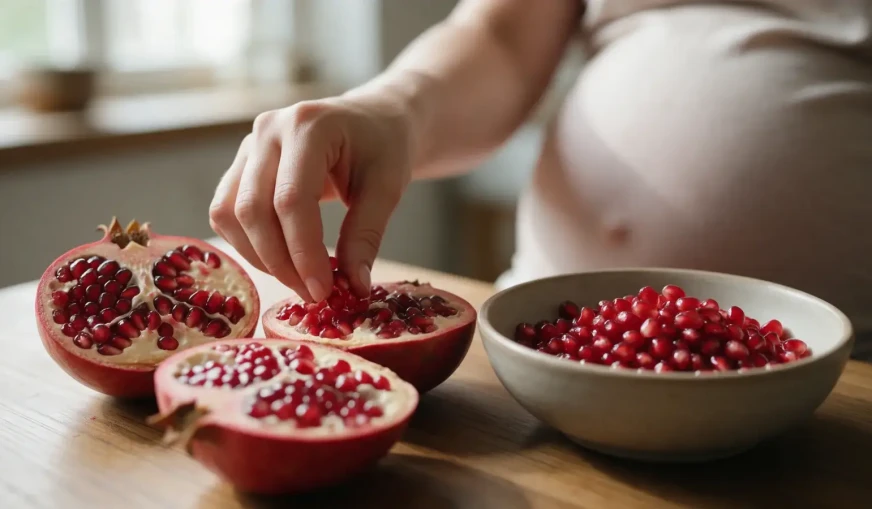
Yes, you can eat pomegranate in pregnancy. Pomegranate is a fruit that provides fibre, vitamin C, folate, vitamin K and potassium and can be eaten safely in pregnancy once it has been washed well. For most expectant mothers, about one cup (about 200 ml) of pomegranate seeds a day, together with the other fruit through the day, is a sensible portion. The main points to watch are to avoid freshly squeezed, unpasteurised pomegranate juice sold on the street, and, if you have gestational diabetes, to adjust the portion according to the advice of your doctor and dietitian.
Pomegranate features often on our tables, both as a fruit and as pomegranate molasses (nar ekşisi). A question that comes up often in pregnancy is “Is it good for anaemia?” In this article I explain the nutritional value of pomegranate, its benefits and what to watch when eating it.
- Pomegranate is a fruit that can be eaten safely in pregnancy; wash the skin before eating it and remove the seeds on a clean surface.
- One cup (about 200 ml) of pomegranate seeds provides about 7 g of fibre, 18 mg of vitamin C and 66 micrograms of folate.
- Pomegranate is not rich in iron; it does not correct iron deficiency on its own.
- Avoid freshly squeezed, unpasteurised pomegranate juice sold on the street in pregnancy.
- If you have gestational diabetes, prefer the fruit itself to the juice, in a moderate portion and with a meal.
Is It Safe to Eat Pomegranate in Pregnancy?
Yes. The NHS states that the great majority of fruit and vegetables can be eaten safely in pregnancy, but that they need to be washed thoroughly to remove soil and bacteria. Although the hard skin of the pomegranate does not touch the seeds directly, washing the skin and removing the seeds into a clean bowl is a good hygiene habit.
The NHS also recommends that pre-cut, packaged fruit is kept cold and eaten before its use-by date. You can choose ready-prepared pomegranate seeds sold in supermarkets if they have been kept in the cold chain and are in date; seeds removed at home are safest kept in a closed container in the fridge and eaten within a few days.
What Is the Nutritional Value of Pomegranate?
Pomegranate is a low-fat fruit that is rich in fibre and contains natural sugar. The values below are approximate figures based on USDA FoodData Central data.
| Nutrient | 100 g pomegranate seeds | 1 cup (about 200 ml; ~170 g) |
|---|---|---|
| Energy | 83 kcal | 140 kcal |
| Carbohydrate (sugar) | 19 g (14 g) | 32 g (23 g) |
| Fibre | 4 g | 7 g |
| Vitamin C | 10 mg | 18 mg |
| Folate | 38 µg | 65 µg |
| Vitamin K | 16 µg | 28 µg |
| Potassium | 236 mg | 400 mg |
| Iron | 0.3 mg | 0.5 mg |
As the table shows, pomegranate is a valuable fruit for fibre, folate and potassium, but its iron content is low. You can look at the article on the benefits of pomegranate for its general benefits.
What Are the Benefits of Eating Pomegranate in Pregnancy?
Pomegranate contributes to some of the nutrients whose needs rise in pregnancy and is a tasty way of increasing the variety of fruit you eat. The NHS recommends eating at least five portions of a variety of fruit and vegetables every day in pregnancy; pomegranate can comfortably make up one of those portions.
- Fibre: Helps with constipation, which is common in pregnancy. If you have constipation, the suggestions in the article on what helps constipation in pregnancy may also help.
- Folate: Important for the development of the baby's nervous system; but it does not replace the folic acid supplement recommended in pregnancy.
- Vitamin C: Raises the absorption of iron from plant sources; pomegranate is a good companion to a lentil or spinach dish in this respect.
- Potassium: Contributes to fluid balance.
- Plant compounds: Pomegranate contains antioxidant compounds called polyphenols; but there is no strong evidence on the effects of these compounds in pregnancy, and pomegranate should not be seen as a treatment.
Is Pomegranate Good for Anaemia?
Pomegranate does not treat anaemia on its own. Contrary to popular belief, pomegranate is not an iron-rich fruit; 100 grams contain only about 0.3 mg of iron. Its contribution is that its vitamin C supports the absorption of plant-based iron from other foods.
Iron needs rise markedly in pregnancy and anaemia is common. If you have been diagnosed with iron deficiency, keep up the treatment your doctor recommends without interruption; and include red meat, pulses and dark green leafy vegetables in your diet. You can look at the article on iron deficiency and anaemia in pregnancy for advice specific to anaemia in pregnancy, and the article on iron deficiency symptoms and iron-rich foods for iron-rich foods and ways of raising absorption.
Can You Have Pomegranate Juice and Pomegranate Molasses in Pregnancy?
Pasteurised, packaged pomegranate juice can be drunk in pregnancy; but freshly squeezed, unpasteurised pomegranate juice sold on the street or at juice stalls should be avoided. The US Food and Drug Administration (FDA) warns that unpasteurised fruit juices can cause serious food-borne illness in some groups, pregnant women above all.
Homemade pomegranate juice can be prepared in hygienic conditions and drunk straight away; even so, juice largely loses its fibre compared with the fruit itself and raises blood sugar faster. The World Health Organization also notes that the sugar in fruit juices counts as “free sugar” and should be limited. So it is more balanced to have pomegranate juice occasionally and in a small glass rather than as a daily habit.
Pomegranate molasses causes no problem in pregnancy when used in small amounts in salads and cooking. Read the label: some “pomegranate molasses sauce” products can contain glucose syrup, sugar and salt; prefer products whose only ingredient is pomegranate. Herbal practices such as pomegranate peel tea should not be used because their safety in pregnancy has not been studied enough.
Can You Eat Pomegranate With Gestational Diabetes?
Expectant mothers with gestational diabetes can eat pomegranate too; what matters is adjusting the portion and the timing. Eating pomegranate not on its own but with a food containing protein and fat, such as yoghurt or a handful of nuts, or within a meal, helps blood sugar run more evenly.
- Keep one portion at around half a cup (about 100 ml) and count it together with the other fruit through the day.
- Prefer pomegranate seeds to pomegranate juice.
- Watch the effect of pomegranate on your blood sugar readings and share the results with your dietitian.
You can read the gestational diabetes nutrition guide for detailed advice.
How Can You Eat Pomegranate in Pregnancy?
Spreading pomegranate through the day in different ways is both tasty and practical:
- A handful of pomegranate seeds on yoghurt and oats at breakfast
- Pomegranate seeds and a little pomegranate molasses on a lentil, chickpea or bulgur salad
- A snack bowl made with yoghurt, walnuts and pomegranate
- On a spinach and rocket salad, for colour and vitamin C
Pomegranate is only one of the seasonal fruits; in pregnancy it is healthiest to base your fruit on variety. You can also look at the article on whether you can eat dates during pregnancy for another fruit often asked about in the winter months. For an individual nutrition plan suited to the season and your needs in pregnancy, we can work together, in line with your obstetrician's advice, within nutrition counselling for pregnancy.
Sources
- NHS – Foods to avoid in pregnancy
- NHS – Have a healthy diet in pregnancy
- FDA – What You Need to Know About Juice Safety
- WHO – Healthy diet
This article is for general information only; please consult your doctor and dietitian about your own situation.
Frequently Asked Questions
How much pomegranate can you eat a day in pregnancy?
For most expectant mothers, about one cup (about 200 ml) of pomegranate seeds a day, that is half to one medium pomegranate, is a sensible portion. Take the other fruit you eat through the day into account too; if you have gestational diabetes, set the portion with your dietitian.
Can you drink pomegranate juice in pregnancy?
Pasteurised, packaged pomegranate juice, or pomegranate juice prepared at home in hygienic conditions and drunk straight away, can be consumed. Freshly squeezed, unpasteurised pomegranate juice sold on the street should be avoided in pregnancy.
Does pomegranate cause miscarriage or contractions?
There is no evidence that pomegranate fruit eaten in normal amounts causes preterm birth or contractions. But herbal practices such as pomegranate peel tea are not recommended in pregnancy because they have not been studied.
Can you use pomegranate molasses in pregnancy?
Yes, it can be used in small amounts in salads and cooking. Check the label and prefer products made only from pomegranate, with no glucose syrup or added sugar.
Does pomegranate cause heartburn?
The sour taste of pomegranate can make heartburn worse in some expectant mothers. If you have heartburn, try eating pomegranate not on an empty stomach but with a meal and in small portions.
Book an appointment for a personalised pregnancy nutrition plan
Nutritional needs in pregnancy change with the week of pregnancy, weight change and test results. Message us for a plan that fits your doctor's advice.

This content is for information only. For a personalised nutrition programme, please consult a dietitian.


