

The most common symptoms of iron deficiency are tiredness and lack of energy, shortness of breath, palpitations, pallor and headaches; signs such as hair loss, nail changes and cravings for non-food things like ice or soil can also occur. Because these symptoms can be confused with other conditions, the diagnosis is made only with a blood test; diet plays an important role both in prevention and in supporting the treatment your doctor recommends.
According to the World Health Organization (WHO), about 30% of women aged 15–49 and 37% of pregnant women worldwide are affected by anaemia, and iron deficiency is the cause of a significant share of anaemias. Below you will find the symptoms, the risk groups and practical ways of raising the iron on your plate.
- Tiredness, shortness of breath, palpitations, pallor and headaches are the most common symptoms of iron deficiency.
- Women who have periods, pregnant women, children, teenagers and people who eat mostly plant-based are at greater risk.
- According to the NHS, the daily iron requirement is 14.8 mg for women aged 19–49 and 8.7 mg for men.
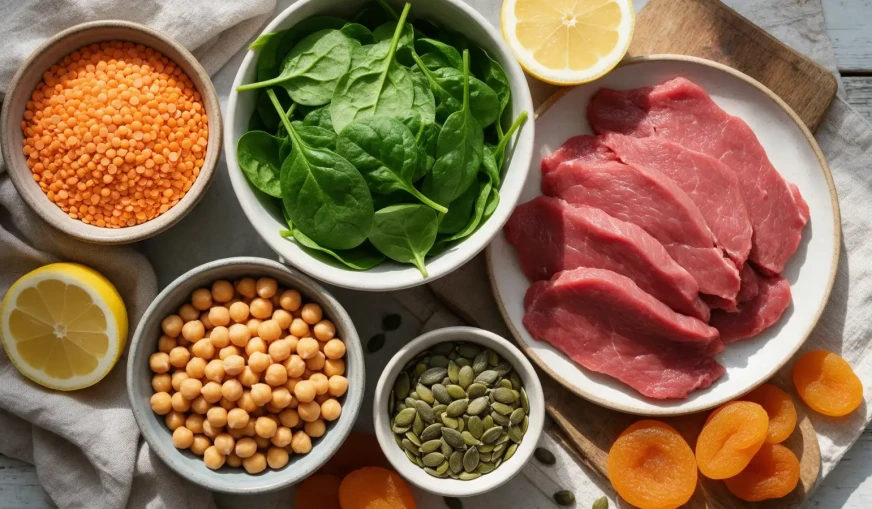
- Red meat, pulses, dark green leafy vegetables, pumpkin seeds and dried fruit are good sources of iron; vitamin C increases absorption.
- Do not drink tea and coffee with meals; use iron supplements only on a doctor's advice.
What Is Iron Deficiency and What Causes It?
Iron is the building block of haemoglobin, which carries oxygen in red blood cells. When the body's iron stores fall, the stores run out first, then haemoglobin drops and iron deficiency anaemia develops.
The NHS notes that iron deficiency anaemia most often arises from blood loss or pregnancy. The most common causes are:
- Blood loss: Heavy periods, hidden bleeding from the digestive system (for example an ulcer) or frequent blood donation
- Increased need: Pregnancy, periods of rapid growth (infancy, childhood, adolescence)
- Inadequate intake: Diets that are poor in iron, monotonous or very restricted
- Absorption problems: Coeliac disease, some stomach operations or the long-term use of certain medicines
Finding the cause is the first step of treatment; so starting a supplement on your own, saying “it must be iron deficiency anyway”, can cause an underlying problem to be missed.
What Are the Symptoms of Iron Deficiency?
Symptoms usually develop slowly and may go unnoticed for a long time. The symptoms listed by the NHS can be grouped in two.
Common symptoms:
- Tiredness and lack of energy
- Shortness of breath, especially on climbing stairs
- Noticeable heartbeat (palpitations)
- Skin that is paler than usual
- Headaches
Less common symptoms:
- Hair loss
- Itching, a sore tongue, sores at the corners of the mouth
- Food tasting different
- Cravings for non-food things such as paper, ice or soil (pica)
- Spoon-shaped nails, a restless legs feeling, difficulty swallowing
- Ringing in the ears
If you have had several of these symptoms for a long time, see your doctor. A simple full blood count and, if needed, extra tests showing iron stores clarify the situation. Your stores may be low even if your haemoglobin is normal; so the results should be interpreted as a whole with your doctor rather than from a single value. For symptoms such as severe shortness of breath, chest pain or fainting, seek urgent assessment without waiting.
Who Is at Greater Risk of Iron Deficiency?
The WHO lists the groups most affected by anaemia as children under five, adolescent girls and women who have periods, and pregnant and postpartum women. In addition, these groups should also be careful:
- People who eat a vegetarian or vegan diet (the absorption of plant-based iron is lower)
- Frequent blood donors and people who do a lot of endurance sport
- People with coeliac disease or inflammatory bowel disease
- People who follow very low-calorie diets and those taking medicines that reduce appetite
Because of the increased blood volume and the baby's needs, iron requirements rise markedly in pregnancy. For advice specific to iron deficiency in pregnancy you can read the article on iron deficiency and anaemia in pregnancy, and for ferritin, the value that shows iron stores, the article on low ferritin. For iron and other micronutrients in pregnancy you can look at the article on vitamin and mineral needs during pregnancy; for people eating mostly plant-based, the article on iron sources for vegans and vegetarians offers a detailed list.
How Much Iron Do You Need a Day?
According to the NHS, the daily iron needs of adults are as follows: 8.7 mg for men aged 19 and over, 14.8 mg for women aged 19–49, and 8.7 mg for women aged 50 and over. The needs of women who still have periods after 50 may be similar to those of younger women.
Needs are higher in pregnancy, and whether you need an iron supplement is decided by your doctor from your blood values. For children and teenagers the need varies with age.
Which Foods Are Rich in Iron?
The iron in food comes in two forms: haem iron in meat, chicken and fish is absorbed more easily; non-haem iron in pulses, vegetables, grains and nuts is absorbed less, though absorption can be raised with the right combinations.
| Food | Portion | Approximate iron |
|---|---|---|
| Red meat (cooked, lean) | 100 g | 2.5–3 mg |
| Sardines (tinned) | 100 g | 2.9 mg |
| Lentils (cooked) | 1 cup (about 200 ml; ~200 g) | 6.5 mg |
| Dried beans (cooked) | 1 cup (about 200 ml; ~180 g) | 6.5 mg |
| Chickpeas (cooked) | 1 cup (about 200 ml; ~165 g) | 4.7 mg |
| Spinach (cooked) | half a cup (~90 g) | 3.2 mg |
| Pumpkin seed kernels | 30 g | 2.5 mg |
| Tahini | 1 tablespoon (15 g) | 1.3 mg |
| Dried apricots | 5–6 (~40 g) | 1.1 mg |
| Egg | 1 | 0.9 mg |
The values are approximate figures based on USDA FoodData Central data; they vary with the product and cooking method. Liver is also a very rich source of iron, but it is not recommended in pregnancy because of its high vitamin A content. The NHS also reminds us to limit red and processed meat; so getting iron not only from meat but also from pulses and vegetables is a balanced approach.
How Can You Increase Iron Absorption?
What you eat matters, and so does what you eat it with. The absorption of plant-based iron is increased by vitamin C; phytic acid in tea, coffee, milk and some wholegrains can reduce absorption.
- Add vitamin C: Squeeze lemon on lentil soup, put a salad with peppers and tomatoes beside dried beans, finish the meal with an orange or a mandarin.
- Combine haem and non-haem iron: Adding a small amount of meat to a vegetable or pulse dish also supports the absorption of plant-based iron.
- Keep tea and coffee apart: Drink them at least an hour before or after a meal.
- Time dairy products: Calcium can affect iron absorption; rather than adding a large amount of milk or yoghurt right next to an iron-rich main meal, have them at snack times.
- Soak pulses: Soaking and cooking them well helps reduce the amount of phytic acid.
An iron-rich sample day
- Breakfast: Eggs with spinach, tomato and green pepper, wholemeal bread; tea an hour after breakfast
- Snack: A handful of pumpkin seeds and a few dried apricots
- Lunch: Lentil soup with lemon, bulgur pilaf with chickpeas, a salad with plenty of greens
- Snack: An orange or a mandarin; yoghurt at a separate time
- Dinner: Dried beans with meat or grilled köfte (Turkish meatballs), a salad with roasted peppers
When Is an Iron Supplement Needed?
When iron deficiency anaemia is diagnosed, your doctor will generally start an iron supplement along with dietary advice and check your blood values at set intervals. The NHS notes that tablets may be taken for about six months and should be taken as your doctor advises.
Do not use high-dose iron on your own. According to the NHS, high doses can cause constipation, nausea, vomiting and abdominal pain; iron tablets left within reach of children can cause serious poisoning. If you have constipation while taking a supplement, increase your fibre and fluid intake and share the complaint with your doctor.
If you have symptoms, see your doctor first; once there is a diagnosis, we can work together within nutrition counselling for medical conditions to support your iron stores through diet and make a plan suited to the likely causes. If you are planning a pregnancy, you can also look at the page on pregnancy preparation to assess your iron stores beforehand.
Sources
This article is for general information only; please consult your doctor and dietitian about your own situation.
Frequently Asked Questions
Does iron deficiency cause hair loss?
Yes, hair loss is among the less common symptoms of iron deficiency. However, because hair loss can have many causes such as thyroid problems, stress and hormonal changes, it needs to be assessed with a blood test.
Can iron deficiency be corrected through diet?
Diet plays an important role in mild deficiencies and in keeping stores up. If anaemia has developed, a supplement recommended by your doctor is often needed as well as diet; the underlying cause (for example heavy periods) must also be treated.
Is pekmez (grape molasses) good for iron deficiency?
Pekmez contains some iron, but it is also a concentrated source of sugar and is not enough on its own to correct a deficiency. It can be eaten in small amounts as part of a balanced diet.
When and with what should an iron supplement be taken?
Decide how to take it according to your doctor's advice. In general, not taking it with tea, coffee and dairy products supports absorption; if it upsets your stomach, taking it with or just after food may be suggested.
Does iron deficiency cause weight gain?
Iron deficiency does not directly cause weight gain; but tiredness and low energy can reduce physical activity. If you notice a change in weight, ask your doctor, together with your thyroid and other values.
Book an appointment for a personalised nutrition plan
The information in this article is general; what you need depends on your age, health and goals. Message us and we will build the plan that suits you together.

This content is for information only. For a personalised nutrition programme, please consult a dietitian.


