

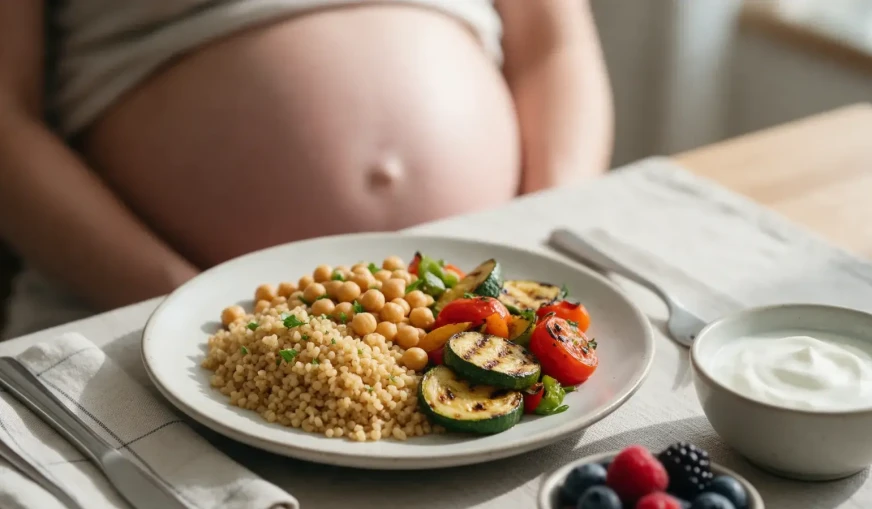
In gestational diabetes, your blood sugar targets are set by your obstetrician and diabetes team; for example, the UK's NICE guideline recommends staying below 5.3 mmol/L (about 95 mg/dL) when fasting and below 7.8 mmol/L (about 140 mg/dL) one hour after a meal. The most powerful tool for reaching these targets is an eating pattern that spreads carbohydrate evenly through the day and includes enough protein and fibre.
A diagnosis of gestational diabetes frightens many mothers-to-be; yet in many women, blood sugar can be kept in the target range with changes to eating and with movement. In some cases medicine or insulin may be needed; this is not a failure, but a precaution taken for your baby.
- Your blood sugar targets and how often you test are set by your doctor.
- The principle is not to cut carbohydrate, but to divide it across meals and adjust its portion and type.
- Having protein and fibre at every meal softens the rise in sugar after eating.
- Breakfast is usually the meal when sugar is most sensitive; it can be planned with less carbohydrate.
- Keeping up check-ups after birth is important for monitoring the risk of type 2 diabetes later on.
What Is Gestational Diabetes and What Causes It?
Gestational diabetes is a condition that first appears during pregnancy and involves blood sugar running higher than normal. Hormones released from the placenta reduce the effect of insulin; when the body cannot produce enough insulin to meet this increased need, blood sugar rises.
Excess weight before pregnancy, a family history of diabetes, gestational diabetes in a previous pregnancy or having had a large baby, and conditions such as polycystic ovary syndrome raise the risk. The diagnosis is usually made with a glucose tolerance test between weeks 24 and 28 of pregnancy; some women need to be tested earlier.
When you are diagnosed, the first weeks are usually the busiest: you learn to test, rearrange your meals and share your results with your team. In this period, instead of trying to be perfect, seeing each reading as information for improving the plan reduces anxiety and makes it easier to stick to.
What Should Blood Sugar Be in Pregnancy?
Target values can vary a little with the person and the guideline used, so follow the targets you have been given. The table below shows the capillary (finger-prick) blood sugar targets recommended in the NICE guideline for women with diabetes in pregnancy, with their mg/dL equivalents.
| Time of test | Target (mmol/L) | Approximate equivalent (mg/dL) |
|---|---|---|
| Fasting (morning, before breakfast) | Below 5.3 | Below 95 |
| 1 hour after a meal | Below 7.8 | Below 140 |
| 2 hours after a meal (if used instead of 1 hour) | Below 6.4 | Below 115 |
Recording your readings regularly makes it easier to see which meal raises your sugar most. As a dietitian, I adjust the eating plan mostly by looking at these records: for example, if only the readings after breakfast are high, rearranging breakfast may be enough instead of changing the whole day. If you use insulin, your doctor will also set a lower limit to guard against low sugar.
Should Carbohydrate Be Cut Out Completely in Gestational Diabetes?
No. Carbohydrate is the main source of energy for both you and your baby, and cutting it out completely is not recommended. The aim is to choose carbohydrate from good-quality sources and to divide it into small portions through the day.
- Prefer: Bulgur, wholegrain bread, oats, dried pulses (lentils, chickpeas, dried beans), vegetables and whole fruit.
- Limit: White bread, white rice pilaf, portions of pasta, mashed potato.
- Keep away from: Sugary drinks, fruit juices, syrupy desserts, and liberal use of sugar, honey, jam and molasses.
Fruit is not banned; however, eating a single portion at a meal and adding a source of protein and fat, such as yoghurt or a few walnuts, helps sugar to rise more slowly. Fruit juice and dried fruit can raise sugar quickly, so they should be used with care.
What Should Your Plate and Meal Pattern Look Like?
The pattern that tends to work well in gestational diabetes is a plan of three main meals and two or three snacks, with protein, vegetables and a moderate amount of carbohydrate at every meal. Long gaps without food and large portions all at once can cause swings in sugar.
A practical start is to give half your plate to vegetables, a quarter to a protein source (eggs, cheese, well-cooked meat, chicken, fish, pulses) and the remaining quarter to wholegrains. Eating the carbohydrate after the vegetables and protein can reduce the rise after the meal in some people.
Why is breakfast more sensitive?
In the morning, insulin resistance can be more marked because of the effect of hormones. So at breakfast, choosing eggs, cheese, olives, plenty of greens and a small slice of wholegrain bread, rather than fruit juice, honey or jam and lots of bread, gives better results in most people.
What Might a Sample Day Look Like?
The example below is only a framework; portions should be adjusted with your dietitian according to your blood sugar readings, your weight and your week of pregnancy.
- Breakfast: Boiled egg, white cheese, olives, tomato and cucumber, plenty of greens, one thin slice of wholegrain bread.
- Snack: A bowl of yoghurt and a few walnut kernels.
- Lunch: Grilled chicken, green beans cooked in olive oil, salad and a few spoonfuls of bulgur pilaf.
- Snack: A small apple and a piece of cheese.
- Dinner: A lentil or chickpea dish, cacık (yoghurt with cucumber) and plenty of salad.
- Evening snack (if your doctor recommends it): A glass of milk, or a few wholegrain crackers with cheese.
Trying to lose weight is not recommended in gestational diabetes; the aim is to eat enough to support the baby's healthy development while keeping blood sugar on target. Your doctor will monitor your weight gain through pregnancy.
How Can You Manage Sweet Cravings, Sweeteners and Eating Out?
Sweet cravings are a common difficulty in gestational diabetes; the safest approach is to meet the need for something sweet with a small portion of fruit, or a sugar-free yoghurt option, straight after a main meal. Eating something sweet on an empty stomach is the situation that raises sugar fastest.
Products labelled "diabetic" or "sugar-free" are not always harmless; they can be high in flour, fat and total energy. Make a habit of looking at the total carbohydrate and sugar on the label when buying packaged products. Also ask for your doctor's advice about using sweeteners in pregnancy.
- Eating out: Ask for grilled meat, chicken or fish with salad and vegetables; choose just one of rice, potato or bread, in a small portion.
- Visiting: Start with the protein and vegetable foods, share dessert or limit it to a few mouthfuls.
- Travelling: Keep planned snacks with you, such as walnuts, almonds or a wholegrain sandwich with cheese; avoid long gaps without eating.
Do Movement and Sleep Affect Blood Sugar?
Yes. A gentle 10 to 15 minute walk after a meal can help the muscles use sugar from the blood and may lower the readings after eating. The type and length of exercise that is suitable in pregnancy must always be discussed with your doctor.
Poor sleep and stress can also affect blood sugar. Regular sleep times, not leaving dinner too late and remembering to drink water through the day are complementary parts of the plan.
When Should You See Your Doctor Straight Away?
If you use insulin or medicine, then with signs of low sugar such as shaking, sweating, palpitations and blurred vision, take sugar straight away in the way you have been taught and let your doctor know. If your readings are constantly above target, share them with your team without waiting for your plan.
Symptoms such as a severe headache, visual disturbance, sudden swelling of the face or hands, bleeding, or reduced movements of the baby need urgent assessment regardless of blood sugar. For general principles of eating with diabetes, you can also look at the article on correct eating for people with diabetes.
After birth, blood sugar returns to normal in most women; however, because the risk of type 2 diabetes rises later, it is important not to miss postnatal check-ups. The article on eating with insulin resistance may be a guide to healthy weight management in this period.
If you have been diagnosed with gestational diabetes, you can look at my page on nutrition counselling in pregnancy for a plan that is updated according to your readings, in line with your obstetrician's advice. The article on vitamin and mineral needs in pregnancy will also be useful for the basic recommendations for the whole of pregnancy.
Sources
- NICE NG3 – Diabetes in pregnancy: management from preconception to the postnatal period
- NHS – Gestational diabetes
- NIDDK – Gestational Diabetes
- ACOG – Gestational Diabetes
This article is for general information only; please consult your doctor and dietitian about your own situation.
Frequently Asked Questions
What should fasting blood sugar be in pregnancy?
Your doctor decides your target value. For example, the NICE guideline recommends that, for women with diabetes in pregnancy, fasting blood sugar be kept below 5.3 mmol/L, that is, about 95 mg/dL. If the target you have been given is different, follow that one.
Can I eat fruit with gestational diabetes?
Yes, but portion and timing matter. Eating a single portion of whole fruit at a meal, adding yoghurt or a few walnuts, and avoiding fruit juice helps blood sugar to stay steadier.
Does gestational diabetes harm the baby?
High blood sugar that is not brought under control can lead to the baby growing too large and to some problems at birth. These risks can be reduced noticeably with regular monitoring, suitable eating and, if needed, treatment started by your doctor.
Does gestational diabetes go away after birth?
In most women, blood sugar returns to normal after birth. However, because the risk of type 2 diabetes rises in later years, it is important to have the tests recommended after birth and to keep up healthy eating habits.
Should bread be given up completely with gestational diabetes?
No, bread and grains should not be given up completely. Choosing wholegrain bread instead of white bread, in small portions spread across meals, both meets your energy needs and helps keep blood sugar steady.
Book an appointment for a personalised pregnancy nutrition plan
Nutritional needs in pregnancy change with the week of pregnancy, weight change and test results. Message us for a plan that fits your doctor's advice.

This content is for information only. For a personalised nutrition programme, please consult a dietitian.


