

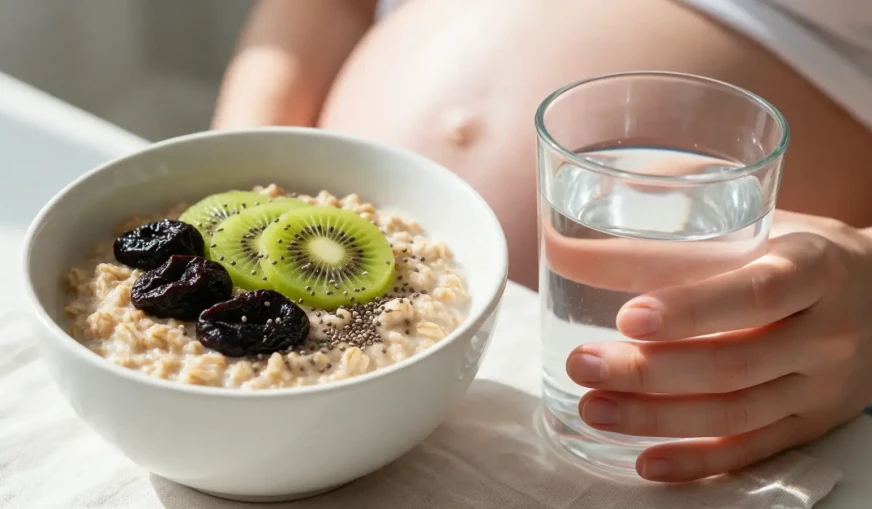
The three things that help most with constipation in pregnancy are fibre, fluids and movement: raising the fibre from vegetables, fruit, pulses and wholegrains gradually, drinking enough water through the day, and moving about every day to the extent your doctor approves. Foods such as prunes, kiwi and oats also ease the bowels in many expectant mothers. Laxatives and herbal “cures”, on the other hand, should be used only on a doctor's advice.
Constipation can start in the very early weeks of pregnancy and can become noticeable again in the last months. The good news is that simple changes to eating and lifestyle often bring marked relief. Below you will find the causes, fibre-rich foods and a practical daily plan.
- Hormonal changes in pregnancy slow bowel movements; the growing womb and iron supplements can also increase constipation.
- Raise fibre not all at once but gradually over a few days, and raise water together with it.
- Prunes, kiwi, pears, oats, pulses and wholegrains are good options.
- If an iron supplement causes constipation, do not stop it on your own; talk to your doctor.
- See a doctor for blood in the stool, severe abdominal pain or constipation that lasts a long time.
Why Does Constipation Happen in Pregnancy?
The hormone progesterone, which rises in pregnancy, relaxes the muscles of the bowel and slows the passage of food through it. This slowing means the stool stays in the bowel longer, loses more water and hardens; so going to the toilet becomes both less frequent and harder. The NHS notes that, because of these hormonal changes, constipation can begin very early in pregnancy.
In the later weeks, pressure from the growing womb on the bowel, reduced movement, changed eating because of nausea and inadequate fluid intake add to the picture. The iron supplements often recommended in pregnancy also increase constipation markedly in some expectant mothers.
Why Does Fibre Matter, and How Much Do You Need a Day?
Fibre adds bulk to the stool and holds water so that it stays softer. The World Health Organization recommends that everyone over 10 years old gets at least 25 grams of fibre a day from natural sources; most adults fall below this amount.
The NHS also recommends raising fibre gradually in constipation. Doubling fibre in one day can increase gas and bloating; adding a new source of fibre to one meal each day makes for a more comfortable transition. You can find more detail on the effects of fibre on the digestive system in the article on the effects of high-fibre foods on the digestive system.
If you get gas and bloating as you raise fibre
When the amount of fibre goes up, gut bacteria ferment that fibre and gas and bloating can increase in the first days. This is usually temporary. If the complaint is marked, start pulses in small portions, soak them well and pour away the cooking water, and flavour them with spices such as cumin and thyme. Preferring cooked vegetables to raw for a while, and spreading fruit through the day rather than eating it all at once, also helps.
In the first weeks when nausea is strong, high-fibre meals can be hard to tolerate. In this period you can start with options that do not tax the stomach, such as toasted wholemeal bread, oat porridge, banana and boiled potatoes, and raise fibre as the nausea eases; the article on nausea during pregnancy can also guide you for this period.
Which Foods Help With Constipation in Pregnancy?
The main sources of fibre are vegetables, fruit eaten with the skin, pulses, wholegrains and seeds. The values below are approximate figures based on USDA FoodData Central data.
| Food | Portion | Approximate fibre |
|---|---|---|
| Lentils (cooked) | 1 cup (about 200 ml; ~200 g) | 15 g |
| Chickpeas (cooked) | 1 cup (about 200 ml; ~165 g) | 12 g |
| Bulgur (cooked) | 1 cup (about 200 ml; ~180 g) | 8 g |
| Pear (with skin) | 1 medium | 5.5 g |
| Broccoli (cooked) | 1 cup (about 200 ml) | 5 g |
| Kiwi | 2 | 4.5 g |
| Apple (with skin) | 1 medium | 4.4 g |
| Rolled oats | 4 tablespoons (~40 g) | 4 g |
| Chia seeds | 1 tablespoon (~12 g) | 4 g |
| Wholemeal bread | 2 thin slices | 3.5–4 g |
| Prunes | 5 (~45 g) | 3 g |
Prunes and kiwi are often recommended for constipation because, as well as fibre, they contain other compounds that support bowel movements. Soaking prunes in water overnight and eating them with their liquid in the morning is a practical method. If you use chia or flaxseed, always take them with enough water.
How Much Water Should You Drink?
Fibre works only together with enough fluid; when water is low, fibre can increase constipation instead of softening the stool. The NHS recommends drinking plenty of water and other fluids in constipation.
Keep a water bottle with you through the day and drink a glass of water with each meal and also between meals. Ayran (Turkish salted yoghurt drink), kefir, soup and watery vegetable dishes also add to your fluid intake. For some expectant mothers, a glass of warm water on waking gets the bowels moving. Pale yellow urine is a rough sign that you are getting enough fluid; your needs rise in hot weather and during periods of vomiting. If you do not want to get up to the toilet often at night, try taking most of your fluid during the daytime; but do not go thirsty in the evening either. Sugary drinks and fruit juices meet fluid needs but add unnecessary sugar and calories; put water, mineral water and ayran first instead.
How Do Movement and Toilet Habits Help?
Regular movement exercises the muscles of the bowel too. The NHS recommends regular exercise to prevent constipation in pregnancy; walking, swimming and pregnancy yoga are suitable options for most expectant mothers. Talk to your doctor about which activity suits you.
- Take time for the toilet without rushing at the same time every day, especially after breakfast.
- Do not put off the urge to go.
- Putting a low stool under your feet at the toilet and keeping your knees above your hips can make passing stool easier.
- A 10–15 minute walk after a meal helps both digestion and blood sugar balance.
A sample day that helps constipation
- Morning: A glass of warm water on waking; rolled oats, milk or yoghurt, kiwi and a tablespoon of chia seeds
- Snack: 4–5 prunes soaked overnight and a glass of water
- Lunch: Green beans or broccoli cooked in olive oil, bulgur pilaf, cacik (Turkish yoghurt and cucumber dip)
- Snack: A pear with its skin and a few walnut kernels
- Dinner: A lentil or chickpea dish, wholemeal bread, a salad with plenty of greens
Iron Supplements and Laxatives: What Should You Watch For?
An iron supplement is often recommended in pregnancy according to blood values and is important for the baby's development. So if the supplement causes constipation, do not stop it on your own. In this case the NHS advises asking your doctor whether you can take a break from the supplement or switch to a different type. Raising fibre and fluids along with the supplement can also ease the complaint. Adding iron-rich foods to your meals and drinking tea and coffee apart from meals are practical ways of supporting your iron needs through diet.
Laxatives, herbal teas and “bowel-cleansing” products should be used in pregnancy only when your doctor or pharmacist recommends them; some herbal products are not suitable in pregnancy. You can look at the article on what not to eat during pregnancy for foods and drinks to avoid in pregnancy.
When Should You See a Doctor?
See your doctor if constipation continues despite changes to your eating and lifestyle habits, or if any of the following applies:
- Blood in the stool or black-coloured stool
- Severe abdominal pain or pain that does not go away
- Being unable to pass gas or stool for a few days, vomiting
- Constipation alternating with diarrhoea
- Painful swelling or bleeding at the anus (could be haemorrhoids, which are common in pregnancy)
Constipation is also linked with the gas and bloating that are common in pregnancy; if you have heartburn, the suggestions in the article on what helps heartburn in pregnancy may also help. For a personal nutrition plan that takes your digestive complaints into account throughout pregnancy, we can work together, in line with your obstetrician's advice, within nutrition counselling for pregnancy.
Sources
This article is for general information only; please consult your doctor and dietitian about your own situation.
Frequently Asked Questions
Does constipation in pregnancy harm the baby?
Constipation does not usually harm the baby, but it can be quite uncomfortable for the mother and can raise the risk of haemorrhoids. If you have symptoms such as severe abdominal pain or bleeding, see your doctor.
How many prunes can you eat in pregnancy?
For most expectant mothers, 4–5 prunes a day is a sensible starting point. Because dried fruit is dense in sugar and calories, do not overdo the amount, and remember to drink enough water.
Is olive oil good for constipation in pregnancy?
Used in moderation in cooking, olive oil makes it easier to eat vegetables and is part of a balanced diet. Practices such as drinking a spoonful of olive oil on an empty stomach have no proven benefit in pregnancy, and they also add to the calorie load.
Can you use an enema or suppositories in pregnancy?
Use enemas, suppositories and laxatives only when your doctor or pharmacist recommends them. There are options considered safe in pregnancy, but a healthcare professional must decide which suits you.
Is there constipation after birth too?
Yes, constipation is common in the days after birth. Plenty of fluids, high-fibre foods and getting moving as early as possible help in this period too; if you are breastfeeding, your fluid needs rise further.
Book an appointment for a personalised pregnancy nutrition plan
Nutritional needs in pregnancy change with the week of pregnancy, weight change and test results. Message us for a plan that fits your doctor's advice.

This content is for information only. For a personalised nutrition programme, please consult a dietitian.


