

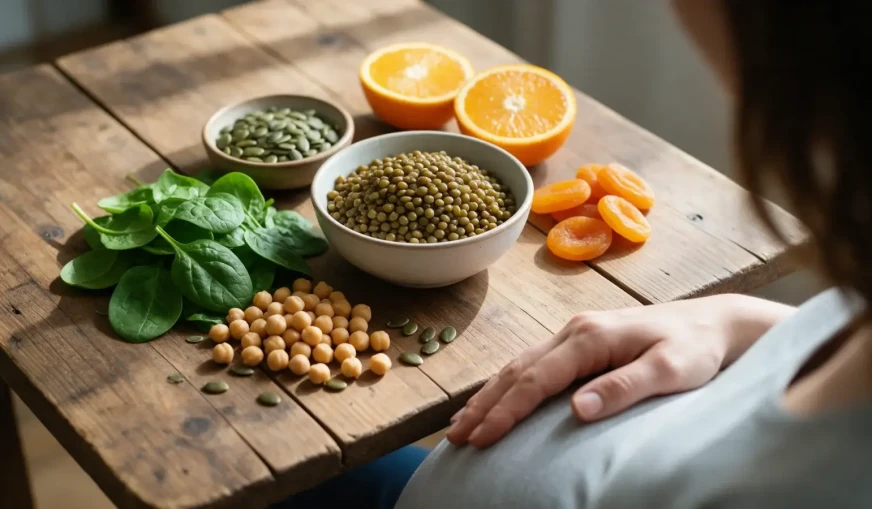
Iron deficiency in pregnancy arises when the need for iron rises markedly with the baby's growth and the mother's expanding blood volume, but diet and iron stores cannot keep up with the increase. The most effective steps in this period are to take regularly the iron support your obstetrician recommends, to eat well-cooked red meat, chicken, fish, pulses and dark green vegetables together with sources of vitamin C, and to keep tea apart from meals.
Anaemia is one of the most common problems in pregnancy. The Turkish Nutrition Guide (TÜBER 2022) stresses that anaemia due to iron deficiency in pregnancy is linked with consequences such as preterm birth, low birth weight and inadequate weight gain in the mother. In this article I explain the symptoms, iron-rich foods and how to arrange your diet when using a supplement.
- The need for iron in pregnancy rises because of the increased blood volume and the baby's development.
- Tiredness, getting tired easily, pallor, shortness of breath and dizziness can be symptoms of iron deficiency.
- Iron from animal sources (haem) is absorbed better than that from plant sources.
- The absorption of plant-based iron increases with vitamin C; tea and coffee reduce absorption.
- Your doctor decides on the iron supplement and its dose; do not start or stop it on your own.
Why Does the Need for Iron Increase in Pregnancy?
In pregnancy the mother's blood volume rises considerably, the placenta and baby develop, and the baby builds up in the womb the iron stores it will use in the first months after birth. For this reason iron needs in pregnancy are markedly higher than those of a woman who is not pregnant, and they rise especially in the second and third trimesters.
According to TÜBER, the daily iron requirement is 16 mg in adult women, while in pregnancy this rises to a range of 16–27 mg. Because it is often hard to meet this increase through diet alone, iron support is given to pregnant women from a certain week under the Ministry of Health programme. The dose and duration of the support are set by your doctor according to your blood values.
What Are the Symptoms of Iron Deficiency in Pregnancy?
When iron deficiency is mild it may cause no symptoms and is noticed on a routine blood test. When it is marked, it leads to complaints that can be confused with the natural tiredness of pregnancy.
- More tiredness than usual and getting tired easily
- Pallor of the skin, lips and the inside of the eyelids
- Shortness of breath, a feeling of palpitations
- Dizziness, headache, difficulty concentrating
- Hair loss, brittle nails
- Cravings for non-food substances such as ice, soil and starch (pica)
These symptoms can have other causes too. Diagnosis is made with tests such as haemoglobin and ferritin; because the threshold values used in pregnancy differ from those for women who are not pregnant, your doctor interprets your results. You can find more detail on what the ferritin value tells you in the article on iron deficiency symptoms and iron-rich foods.
Which Foods Are Rich in Iron in Pregnancy?
Iron occurs in food in two forms: haem iron in meat, chicken and fish is absorbed more easily; non-haem iron in pulses, leafy green vegetables, eggs, dried fruit and pekmez (grape molasses) is absorbed at a lower rate. Combining the two in the same meal also raises the absorption of plant-based iron.
The values below are approximate figures based on USDA and TürKomp (the Turkish food composition database) data; they vary with cooking method and the type of product.
| Food and portion | Approximate iron | Note in pregnancy |
|---|---|---|
| 1 bowl (200 g) cooked lentils | 6–7 mg | Add a salad with lemon alongside |
| 1 bowl (200 g) cooked chickpeas | 5–6 mg | Boil well for digestion |
| 100 g cooked red meat | 2.5–3 mg | Cook thoroughly so no pink remains |
| 100 g cooked spinach | 3–3.5 mg | Eating it with lemon rather than yoghurt supports absorption |
| 30 g pumpkin seeds (raw, unsalted) | 2.5 mg | Choose unsalted |
| 1 egg | 0.9 mg | Eat it hard-cooked |
| 5 (40 g) dried apricots | 1 mg | Watch the portion because of the sugar content |
Although liver is very rich in iron, it is not recommended in pregnancy because it contains very high levels of vitamin A. The NHS also advises avoiding liver and liver products in pregnancy. Safe options for iron are red meat, chicken, fish and pulses.
What Can You Do to Increase Iron Absorption?
Eating plant sources of iron together with foods containing vitamin C and keeping tea and coffee apart from meals are the simplest ways of increasing absorption. TÜBER recommends having tea and coffee not with meals but at least half an hour after them; waiting an hour is also often advised in practice.
- Combine with vitamin C: A tomato and pepper salad alongside a lentil dish, lemon on chickpeas, an orange or a mandarin with breakfast.
- Combine haem and non-haem iron: Traditional dishes such as dried beans with meat and spinach with mince are good examples in this respect.
- Keep tea and coffee apart: Drink tea at breakfast not with the meal but after it.
- Mind the timing with calcium: If you have an iron supplement, you may be asked not to take it at the same time as milk and yoghurt; ask your doctor about timing.
Small details in cooking make a difference too. Soaking pulses overnight and pouring away the water before cooking reduces some of the compounds that lower absorption and makes them easier to digest. Cooking vegetables briefly rather than boiling them for a long time limits the loss of vitamin C. Meat, on the other hand, must always be cooked thoroughly in pregnancy so that no pink remains on the inside.
How Should You Arrange Your Diet When Using an Iron Supplement?
Iron supplements can cause constipation, nausea, stomach pain and darkening of the stool in some women. These complaints are not a reason to stop the supplement but a sign to talk to your doctor and adjust your eating.
- For constipation, increase high-fibre foods such as vegetables, fruit, wholegrains and pulses, and drink water spread through the day.
- Foods such as prunes, kiwi and flaxseed can support bowel regularity.
- Decide at what time and with what you take the supplement according to your doctor's advice; the timing can be changed if it upsets your stomach.
- If your complaints continue, do not stop the supplement on your own; your doctor may suggest a different form.
You can look at the article on vitamin and mineral needs during pregnancy to plan iron in balance with other vitamins and minerals in pregnancy.
Who Is at Higher Risk of Iron Deficiency?
Some pregnant women are at greater risk of iron deficiency and may need their tests monitored more closely. In these cases it is important to set up the nutrition plan earlier and more carefully too.
- Those who had heavy periods or known iron deficiency before pregnancy
- Those who become pregnant at short intervals; WHO recommends waiting at least 24 months between pregnancies
- Twin or multiple pregnancies
- Those who eat a vegetarian or vegan diet
- Those who have severe nausea and vomiting for a long time in the first trimester
- Those with a condition affecting absorption, such as coeliac disease
If you are in one of these groups, be sure to tell your doctor at your first check-ups.
A Sample Pregnancy Day for Iron
The example below shows a day that combines haem and non-haem iron with vitamin C and keeps tea apart from meals. Portions should be adjusted to your week of pregnancy and any conditions such as gestational diabetes.
- Breakfast: Hard-cooked egg, cheese, tomato, green pepper, parsley, wholegrain bread; a mandarin alongside. Tea an hour after breakfast.
- Snack: A few dried apricots and a handful of unsalted pumpkin seeds.
- Lunch: Lentil soup, a rocket and tomato salad with lemon, bulgur pilaf.
- Snack: Yoghurt and a portion of fruit.
- Dinner: Spinach with mince or dried beans with meat, with a çoban salatası (Turkish shepherd's salad) alongside.
Meeting iron needs takes more planning for vegetarian pregnant women. The article on vegetarian eating in pregnancy can guide you on this.
When Should You See a Doctor Straight Away?
If you have marked shortness of breath, chest pain, a feeling of fainting, a very fast heartbeat or severe tiredness, see your doctor without waiting for dietary advice. Bleeding in pregnancy always needs urgent assessment.
If you have been diagnosed with anaemia in pregnancy and would like a nutrition plan that fits with your supplement, we can work together, in line with your obstetrician's advice, within nutrition counselling for pregnancy.
Sources
- Turkish Ministry of Health – Turkey Nutrition Guide (TÜBER) 2022
- WHO – Anaemia
- NHS – Iron deficiency anaemia
- NHS – Foods to avoid in pregnancy
This article is for general information only; please consult your doctor and dietitian about your own situation.
Frequently Asked Questions
Does iron deficiency in pregnancy harm the baby?
Marked untreated iron deficiency anaemia is linked with risks such as preterm birth and low birth weight and makes the mother feel very tired. These risks can be reduced with regular tests, the supplement your doctor recommends and suitable eating.
Is pekmez (grape molasses) good for anaemia in pregnancy?
Pekmez contains plant-based iron, but its absorption is limited and its sugar content is high. It does not correct anaemia on its own and does not take the place of the supplement your doctor recommends or of sources such as well-cooked meat and pulses. If you have gestational diabetes, use pekmez with care.
Can you drink milk at the same time as an iron supplement?
The calcium in milk and dairy products can reduce iron absorption. So it is better to take your supplement not at the same time as milk, yoghurt or tea but at the time your doctor recommends.
What should I do if my iron supplement causes constipation in pregnancy?
Increasing high-fibre foods and water, and moving about to the extent your doctor approves, often brings relief. If your complaint continues, rather than stopping the supplement yourself, talk to your doctor about a different form or timing.
Can you eat liver for anaemia in pregnancy?
Although liver is rich in iron, it is not recommended in pregnancy because it contains a very high amount of vitamin A. Well-cooked red meat, chicken, fish and pulses are safer options for your iron needs.
Book an appointment for a personalised pregnancy nutrition plan
Nutritional needs in pregnancy change with the week of pregnancy, weight change and test results. Message us for a plan that fits your doctor's advice.

This content is for information only. For a personalised nutrition programme, please consult a dietitian.


