

Pregnancy Nutrition
Personal nutrition support through every trimester, planned around your test results and routine, in line with your obstetrician's advice.
The ketogenic diet is a very low-carbohydrate, high-fat eating plan. It is not suitable for everyone and should only be followed with professional supervision.
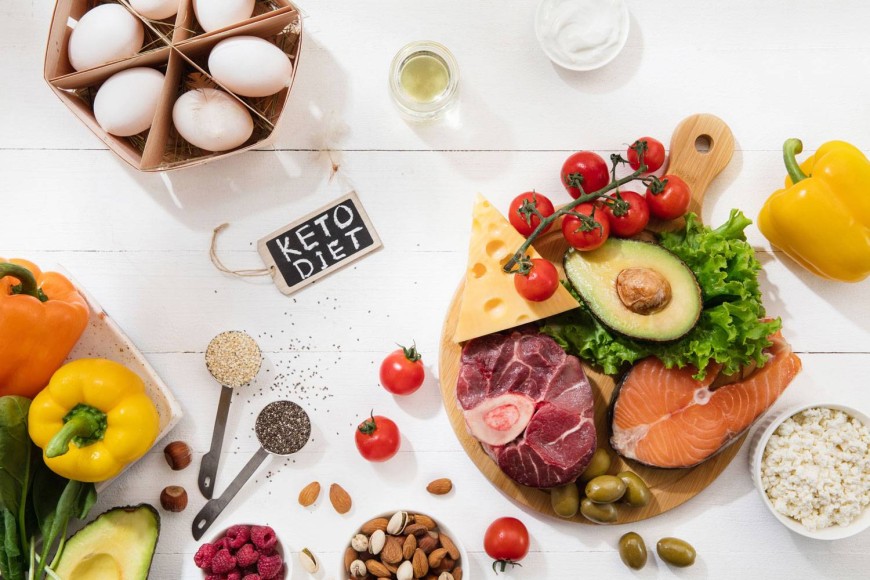
There are many types of diet, and the ketogenic (keto) diet is one of the most talked about. It changes the balance of nutrients in a very specific way, so it is important to understand how it works, what it can and cannot do, and whether it suits you before you start. I only use it with clients for whom it is appropriate, under close follow-up and in line with their doctor's advice.
The ketogenic diet is a high-fat, moderate-protein and very low-carbohydrate way of eating. Because carbohydrate intake is so low, many nutrient-rich foods that contain carbohydrate, such as fruit, grains, legumes and some dairy products, are strongly limited or left out. For most people this means a major change in eating habits.
When the body does not get enough carbohydrate, it shifts from using glucose to using fat for energy. In this state, called ketosis, the liver produces ketones, which become a main fuel for the heart, kidneys and muscles and an alternative fuel for the brain. The diet was first developed in the medical setting to help manage epilepsy, and research still supports its use there as part of treatment. Evidence on its long-term effects on weight and other health outcomes is still developing.
A classic ketogenic plan provides roughly:
More moderate versions exist, and the right ratios depend on your health, activity and goals. Reaching ketosis usually takes more than a week, and even a small excess of carbohydrate can prevent it, so food quantities need careful planning. Typical food sources are meat, chicken, turkey, fish, eggs and cheese for protein; low-carbohydrate vegetables for carbohydrate; and olive oil, butter, ghee, tahini, nuts and seeds for fat. People who follow it for longer periods usually need attention to vitamins, minerals and fibre.
Research into its role in other neurological conditions is ongoing, and long-term studies are still limited.
A ketogenic diet should not be started without your doctor's approval if you have, or have had:
It is also not suitable for children and teenagers who are still growing (except as medical therapy), or during pregnancy and breastfeeding. If you are pregnant or planning a pregnancy, see pregnancy nutrition instead. If you are using weight-loss medication prescribed by your doctor, a very restrictive diet is generally not the right starting point; see nutrition support while using GLP-1 medication.
Before considering keto, we review your health history, medication and recent blood tests. If it is appropriate, I prepare a plan with suitable food choices and quantities, monitor how you feel and how your tests change, and plan a gradual transition back to a broader eating pattern. For many people, a less restrictive approach such as the Mediterranean diet is easier to keep up. Results vary from person to person.
No. It carries real risks and is unsuitable for several groups, which is why it should only be followed with professional supervision and your doctor's approval.
This depends on your health and goals. Long-term evidence is limited, so most plans are time-limited and regularly reviewed, with blood tests where needed.
Yes. Consultations are held in English by video call, and follow-up between sessions is available via WhatsApp.
If you are thinking about a ketogenic diet and want to know whether it suits you, contact me or send a message on WhatsApp.
Fill in the form and we will get back to you.
This content is for information only. For a personalised nutrition programme, please consult a dietitian.
Personal nutrition support through every trimester, planned around your test results and routine, in line with your obstetrician's advice.

Work with an English-speaking specialist dietitian by video call from anywhere: personal plans adapted to where you live, with weekly follow-up.

A personalised, habits-first weight management plan with a specialist dietitian, online in English or in person in Istanbul.