

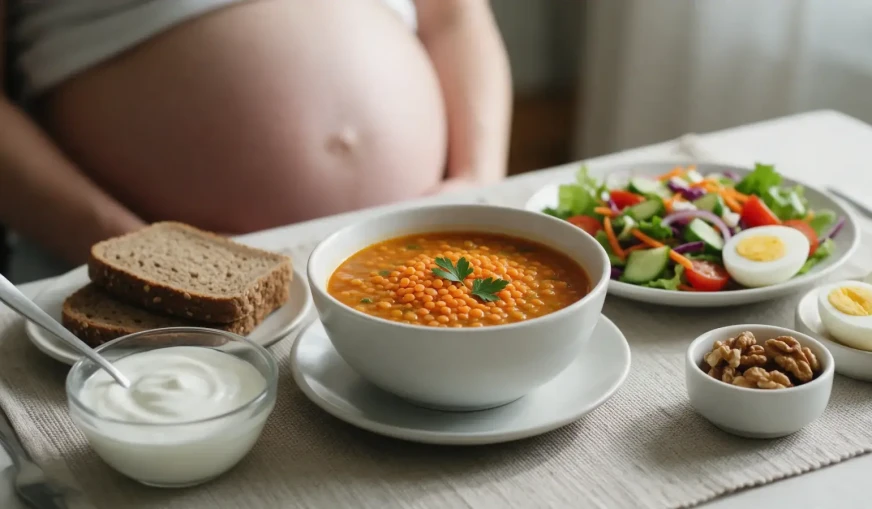
There is no single food that makes the baby in the womb gain weight. The baby's growth is determined by how well the placenta works, the mother's health, her weight before pregnancy and the whole of her eating through pregnancy. The most effective thing you can do to support healthy growth is to build a balanced eating pattern with enough energy, protein, iron, folate, iodine, calcium and omega-3, and to keep up your check-ups regularly.
Expectant mothers who hear “the baby is a bit small” or “the baby is big” after a scan often turn to the kitchen. Yet eating more sweets to make the baby grow raises the mother's weight and risk of gestational diabetes without necessarily giving the expected benefit to the baby. In this article I explain what really affects the baby's growth and the place of diet in this picture. Every suggestion should be applied in line with your obstetrician's assessment.
- There is no magic food that makes a baby “put on weight”; the baby's growth is determined by the placenta, the mother's health and the whole of her eating.
- Extra sugar and sweets mainly make the mother grow, not the baby; gestational diabetes, on the other hand, can lead to a baby that is too large.
- Protein, iron, folate, iodine, calcium, vitamin D and omega-3 are the nutrients that stand out for the baby's development.
- If your doctor has said the baby is small, the cause is looked into; diet is a part of that plan, not the only answer.
- Dates, walnuts, pekmez (grape molasses) and milk can be part of a balanced diet, but they are not foods that “make the baby grow”.
Is There a Food That Makes the Baby Gain Weight?
No. The baby takes the nutrients it needs from the mother's blood through the placenta. So the baby's growth depends not on a single food but on the mother's overall nutritional state, how well the placenta carries those nutrients and the baby's own growth potential.
However many calories a food has, it does not on its own solve a growth problem linked to the placenta. On the contrary, syrupy desserts, pastries and sugary drinks eaten “so the baby grows” quickly raise the mother's weight. As the NHS stresses, gaining too much weight in pregnancy can raise the risk of gestational diabetes and high blood pressure; and gestational diabetes can lead to a baby larger than normal and difficulties at birth.
What Affects the Baby's Birth Weight?
Birth weight is the joint result of many factors. Some of them relate to diet, and some are conditions that need medical follow-up altogether.
- How the placenta works: If the placenta cannot provide enough blood flow, the baby's growth can slow.
- The mother's health: High blood pressure, pre-eclampsia, some chronic illnesses and infections can affect growth.
- Gestational diabetes: Blood sugar that is not under control can lead to excessive growth of the baby.
- Pre-pregnancy weight and weight gain in pregnancy: According to the NHS, gaining very little weight is linked with preterm birth and low birth weight (under 2.5 kg).
- Smoking and alcohol: Preventable factors that affect the baby's growth negatively.
- Genetics and family traits: The build of the mother and father also affects the baby's size; not every small baby is unwell.
You can check how much weight is suitable to gain in pregnancy, according to your pre-pregnancy body mass index, from the tables in the article on how much weight to gain in pregnancy.
Which Nutrients Matter for the Baby's Development?
Some nutrients stand out for the baby's growth and the development of its organs. Getting these every day from a variety of foods is far more effective than relying on a single “superfood”.
| Nutrient | Why does it matter? | Good sources |
|---|---|---|
| Protein | The building block of the baby's tissues, the placenta and the mother's increased blood volume | Eggs, dairy products, meat, chicken, fish, pulses |
| Energy (good-quality carbohydrate and fat) | The fuel for growth; needs rise especially in the second and third trimesters | Wholegrains, bulgur, potatoes, olive oil, nuts |
| Iron | Blood production for mother and baby, the baby's iron stores | Red meat, lentils, chickpeas, dark green leafy vegetables |
| Folate (folic acid) | Nervous system development and cell division | Leafy green vegetables, pulses, oranges; plus the supplement your doctor recommends |
| Iodine | The baby's brain development and thyroid function | Iodised salt, dairy products, fish, eggs |
| Calcium and vitamin D | Bone and tooth development | Milk, yoghurt, cheese, sardines; for vitamin D, your doctor's advice |
| Omega-3 (DHA) | Brain and eye development | Low-mercury oily fish such as salmon, sardines and anchovies |
The NHS stresses the importance of folic acid and vitamin D supplements in pregnancy; which supplement you use and at what dose is for your doctor to decide. You can look at the article on vitamin and mineral needs during pregnancy for detailed information on micronutrients, and the article on which fish can be eaten during pregnancy for choosing fish safely.
A sample day that supports the baby's development
- Breakfast: Egg, cheese, tomato, cucumber, greens, wholemeal bread, a few walnut kernels
- Snack: Yoghurt and a portion of fruit
- Lunch: Dried beans with meat or a lentil dish, bulgur pilaf, salad
- Snack: Milk or ayran (Turkish salted yoghurt drink), a handful of dried apricots and hazelnuts
- Dinner: Baked salmon or chicken, vegetables, potato or wholegrains, cacik (Turkish yoghurt and cucumber dip)
My Doctor Said “The Baby Is Small”: What Should I Eat?
First, do not panic and do not change your eating a great deal on your own. There can be many reasons why the baby's estimated weight is found to be lower than expected; measurement differences, family build or placenta-related conditions are some of them. Your doctor will plan the follow-up and tests they think necessary.
What can be done on the nutrition side is as follows:
- Do not skip meals; keep your energy intake regular with three main meals and two or three snacks.
- Have a protein source at every meal.
- If you can only eat a little because of nausea or poor appetite, add small but nutrient-dense snacks: yoghurt and fruit, wholemeal bread with cheese, nuts, milk.
- If your iron or other values are low, use the supplements your doctor recommends regularly.
- If you smoke or are exposed to smoke, talk to your doctor about it.
If your appetite is good but your weight gain is still slow, try raising the nutrient density of meals rather than making portions bigger: small touches such as a spoonful of yoghurt in soup, chickpeas or cheese in a salad and a handful of walnuts at breakfast provide energy and protein without adding to the sugar load. Watching your weight gain and the baby's growth trend together at check-ups lets you see which change is working.
These suggestions are aimed at making sure the mother eats enough. If there is a medical problem with the baby's growth, diet does not replace the follow-up your doctor recommends.
My Doctor Said “The Baby Is Big”: What Should I Do?
If the baby is found to be large, your doctor will usually assess you for gestational diabetes. In that case, limiting sweets and sugary drinks, spreading carbohydrate evenly across meals and adding protein and fibre to every meal become important.
However, skipping meals or going on a diet because “the baby is big” is not right; the baby's needs continue. If you have been diagnosed with gestational diabetes, you can put into practice, together with your doctor, the advice in the gestational diabetes nutrition guide.
Do Dates, Walnuts, Pekmez and Milk Make the Baby Grow?
None of these foods makes the baby grow directly, but all of them can be part of balanced eating in pregnancy. The problem is eating them without measure “so that the baby grows”.
- Dates: They contain fibre and potassium but are also dense in sugar. A few a day is a sensible amount; for details you can look at the article on whether you can eat dates during pregnancy.
- Walnuts and other nuts: They provide healthy fat, protein and plant omega-3; a handful is enough, and more quickly raises the calorie load.
- Pekmez: It contains some iron but is a concentrated source of sugar; it does not correct iron deficiency on its own.
- Milk and dairy products: Important for calcium and protein; two or three portions a day are enough for most expectant mothers. Stay away from unpasteurised milk and dairy products in pregnancy.
You can look at the article on what not to eat during pregnancy for the list of foods not to eat in pregnancy. For an individual plan that takes both your baby's development and your own needs into account, we can work together, in line with your obstetrician's advice, within nutrition counselling for pregnancy.
Sources
- NHS – Weight gain in pregnancy
- NHS – Have a healthy diet in pregnancy
- NHS – Gestational diabetes
- NHS – Pregnancy vitamins and supplements
This article is for general information only; please consult your doctor and dietitian about your own situation.
Frequently Asked Questions
Does eating a lot in pregnancy make the baby grow?
Eating a lot raises the mother's weight more than the baby's. The baby's needs rise by a certain amount and this rise can mostly be met with one or two snacks; excess weight gain, on the other hand, can raise risks such as gestational diabetes.
In which week does the baby's weight gain speed up?
The baby's weight gain speeds up especially in the third trimester. It is important in this period to keep eating in a balanced way and to attend your check-ups regularly; your doctor assesses whether growth is on track with scans and examinations.
Can I use protein powder because the baby is small?
Do not use protein powder or similar products in pregnancy on your own. Protein needs can often be met with eggs, dairy products, meat, fish and pulses; if an extra product is needed, your doctor and dietitian should assess it.
Does eating sweets in pregnancy make the baby gain weight?
Sweets make the mother, rather than the baby, gain weight, and make blood sugar swing. Blood sugar that is not under control can lead to a baby that is too large; that is why it is healthier to limit sweets to small portions.
How is a baby's weight measured in the womb?
The baby's weight is estimated from scan measurements; these estimates have a certain margin of error. So the growth trend across successive check-ups is assessed rather than a single measurement.
Book an appointment for a personalised pregnancy nutrition plan
Nutritional needs in pregnancy change with the week of pregnancy, weight change and test results. Message us for a plan that fits your doctor's advice.

This content is for information only. For a personalised nutrition programme, please consult a dietitian.


