

The main foods to avoid in pregnancy are raw or undercooked meat, chicken, eggs and fish; unpasteurised milk and products made from it; liver and liver products; high-mercury fish such as swordfish and shark; and alcohol. Caffeine is not completely forbidden, but should be limited to 200 mg a day.
Most of these rules are not there because the foods are "unhealthy", but because of the risk of infections such as listeria, salmonella and toxoplasma, or because of high levels of vitamin A and mercury that can harm the baby. The good news is that the list of foods to avoid is not as long as many people think, and most foods can be eaten safely with the right cooking and hygiene. The list below is a general guide that complements your obstetrician's advice.
- Meat, chicken, kofta and eggs must be fully cooked; do not eat raw kofta (çiğ köfte), raw fish or sushi.
- Do not eat unpasteurised milk, such as village milk, or its products; pasteurised cheese, yoghurt and milk are safe.
- Liver and liver products are not recommended in pregnancy because of their vitamin A content.
- Caffeine should not exceed 200 mg a day; there is no safe amount of alcohol in pregnancy.
- Wash vegetables and fruit well so that no soil remains, and use a separate chopping board for raw meat.
Why Are Some Foods Avoided in Pregnancy?
There are three main reasons for avoiding certain foods in pregnancy: the risk of infection, substances that can harm the baby, and the amount-dependent effects of some drinks. Because the immune system changes in pregnancy, food-borne infections can be more serious.
- Listeria: can be found in unpasteurised dairy products, mould-ripened soft cheeses, cold deli products and cold-smoked fish. Listeriosis can increase the risk of miscarriage and stillbirth.
- Toxoplasma: can be passed on by raw or undercooked meat and cured meats, and by traces of soil on poorly washed vegetables and fruit.
- Salmonella: can be passed on by raw or undercooked eggs and chicken, and can cause serious food poisoning.
- High vitamin A and mercury: the high vitamin A in liver and the mercury in some large fish can affect the baby's development.
List of Foods to Avoid
The table below summarises, by food group, which foods to avoid in pregnancy, which to eat with care and which can be eaten safely.
| Food group | Avoid | Eat with care | Safe to eat |
|---|---|---|---|
| Milk and cheese | Unpasteurised milk (village milk) and yoghurt, cheese and clotted cream (kaymak) made from it | Mould-ripened and blue-veined soft cheeses such as brie, camembert and Roquefort (only if thoroughly cooked) | Pasteurised milk, yoghurt, ayran, kefir; pasteurised white cheese, kaşar, lor (cottage cheese) |
| Meat and deli meats | Raw or undercooked meat, raw kofta (çiğ köfte), liver and liver products, game | Cured meats such as salami, sucuk (spiced sausage) and pastırma (cured beef), only if cooked until steaming hot; packaged pâtés | Meat, chicken and kofta cooked so that no pink remains |
| Eggs | Home-made mayonnaise, mousse and raw cake batter containing raw egg | Soft-boiled or runny-yolk eggs | Eggs with the white and yolk fully set |
| Fish and seafood | Raw fish, sushi, raw shellfish; shark, swordfish, marlin | Tuna and oily fish (with a limit on amount); cold-smoked fish (only if cooked) | Fish and seafood that are thoroughly cooked |
| Drinks | Alcohol, teas containing liquorice root | Coffee, tea, cola, energy drinks (total caffeine up to 200 mg a day); herbal teas (fewer than 4 cups a day) | Water, milk, ayran, freshly squeezed fruit juice (in small amounts) |
What Should You Watch For with Dairy Products and Cheese?
What matters most in pregnancy is whether the product is pasteurised. The great majority of the milk, yoghurt and cheese on supermarket shelves is pasteurised; checking the packaging is enough.
Loose milk bought at a market or in a village, and the yoghurt, cheese and clotted cream made at home from it, are not pasteurised. If you have to drink loose milk, you need to boil it thoroughly; however, it is safer not to eat matured cheeses made from this milk. Mould-ripened soft cheeses with a white rind, such as brie and camembert, and blue-veined soft cheeses such as Roquefort, can only be eaten when cooked until steaming hot, for example in a baked dish.
How Should Meat, Chicken and Eggs Be Eaten?
In pregnancy, meat, chicken and eggs are valuable sources of protein, iron and B12; the only condition is that they are fully cooked. There should be no pink left inside meat and chicken, and the juices should run clear.
- Raw kofta (çiğ köfte): Raw kofta made with meat should not be eaten in pregnancy. Even with products sold without meat, you should be sure of the hygiene conditions.
- Cured meats: Pastırma, salami and sucuk carry a risk of listeria and toxoplasma when eaten cold without cooking. The risk is lower in thoroughly cooked dishes such as eggs with sucuk or pastırma; even so, they should be limited because of their salt and saturated fat content.
- Liver: Liver and liver products are not recommended in pregnancy because they contain a very high level of vitamin A. For the same reason, supplements containing vitamin A should not be used unless your doctor recommends them.
- Eggs: The eggs that the NHS allows to be eaten raw or undercooked in pregnancy are eggs produced under a vaccination and certification scheme specific to the UK. So in Turkey the safest approach is to cook eggs until the yolk and white are completely set. Recipes with raw egg, such as home-made mayonnaise, tiramisu and raw cake batter, should not be eaten in this period.
Which Fish Should You Not Eat in Pregnancy?
In pregnancy, raw fish, raw shellfish and large predatory fish with high levels of mercury (shark, swordfish, marlin) should not be eaten. On the other hand, thoroughly cooked fish is a food recommended in pregnancy for its protein and omega-3.
The NHS recommends that pregnant women eat two portions of fish a week, one of which should be an oily fish such as salmon, sardines or mackerel, but no more than two portions of oily fish a week. The recommended upper limit for tuna is 4 cans or 2 tuna steaks a week. The US Food and Drug Administration (FDA) also advises pregnant women to choose fish that are low in mercury and to vary the types of fish they eat. Because you cannot be sure about the cooking and storage conditions of seafood sold on the street, such as stuffed mussels (midye dolma), it is safer to avoid it in this period.
How Much Caffeine, Herbal Tea and Alcohol Is Allowed?
In pregnancy, total caffeine should not exceed 200 mg a day, herbal teas should be kept to fewer than 4 cups a day, and alcohol should not be drunk at all. Too much caffeine has been linked with a higher risk of miscarriage and stillbirth; alcohol can cause long-term harm to the baby.
According to the approximate values given by the NHS, a cup of instant coffee contains about 100 mg of caffeine, a cup of black or green tea about 75 mg, a can of cola about 40 mg and a 250 ml can of energy drink about 80 mg. Filter coffee and coffee sold in coffee shops can contain more caffeine. So a pregnant woman who has two glasses of tea and a cup of coffee in a day can easily reach the limit.
There is not enough research on the effects of herbal teas in pregnancy; for this reason it is recommended to limit even teas such as mint and chamomile, and to avoid teas containing liquorice root. Herbal blends sold with claims of slimming, "detox" or flushing out water should not be used in pregnancy.
What Should You Watch For So That You Can Eat Vegetables and Fruit Safely?
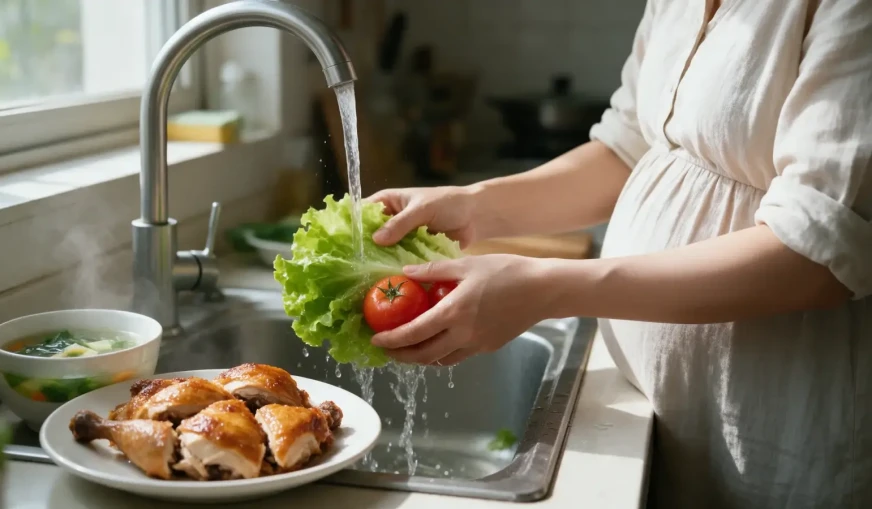
Vegetables and fruit are free to eat in pregnancy and should be eaten plentifully; the only rule is to wash them well so that no traces of soil remain. Toxoplasma and bacteria in the soil can be passed on by poorly washed greens and vegetables.
- Separate salad leaves and wash them in plenty of water.
- Use a separate knife and chopping board for raw meat and chicken; wash surfaces and your hands straight after they touch raw meat.
- Keep ready-packaged salads and sandwiches in the cold chain and eat them before the use-by date.
- Wear gloves for jobs that involve contact with soil, such as gardening and cleaning a cat litter tray.
Which Foods Are Thought to Be Banned But Can Actually Be Eaten?
Some foods are known by word of mouth to be banned in pregnancy, but current guidelines contain no such restriction. Unnecessary bans can narrow the menu and reduce variety in your diet.
- Hazelnuts, peanuts and other nuts: If you have no allergy and your doctor has not said otherwise, they can be eaten in pregnancy.
- Foods such as pineapple and parsley: In normal amounts used in cooking they can be part of a balanced menu; excessive amounts, and use with the aim of "starting labour", are not recommended.
- Pasteurised cheeses: White cheese, kaşar, lor, halloumi (hellim) and mozzarella can be eaten safely when made from pasteurised milk.
- Cooked seafood: Products such as prawns and squid can be eaten when thoroughly cooked.
In my article on eating in the first 3 months of pregnancy I described how to build a balanced menu in the first months of pregnancy, using a sample day. If you find it hard to eat because of nausea, the article on nausea in pregnancy may also help. For a safe and balanced eating plan throughout your pregnancy, we can work together, in line with your obstetrician's advice, through nutrition counselling in pregnancy.
When should you see a doctor? If, after eating a food you are unsure about, you develop fever, muscle pain, diarrhoea, vomiting or flu-like symptoms, see your doctor without delay and tell them what you ate.
Sources
- NHS – Foods to avoid in pregnancy
- NHS – Have a healthy diet in pregnancy
- FDA – Advice about Eating Fish
- WHO – Food safety
This article is for general information only; please consult your doctor and dietitian about your own situation.
Frequently Asked Questions
Can I eat offal such as kokoreç or tripe in pregnancy?
Liver is not recommended in pregnancy because it contains a lot of vitamin A. Other offal can be eaten only if it is fully cooked and prepared in hygienic conditions; it is safer to avoid street-sold products when you cannot be sure how they were prepared. Kokoreç is a Turkish dish of grilled seasoned offal, and işkembe is tripe.
Can I eat white cheese in pregnancy?
White cheese made from pasteurised milk can be eaten safely in pregnancy; just check the packaging for the word "pasteurised". It is recommended to avoid open village cheeses made from unpasteurised milk.
Can I drink Turkish coffee in pregnancy?
Coffee is not completely forbidden in pregnancy, but your total caffeine over the day should not exceed 200 mg. Tea, cola and chocolate also count towards this total, so on days when you drink coffee you need to cut down on other sources of caffeine.
Can I eat sushi in pregnancy?
Sushi made with raw fish is not recommended in pregnancy, even if the fish has been frozen beforehand. Types of sushi made with cooked fish, cooked seafood or only vegetables can be eaten.
I accidentally ate a food that is not allowed. What should I do?
In most cases a one-off portion does not cause a serious problem, but tell your doctor at your next check-up. If fever, muscle pain, diarrhoea, vomiting or flu-like symptoms appear in the following days, see your doctor without waiting.
Book an appointment for a personalised pregnancy nutrition plan
Nutritional needs in pregnancy change with the week of pregnancy, weight change and test results. Message us for a plan that fits your doctor's advice.

This content is for information only. For a personalised nutrition programme, please consult a dietitian.


