

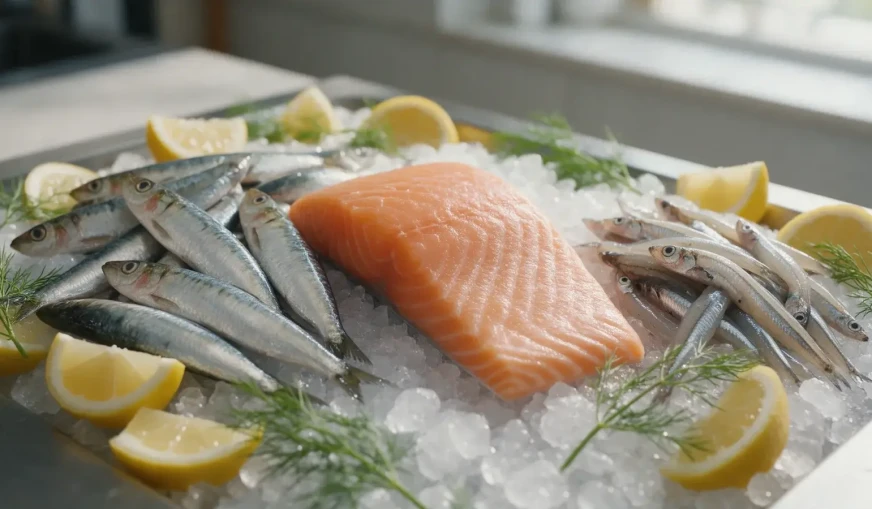
Eating fish is recommended in pregnancy; what matters is choosing the right type, in the right amount, and cooking it thoroughly. Two portions a week of low-mercury fish such as anchovies, sardines, mackerel, salmon, trout and whiting, one of them an oily fish, is a good target. Large predatory fish such as swordfish, shark and marlin, on the other hand, should be avoided in pregnancy.
Fish is one of the richest sources of omega-3 fatty acids, which are important for the development of the baby's brain and nervous system. So the approach of “there is a mercury risk, so I won't eat any” is not right either. Below you will find which fish can be eaten safely, which need to be limited, and what to watch for with raw or smoked products.
- About two portions of fish a week are recommended in pregnancy; one of them can be an oily fish such as salmon, sardines or mackerel.
- The NHS advises that oily fish should not exceed two portions a week in pregnancy.
- Swordfish, shark and marlin should not be eaten in pregnancy; tuna should be eaten in limited amounts.
- Raw fish, raw seafood and cold-smoked fish should not be eaten unless thoroughly cooked.
- If you do not eat fish, assess your omega-3 needs with your doctor and dietitian.
Why Is Eating Fish Important in Pregnancy?
Fish provides many of the nutrients whose needs rise in pregnancy all in one place: good-quality protein, iodine, vitamin D, vitamin B12 and, especially in oily fish, plenty of long-chain omega-3 fatty acids (DHA and EPA).
The US Food and Drug Administration (FDA) states that fish, with its omega-3s (DHA and EPA), iodine and other nutrients, supports the baby's brain development in pregnancy and while breastfeeding. According to the FDA, there is moderate evidence that eating fish in pregnancy may contribute to the baby's cognitive development; for this reason pregnant women are advised to keep eating fish, choosing those low in mercury. For the general benefits of omega-3 you can look at the article on healthy fats: omega-3 and omega-6.
Why Does Mercury Matter, and Which Fish Have More?
Mercury turns into methylmercury in the sea and builds up in the tissues of fish. The World Health Organization stresses that large predatory fish tend to carry more mercury because they eat many smaller fish, and that the baby in the womb is particularly sensitive to methylmercury.
The practical rule is simple: small, short-lived fish lower down the food chain build up less mercury, and large, long-lived predatory fish more. That is why small fish such as anchovies and sardines come to the fore in pregnancy, while large species such as swordfish and shark are avoided.
Which Fish Can You Eat in Pregnancy, and Which Not?
The table below was prepared by adapting the FDA's classification by mercury level and the NHS recommendations to fish commonly eaten in Turkey. For species not in the table, choosing small and medium-sized fish and varying the types is a good general rule.
| Group | Examples | Advice in pregnancy |
|---|---|---|
| Low in mercury, can be chosen often | Anchovies, sardines, mackerel (Atlantic mackerel), salmon, trout, whiting, cod, squid, cooked prawns and crab | Up to 2–3 portions a week; oily fish (salmon, sardines, mackerel, anchovies) at most 2 portions a week |
| Medium level, less often | Bluefish (lüfer), grouper, mahi-mahi, white (albacore) tuna, yellowfin tuna | At most 1 portion a week, and in place of other fish that week |
| Should be avoided | Swordfish, shark, marlin, king mackerel, bigeye tuna | Should not be eaten in pregnancy or when planning a pregnancy |
The FDA recommends about 225–340 grams of low-mercury seafood in total a week in pregnancy. You can think of one portion as palm-sized, about 110–140 grams. The NHS states that oily fish should not exceed two portions a week in pregnancy, because apart from mercury it can contain some other pollutants.
A sample weekly fish plan
- Monday evening: Baked salmon, with boiled vegetables and bulgur pilaf (the oily fish portion).
- Thursday lunch: Grilled whiting or steamed trout, a seasonal salad and wholemeal bread.
- A snack during the week: A small tinned tuna salad enriched with a boiled egg and vegetables.
In season, anchovies and sardines can also replace salmon as the oily fish portion. In this plan the oily fish limit is not exceeded, tuna stays moderate, and on the other days of the week protein needs are met from meat, chicken, eggs, dairy products and pulses. If the smell of fish bothers you in the early weeks when nausea is strong, you can try cooking methods that spread less smell in the oven, or cold fish salads.
Can You Eat Tuna in Pregnancy?
Yes, but in limited amounts. The NHS recommends eating no more than four medium cans of tinned tuna or two tuna steaks a week in pregnancy; the FDA also places tinned “light” (skipjack) tuna in the low-mercury group and white (albacore) tuna in the group that should be eaten less often.
Because tuna is not counted as an oily fish, it does not fully take the place of salmon or sardines in terms of omega-3. It is more balanced to use tuna in your weekly plan as a snack or salad ingredient and to take the main fish portion from oily fish.
Can You Eat Raw, Smoked and Undercooked Fish?
No. Raw fish and raw seafood carry a risk of bacteria such as listeria, parasites and food poisoning. The NHS advises not eating sushi made with raw fish in pregnancy even if it has been frozen beforehand, and says cold-smoked or cured fish (for example smoked salmon) should be eaten only after being cooked until piping hot.
- Avoid: Sushi and sashimi made with raw fish, raw oysters and mussels, marinated but uncooked fish, cold-smoked salmon (uncooked).
- Safe options: Sushi made with cooked fish and seafood, smoked salmon thoroughly cooked in the oven or pan, tinned fish.
- Ready-made products: Keep packaged fish sandwiches and salads cold and eat them before the use-by date.
Mussels, prawns and squid can be eaten in pregnancy when thoroughly cooked. For similar rules on raw meat and offal, you can look at the article on liver, offal and raw meat in pregnancy. It is safer in this period to stay away from products whose storage conditions you do not know, such as stuffed mussels (midye dolma) sold on the street. For the full list of other foods to avoid in pregnancy, you can look at the article on what not to eat during pregnancy.
How Should Fish Be Cooked and Stored in Pregnancy?
Fish should be cooked until the flesh turns opaque and flakes easily with a fork. Grilling, baking, steaming and poaching both preserve the nutritional value and add no extra fat.
- Cook fresh fish on the day you buy it or the next day; if you will not eat it straight away, clean it and freeze it.
- Defrost frozen fish in the fridge; do not leave it on the worktop.
- Wash knives, boards and your hands that have touched raw fish straight away in hot soapy water.
- Do not leave cooked fish at room temperature for more than two hours.
- Prefer the oven or grill to deep-frying; frying changes the healthy fat profile of the fish and adds calories.
Where Can You Get Omega-3 If You Don't Like Fish?
Walnuts, flaxseed, chia seeds and purslane contain plant omega-3 (ALA); but the body converts this form to DHA only to a limited extent. So if you do not eat fish or follow a vegetarian diet, you need to assess with your doctor and dietitian how your omega-3 needs will be met.
Do not start fish oil or omega-3 supplements on your own; every supplement used in pregnancy should be chosen on a doctor's advice. The NHS advises not using supplements that contain vitamin A (retinol), such as cod liver oil, in pregnancy. Expectant mothers who eat mostly plant-based can also benefit from the article on vegetarian eating in pregnancy.
Spreading your weekly menu in a balanced way across fish, meat, pulses and dairy products is the easiest way to meet the nutrient needs of pregnancy. We can prepare a plan that suits you together, in line with your obstetrician's advice, within nutrition counselling for pregnancy; the page on nutrition while breastfeeding also includes fish advice for the period after birth.
Sources
- NHS – Foods to avoid in pregnancy
- FDA – Advice about Eating Fish
- WHO – Mercury and health
- NHS – Pregnancy vitamins and supplements
This article is for general information only; please consult your doctor and dietitian about your own situation.
Frequently Asked Questions
Can you eat salmon in pregnancy?
Yes. Salmon is a low-mercury oily fish rich in omega-3 and can be eaten safely in pregnancy when thoroughly cooked. Make sure the total of oily fish does not exceed two portions a week, and do not eat raw or cold-smoked salmon without cooking it.
Can you eat anchovies in pregnancy?
Yes, because anchovies are a small, short-lived fish their mercury level is low, and they are a good choice in pregnancy. Cook them thoroughly; prefer the oven or steaming to deep-frying.
Can you eat sushi in pregnancy?
Sushi made with raw fish is not recommended in pregnancy, even if it has been frozen beforehand. Sushi types made with cooked prawns, cooked salmon or vegetables are safe options.
Can you eat mussels in pregnancy?
Mussels that are thoroughly cooked and bought from a trusted source can be eaten. Raw mussels and street-sold products whose storage conditions you do not know are risky in pregnancy because of food poisoning.
Can you take a fish oil supplement in pregnancy?
This decision should be made together with your doctor. Fish liver oils in particular are not recommended in pregnancy because they can contain vitamin A; your need and the right product should be assessed according to your eating pattern.
Book an appointment for a personalised pregnancy nutrition plan
Nutritional needs in pregnancy change with the week of pregnancy, weight change and test results. Message us for a plan that fits your doctor's advice.

This content is for information only. For a personalised nutrition programme, please consult a dietitian.


