

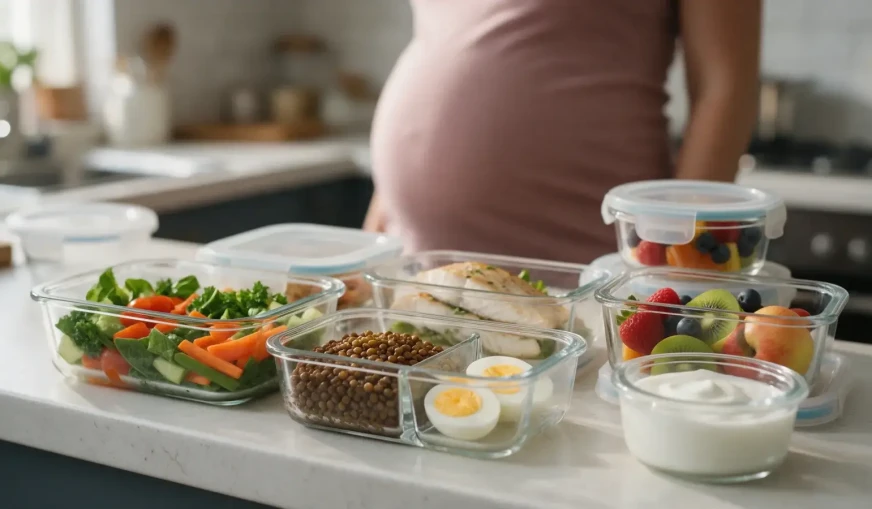
The foundation of eating in pregnancy is the same for all nine months: varied, balanced and safe foods. But the priority changes with each stage; in the first months it is folate and coping with nausea, in the second trimester more iron, calcium and protein, and in the last months small, frequent meals, fibre, fluids and healthy weight gain come to the fore. The month-by-month table below is a general roadmap you can use in line with your obstetrician's advice.
Pregnancy is not a time for “eating for two”; energy needs rise very little in the early months, while the need for protein, vitamins and minerals rises markedly. The Turkish Nutrition Guide (TÜBER 2022) recommends that daily protein in pregnancy should not fall below an average of 70 grams and that 4 portions a day should be eaten from the dairy group. In this article I turn these recommendations into something concrete by month and trimester.
- Months 1–3: Folate, vitamin B12 and food safety come first; small, frequent meals for nausea.
- Months 4–6: Needs for iron, calcium, protein and omega-3 rise; appetite generally improves.
- Months 7–9: Small meals, fibre and enough fluids against heartburn, constipation and swelling.
- According to TÜBER, 4 portions of dairy, 3–4 portions of the meat, egg and pulse group, and at least 5 portions of vegetables and fruit a day are recommended in pregnancy.
- Supplements and the weight gain target are individual; they are planned with your doctor.
How Many Daily Portions Should You Have in Pregnancy?
TÜBER 2022 recommends daily food group portions for pregnant women as below. These amounts are an average framework; they should be adapted with your dietitian according to your pre-pregnancy weight, activity and health.
| Food group | Non-pregnant adult woman | Pregnant woman |
|---|---|---|
| Milk, yoghurt, cheese | 3 portions | 4 portions |
| Meat, chicken, fish, eggs, dried pulses, oilseeds | 2.5–3 portions | 3–4 portions |
| Bread and grains | 7 portions | 7–8 portions |
| Vegetables and fruit | At least 5 portions | At least 5 portions |
The same guide recommends eating 300–400 grams of fish a week in pregnancy, choosing fish with lower mercury exposure such as anchovy, horse mackerel (istavrit), bonito (palamut), mackerel, sea bass and trout, and avoiding raw fish. The recommended amount of fibre per day is 25 grams.
The Month-by-Month Nutrition Chart for Pregnancy
The table below summarises the main need of each month and a practical tip. Every pregnancy is different; your symptoms and test results may change your plan.
| Month | Main need | Practical tip |
|---|---|---|
| Month 1 | Folate, food safety | Leafy greens, lentils, chickpeas; stay away from raw meat, raw milk and raw eggs |
| Month 2 | Coping with nausea, fluids | Small, frequent meals, dry crackers, warm soup; spread fluids through the day |
| Month 3 | Folate, B12, iodine | Eggs, dairy products, iodised salt (in small amounts); keep up with tests |
| Month 4 | Rise in iron needs | Well-cooked red meat or pulses a few times a week; with a source of vitamin C |
| Month 5 | Calcium, vitamin D | 4 portions a day from the dairy group; make safe use of sunlight |
| Month 6 | Omega-3, protein | Low-mercury fish twice a week; a protein source at every meal |
| Month 7 | Blood sugar balance, fibre | Wholegrains, a vegetable-heavy plate; limit sugary drinks |
| Month 8 | Heartburn, swelling | Smaller portions, finish dinner early; cut the salt in ready-made foods |
| Month 9 | Energy, constipation, preparing for birth | Nourishing snacks, plenty of fluids and fibre; preparing for breastfeeding |
What Should You Watch in the First Trimester (Months 1–3)?
In the first three months the most important priorities are folate, food safety and being able to keep eating despite nausea. The foundations of the baby's organs are laid in this period; but there is no marked rise in energy needs.
TÜBER stresses the importance of folic acid support before pregnancy and in the first three months; the dose and duration are set by your doctor. If you have nausea, small, frequent meals, staying away from fatty and strong-smelling dishes and sipping fluids make things easier. I explained this period in detail in the article on nutrition in the first 3 months of pregnancy, and folate-rich foods in the article on foods containing folic acid.
How Do Needs Change in the Second Trimester (Months 4–6)?
In the second trimester nausea eases in most women and appetite rises; in this period the needs for iron, calcium, protein and omega-3 become more pronounced. Because the baby's growth speeds up, the nutritional quality of meals matters more than ever.
- Iron: The need rises as blood volume increases. According to TÜBER, iron support is given to pregnant women from a certain stage under the Ministry of Health programme; your doctor guides its use. In your diet, well-cooked red meat, chicken, eggs, lentils and chickpeas stand out.
- Calcium: Aim for 4 portions a day with milk, yoghurt, kefir and cheese.
- Protein: Have a protein source at every meal.
- Omega-3: Eat low-mercury fish thoroughly cooked in the oven, steamed or grilled.
Weight gain can speed up in this period when appetite rises. You can look at the article on how much weight to gain in pregnancy to see the range that suits you. A glucose challenge test is also done between weeks 24 and 28 of pregnancy; if you are diagnosed, the gestational diabetes nutrition guide will help you.
How Should You Eat in the Third Trimester (Months 7–9)?
In the last trimester the baby enters the period when it puts on weight fastest; at the same time, because the growing womb presses on the stomach and bowel, heartburn, feeling full early and constipation become more frequent. Making portions smaller and increasing the number of meals is the most practical answer in this period.
- Keep the three main meals smaller and add two or three nourishing snacks.
- Finish dinner at least 2–3 hours before bed; if heartburn gets worse after lying down, raise your pillow.
- Get close to your daily fibre target with vegetables, fruit, wholegrains and pulses; TÜBER recommends taking about 3–4 cups (about 200 ml each) more fluid in pregnancy on top of normal needs.
- For swelling, cut the excess salt in ready-made foods but do not cut salt out completely; for sudden and marked swelling, see your doctor straight away.
You can read the article on what helps heartburn in pregnancy for detailed advice on heartburn.
How Big Is a Portion?
A few measures make it easier to turn portion recommendations into daily life. These are approximate values and practical examples consistent with the portion definitions in TÜBER.
- Dairy group: 1 cup (about 200 ml) of milk, ayran (Turkish salted yoghurt drink) or kefir; 1 bowl of yoghurt or two finger-sized pieces of cheese, about the size of a matchbox.
- Meat group: Cooked meat, chicken or fish the size of a köfte (Turkish meatball); 1 egg or 4–5 tablespoons of cooked dried pulses.
- Grain group: 1 thin slice of bread, half a cup (about 100 ml) of cooked bulgur pilaf or pasta.
- Vegetables and fruit: 1 medium piece of fruit, 1 bowl of salad or 4–5 tablespoons of vegetable dish.
Which Rules Do Not Change in Any Trimester?
Some rules stay the same from the start of pregnancy to the end: food safety, staying away from alcohol completely, limiting caffeine and using supplements only on a doctor's advice.
- Food safety: Do not eat raw or undercooked meat, fish and eggs, unpasteurised milk and cheese, or unwashed vegetables and fruit.
- Caffeine: According to TÜBER and the NHS, daily caffeine should not exceed 200 mg.
- Alcohol: There is no safe amount of alcohol in pregnancy.
- Supplements: Do not start any supplement, including herbal products, without asking your doctor.
I have gathered which vitamins and minerals are found in which foods in a table in the article on vitamin and mineral needs during pregnancy.
In Which Situations Should the Plan Be Individual?
In situations such as gestational diabetes, high blood pressure, a multiple pregnancy, starting pregnancy at a low or high weight, vegetarian eating, severe nausea and vomiting, or anaemia, general tables are not enough; the plan should be made individually.
For symptoms such as severe vomiting and being unable to keep fluids down, bleeding, sudden swelling, a headache that does not go away, visual disturbances or a drop in the baby's movements, see your doctor straight away without waiting for dietary advice. For a plan suited to each month of your pregnancy, prepared in line with your obstetrician's advice, you can look at my page on nutrition counselling for pregnancy.
Sources
- Turkish Ministry of Health – Turkey Nutrition Guide (TÜBER) 2022, Nutrition During Pregnancy and Breastfeeding
- WHO – Recommendations on antenatal care for a positive pregnancy experience
- NHS – Have a healthy diet in pregnancy
- NHS – Foods to avoid in pregnancy
This article is for general information only; please consult your doctor and dietitian about your own situation.
Frequently Asked Questions
In which month of pregnancy do you need to eat more?
Energy needs rise very little in the first trimester; they rise in the second and especially the third trimester. But this rise is not as big as “eating for two”; slightly larger portions and adding nourishing snacks is often enough. Set the amount with your dietitian according to your weight and activity.
How many meals a day should you eat in pregnancy?
For most pregnant women a routine of three main meals and two or three snacks is suitable. Smaller, more frequent meals can be especially soothing in the early months, when nausea is strong, and in the last months, when heartburn increases.
How much protein do you need in pregnancy?
The Turkish Nutrition Guide recommends that daily protein intake in pregnancy should not fall below an average of 70 grams and that at least half of it should come from animal sources such as eggs, meat, chicken, fish and dairy products. Your personal need may vary with your weight and health.
How many portions of dairy should you have in pregnancy?
TÜBER 2022 recommends that pregnant women have 4 portions a day from the milk, yoghurt and cheese group. Make sure milk and cheese are pasteurised; if you are lactose intolerant, you can choose yoghurt, kefir or lactose-free milk.
Does the month-by-month nutrition chart suit everyone?
No, this table is a general roadmap. In situations such as gestational diabetes, high blood pressure, a multiple pregnancy, anaemia or vegetarian eating, the plan should be made individually, in line with your obstetrician's advice.
Book an appointment for a personalised pregnancy nutrition plan
Nutritional needs in pregnancy change with the week of pregnancy, weight change and test results. Message us for a plan that fits your doctor's advice.

This content is for information only. For a personalised nutrition programme, please consult a dietitian.


