

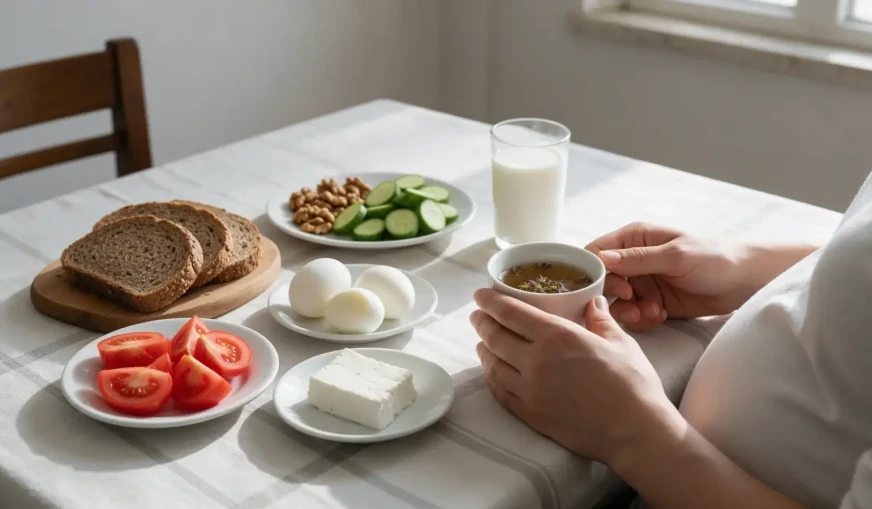
In the first 3 months of pregnancy you do not need to "eat for two"; the real aim is to build your meals from nutrient-rich choices. In this period folate (folic acid), iodine, iron, calcium and protein stand out. Not skipping breakfast, planning 3 main meals and 2 snacks a day, and following food safety rules are the basis of eating in the first trimester.
The first trimester is the period when the foundations of the baby's organs are laid; it is also the weeks when nausea, tiredness and sensitivity to smells are at their strongest. So alongside an ideal menu you also need a flexible plan that you can follow on the days when you feel unwell. The suggestions below are a general framework; your individual needs should be set in line with your obstetrician's advice.
- Energy needs do not rise noticeably in the first 3 months; improve the quality of your food rather than enlarging portions.
- Leafy green vegetables, dried pulses, eggs, dairy products and fish are key foods in this period.
- Take the folic acid and other supplements your doctor recommends regularly, and do not add supplements on your own.
- Avoid raw and undercooked meat, eggs and fish, unpasteurised dairy products and liver.
- On days with nausea, simplify the menu; what matters is keeping up your fluid and energy intake.
How Many Calories Do You Need in the First 3 Months?
In the first trimester, most women's energy needs do not rise noticeably compared with before pregnancy. The NHS also stresses that you do not need to "eat for two" in pregnancy, and that this approach is not right even in twin or triplet pregnancies.
In this period your appetite may rise, or on the contrary fall because of nausea. In both cases the aim is not to chase the number on the scales, but to build balanced meals. Your weight before pregnancy, your health and your activity level determine your personal needs; a weight-loss diet with calorie restriction should not be followed in pregnancy.
Which Nutrients Stand Out in the First Trimester?
In the first 3 months folate, iodine, iron, calcium, protein and omega-3 fatty acids are especially important. Most of these nutrients can be met with a varied and balanced menu; for some of them your doctor may recommend supplements.
| Nutrient | Why it matters | Food sources |
|---|---|---|
| Folate (folic acid) | Plays a role in the development of the baby's nervous system | Spinach, broccoli, asparagus, lentils, chickpeas, oranges |
| Iodine | Needed for the mother's thyroid hormones and the baby's brain development | Iodised salt (in small amounts), milk and dairy products, eggs, fish |
| Iron | Needed for the increase in blood volume | Red meat, chicken, eggs, dried pulses, dark green leafy vegetables |
| Calcium | Important for the baby's bone development and the mother's bone health | Milk, yoghurt, cheese, kefir, sesame |
| Protein | The basic building block for the development of tissues | Eggs, meat, chicken, fish, dairy products, dried pulses |
| Omega-3 (DHA) | Supports brain and eye development | Oily fish such as salmon, sardines and mackerel; walnuts |
Folic acid supplementation is something that is recommended to start before pregnancy and to continue in the first weeks; the World Health Organization also recommends iron and folic acid supplementation in pregnancy. Because the type and amount of a supplement can vary from person to person, your obstetrician decides these. I have covered eating suggestions for people planning a pregnancy on my page on preconception nutrition.
A Sample Daily Menu for the First 3 Months of Pregnancy
The menu below is a general example of how a balanced day in the first trimester might be set up. Portions should be adjusted to your appetite, your weight and your doctor's advice.
- Breakfast: 1 or 2 fully cooked (hard) boiled eggs, white cheese made from pasteurised milk, 2 slices of wholegrain bread, tomato, cucumber, greens, a few walnut kernels; lightly brewed tea or milk.
- Snack: 1 portion of fruit (orange, mandarin or apple) and a bowl of yoghurt.
- Lunch: A lentil or chickpea dish, bulgur pilaf, a salad with plenty of greens (with lemon juice squeezed over), ayran (a salted yoghurt drink).
- Snack: A few dried apricots or a handful of almonds with milk or kefir.
- Dinner: Baked salmon, sea bass or chicken; broccoli or spinach cooked in olive oil; a small portion of wholegrain pasta or potato; yoghurt.
- Evening (optional): A glass of warm milk or a small piece of fruit.
To help iron absorption, it helps to eat sources of vitamin C such as lemon, orange or tomato alongside dishes containing dried pulses and leafy green vegetables. It is better for iron absorption to drink tea and coffee some time after meals, not with them.
How Can You Simplify the Menu on Days with Nausea?
On days with nausea the aim is not to follow the ideal menu, but to keep up your fluid and energy intake. It is easier to eat plain, low-fat, mild-smelling foods in small portions at frequent intervals.
- A few crackers or a slice of toast before getting up in the morning.
- Plain options for breakfast, such as cheese on toast, a boiled egg or oats with yoghurt.
- Dishes at lunch and dinner that can be served cold: pasta with yoghurt, cold chicken salad, boiled potato.
- Banana, apple, crackers, yoghurt or ayran as snacks.
- Water in small sips through the day; ginger tea may bring relief for some pregnant women.
Detailed suggestions for coping with nausea are in my article on nausea in pregnancy. If you cannot keep anything down for 24 hours, if your urine is very dark or if you feel dizzy, do not rely on eating suggestions but see your doctor straight away.
Why Does Fluid Intake Matter in the First 3 Months?
The body's need for fluid rises in pregnancy, and not drinking enough can also make nausea worse. ACOG recommends drinking water through the day in pregnancy without waiting to feel thirsty, and aiming for about 8 to 12 glasses of water a day.
Spreading water through the day rather than drinking large amounts at once is easier, especially on days with nausea. Ayran, milk, soup and juicy fruit also contribute to fluid intake; sugary drinks and ready-made fruit juices should be limited.
Which Foods Should You Avoid in the First 3 Months?
In the first trimester, as throughout pregnancy, it is necessary to avoid certain foods that carry a risk of infection and could harm the baby. What these foods have in common is that they may contain microorganisms such as listeria, salmonella and toxoplasma, or high levels of vitamin A and mercury.
- Raw or undercooked meat, kofta, chicken and eggs, and çiğ köfte (raw kofta); cured meat products such as salami, sucuk (spiced sausage) and pastırma (cured beef) only once they have been cooked thoroughly until steaming hot
- Unpasteurised milk and products made from it; mould-ripened soft cheeses such as brie and camembert (unless thoroughly cooked)
- Liver and liver products (they contain very high levels of vitamin A)
- Raw fish and raw shellfish; fish high in mercury such as shark and swordfish
- Alcohol (there is no safe amount in pregnancy)
- Caffeine above 200 mg a day (coffee, tea, cola and energy drinks combined)
Washing vegetables and fruit well so that no traces of soil remain, and using a separate knife and chopping board for raw meat, are also important precautions against toxoplasma. You can also take a look at my article on what not to eat in pregnancy.
What Are the Most Common Eating Mistakes in the First Trimester?
The most common mistakes are enlarging portions unnecessarily, skipping breakfast and banning some foods completely because of hearsay. Many of these mistakes can turn into habits that carry on through the rest of pregnancy.
- "Eating for two": The need for extra energy is not marked in the first 3 months; overeating lays the ground for gaining too much weight through pregnancy.
- Skipping breakfast: It can make nausea worse and make it easier to reach for fatty and sugary snacks during the day.
- Eating unlimited fruit: Fruit is a valuable food, but eating kilos of it because it is "healthy" raises the sugar load; 2 or 3 portions a day is generally enough.
- Taking supplements on your own: Herbal products and extra vitamin and mineral supplements should not be used without asking your doctor.
- Exaggerating the "banned" lists: Bans with no scientific basis can narrow your eating unnecessarily. For example, fruits such as pineapple can be part of a balanced menu when eaten in normal amounts.
If you do not eat meat, you will need extra planning for protein, iron and B12; my article on vegetarian eating in pregnancy may be a guide on this. For a personal eating plan and regular follow-up throughout your pregnancy, we can work together, in line with your obstetrician's advice, through nutrition counselling in pregnancy.
Sources
- NHS – Have a healthy diet in pregnancy
- NHS – Foods to avoid in pregnancy
- ACOG – Morning Sickness: Nausea and Vomiting of Pregnancy
- WHO – Recommendations on antenatal care for a positive pregnancy experience
This article is for general information only; please consult your doctor and dietitian about your own situation.
Frequently Asked Questions
What should I do if I feel hungrier in the first months of pregnancy?
Eating more often in smaller portions and adding protein and fibre to each meal helps you to stay full for longer. For snacks, choose nourishing options such as yoghurt, fruit, a handful of nuts or wholegrain bread with cheese, and limit sugary and packaged snacks.
Can I drink coffee in the first 3 months?
Caffeine is not completely forbidden in pregnancy, but the recommendation is that the daily total should not exceed 200 mg. Coffee, tea, cola, energy drinks and chocolate all count towards this total; plan your own intake by talking to your doctor.
Is it normal to lose weight in the first trimester?
A small change in weight may be seen in the first weeks because of nausea. However, if weight loss continues, or if you cannot keep food and fluids down, please see your doctor; a weight-loss diet should not be followed deliberately in pregnancy.
Which fruits can I eat in the first 3 months of pregnancy?
Most well-washed seasonal fruits can be eaten safely in the first trimester; oranges, mandarins, apples, bananas, strawberries and kiwi are good choices. Limiting fruit to 2 or 3 portions a day, and choosing the fruit itself rather than fruit juice, helps to balance the sugar load.
Can I eat fish in the first 3 months?
Well-cooked fish is a valuable source of protein and omega-3 in pregnancy. The NHS recommends two portions of fish a week (one of them oily fish), advises not to eat more than two portions of oily fish a week, and says to avoid species such as shark and swordfish; raw fish and sushi should not be eaten.
Book an appointment for a personalised pregnancy nutrition plan
Nutritional needs in pregnancy change with the week of pregnancy, weight change and test results. Message us for a plan that fits your doctor's advice.

This content is for information only. For a personalised nutrition programme, please consult a dietitian.


