

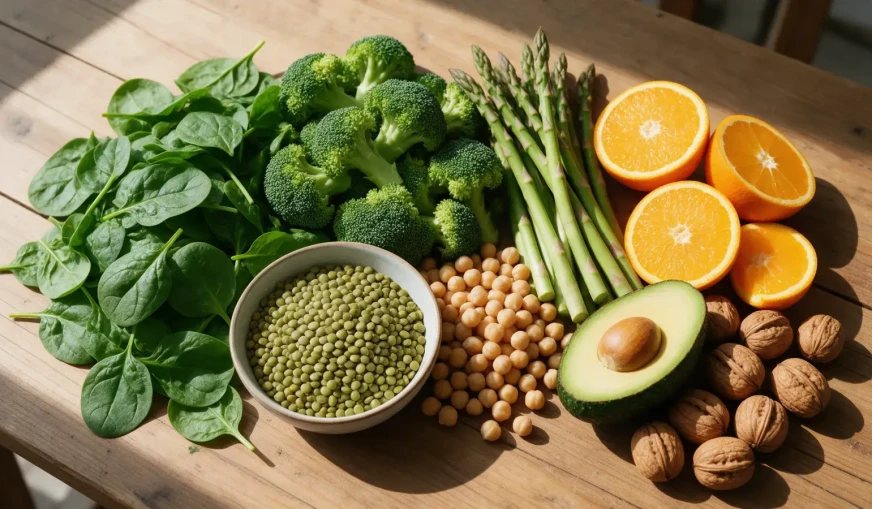
Folic acid (folate, as it occurs naturally in food) is found most in dark green vegetables such as spinach, lettuce, asparagus and broccoli; in pulses such as lentils, chickpeas and beans; and in avocado, oranges and eggs. For women planning a pregnancy, however, food alone is not considered enough: the World Health Organization recommends taking a folic acid supplement from the time you start trying to conceive until week 12 of pregnancy.
Folate is a B vitamin needed for cell division and DNA production. The neural tube, which forms the foundation of the baby's brain and spinal cord, closes in the first weeks of pregnancy, often before the pregnancy has even been noticed. That is why the subject of folate begins when you are planning a pregnancy, not when the pregnancy test turns positive.
- Folate is found in leafy green vegetables, pulses, asparagus, broccoli, avocado, citrus fruit and eggs.
- Anyone planning a pregnancy is advised to take a folic acid supplement on their doctor's advice in addition to food.
- The dose and duration of the supplement can vary from person to person; a different dose may be needed if you have had a previous pregnancy affected by a neural tube defect.
- Folate is water-soluble and sensitive to heat; cooking vegetables briefly in a little water reduces the loss.
- Although liver is rich in folate, it is not recommended in pregnancy because of its high vitamin A content.
What Is the Difference Between Folate and Folic Acid?
Folate is the general name for vitamin B9 found naturally in food; folic acid is the synthetic form used in supplements and fortified products. In everyday speech the two are often used to mean the same thing.
The supplement recommended before and in early pregnancy is folic acid, on which most of the evidence for preventing neural tube defects is based. Some supplements may also contain a different form of folate (methylfolate). Your obstetrician decides which product and which dose suit you; do not choose a supplement based on information from the internet or hearsay.
Which Foods Contain Folic Acid?
The richest sources of folate are dark green leafy vegetables and pulses. The table below gives the approximate folate in 100 grams of some foods, according to the values in USDA FoodData Central, the US Department of Agriculture's food database.
| Food (100 g) | Approximate folate (µg DFE) |
|---|---|
| Spinach, raw | 194 |
| Lentils, boiled | 181 |
| Black beans, boiled | 149 |
| Asparagus, boiled | 149 |
| Spinach, boiled | 146 |
| Lettuce (romaine), raw | 136 |
| Broccoli, boiled | 108 |
| Avocado | 81 |
| Egg, boiled | 44 |
| Orange | 30 |
The values can vary with the variety, growing conditions and cooking method, so they should be treated as approximate. Chickpeas, dried beans, black-eyed peas, peas, parsley, rocket, Brussels sprouts, beetroot and sunflower seeds, which are not in the table, are also valuable sources of folate.
How Should You Cook to Protect the Folate in Food?
Folate is a water-soluble, heat-sensitive vitamin; boiling for a long time in plenty of water and throwing away the cooking water increases folate loss. Cooking vegetables briefly, in a little water or by steaming, reduces this loss.
- Eat some of your leafy green vegetables raw as salad; in pregnancy, remember to wash greens thoroughly so that no soil remains.
- Steam spinach, broccoli and asparagus, or cook them in a little water, only until the colour stays bright.
- Use the water you cook pulses in as part of the dish rather than pouring it away.
- Chop vegetables just before cooking; do not leave chopped vegetables sitting in water for long.
Why Is Folic Acid So Important Before Pregnancy?
Because the period when folate matters most is the first weeks of pregnancy, when it is usually not yet noticed. The neural tube is the structure that becomes the baby's brain and spinal cord and it closes early in pregnancy; insufficient folate in this process raises the risk of neural tube defects such as spina bifida.
The World Health Organization recommends that all women who start trying to conceive take a folic acid supplement from that point until week 12 of pregnancy. For those who have previously had a pregnancy affected by a neural tube defect, a higher-dose supplement and a higher intake of folate-rich foods are advised. The NHS also notes that some women may need a higher dose and that some medicines, such as certain epilepsy medicines, can interact with folic acid. So the only yardstick for dose and duration is your doctor's advice.
When planning a pregnancy, weight, blood values, other vitamins and minerals and lifestyle should be considered alongside folate. We can plan the nutrition side of this process together, in line with your obstetrician's advice, within pregnancy preparation counselling.
What Else Should You Pay Attention to When Planning a Pregnancy, Besides Folate?
Folic acid is an important part of preparing for pregnancy, but not the only part. The NHS advises people planning a pregnancy to take supplements, including folic acid and vitamin D, on a doctor's advice, to stop smoking, to avoid alcohol, to eat healthily and to try to reach a healthy weight; it also notes that a very low or very high weight can make it harder to conceive.
- Weight: Moving towards a healthy weight before pregnancy may help reduce risks such as high blood pressure and gestational diabetes in pregnancy. In this period, sustainable changes should be preferred to crash diets.
- Iron and iodine: Iron-rich foods (meat, chicken, pulses), a small amount of iodised salt and dairy products prepare you for the increased needs of pregnancy.
- Medicines and chronic conditions: If you take regular medicines or have a condition such as diabetes or epilepsy, talk to your doctor about your pregnancy plans beforehand, and do not stop prescribed medicines on your own.
- Caffeine and herbal products: From the time you start trying to conceive, it is a good habit to limit caffeine and not to use herbal products without asking your doctor.
How Do You Plan a Folate-Rich Day in Pregnancy?
A practical way to build a folate-rich menu is to aim for at least one portion of leafy green vegetables and one portion of pulses every day. The sample below shows how this can be achieved with everyday meals.
- Breakfast: Fully cooked eggs with spinach or menemen (Turkish scrambled eggs with tomato and peppers), plenty of greens, wholegrain bread, an orange.
- Snack: Yoghurt and a handful of walnut kernels.
- Lunch: Lentil soup with a seasonal salad of rocket and parsley.
- Snack: Half an avocado with wholegrain crackers, or a portion of fruit.
- Dinner: Dried beans with chickpeas or meat, bulgur pilaf, steamed broccoli and cacik (Turkish yoghurt and cucumber dip).
If you would like to see a whole balanced menu for the first months of pregnancy, take a look at my article on nutrition in the first 3 months of pregnancy.
Are There Folate-Rich Foods to Be Careful With in Pregnancy?
Yes. Although liver is very rich in folate, it is not recommended in pregnancy because it contains a lot of vitamin A. Too much vitamin A can harm the baby's development.
Similarly, although leafy green vegetables are rich in folate, they carry a risk of soil-borne infection if they are not washed well, so hygiene rules need to be followed. I explain in detail which foods to avoid in pregnancy in my article on what not to eat during pregnancy.
How Can You Tell If You Are Low in Folic Acid?
Folate deficiency can progress without obvious symptoms; as it advances, tiredness, weakness, pallor and a type of anaemia (megaloblastic anaemia) can appear. A deficiency can only be assessed properly with a blood test.
Do not try to diagnose yourself from symptoms or to take high-dose supplements on your own. Tiredness and weakness can have many different causes; because some conditions, such as B12 deficiency, can be masked by folic acid, the assessment must be done with your doctor. To support your diet throughout pregnancy, you can also look at my page on nutrition during pregnancy.
Sources
- WHO eLENA – Periconceptional folic acid supplementation to prevent neural tube defects
- Folic Acid Supplementation to Prevent Neural Tube Defects: Updated Evidence Report and Systematic Review for the US Preventive Services Task Force. JAMA, 2023 (PubMed)
- USDA FoodData Central
- NHS – Folic acid
This article is for general information only; please consult your doctor and dietitian about your own situation.
Frequently Asked Questions
Does folic acid make it easier to get pregnant?
The main importance of folic acid is that it supports the development of the baby's neural tube; it should not be seen as something that makes conception easier. When planning a pregnancy, balanced eating, a healthy weight and the use of a supplement on your doctor's advice should be considered together.
When should you start a folic acid supplement?
The World Health Organization recommends taking a supplement from the time you start trying to conceive and continuing until week 12 of pregnancy. You need to talk to your obstetrician about when to start, the dose and the duration.
Can you get enough folic acid from food alone?
A balanced menu provides a good amount of folate, but before and in early pregnancy food alone is not considered enough. That is why a folic acid supplement on your doctor's advice is recommended in addition to food.
Do men need folic acid too?
Folate is a vitamin everyone needs, and men too should get enough folate through balanced eating. Whether a man in a couple planning a pregnancy needs a supplement should be assessed with a doctor according to his personal health.
Which fruits contain folic acid?
Citrus fruits such as oranges and mandarins, avocado, strawberries, kiwi and banana are fruits that contain folate. However, the amount of folate in fruit is generally lower than in leafy green vegetables and pulses, so vegetables and pulses also need a place on the menu.
Book an appointment for a personalised pregnancy nutrition plan
Nutritional needs in pregnancy change with the week of pregnancy, weight change and test results. Message us for a plan that fits your doctor's advice.

This content is for information only. For a personalised nutrition programme, please consult a dietitian.


