
A woman who follows a vegetarian or vegan diet in pregnancy can meet her own and her baby's needs with good planning. The things to watch most closely to avoid gaps are vitamin B12, iron, iodine, calcium, vitamin D, omega-3 fatty acids, choline, zinc and protein. On a vegan diet, fortified products or supplements recommended by a doctor are generally needed for B12 and iodine.
Being vegetarian or vegan is not in itself a risk for pregnancy; the risk lies in continuing this way of eating without planning. In this article I have prepared a checklist, nutrient by nutrient, that focuses not on “what you don't eat” but on “what you should eat, with what and how often”.
- The risk is lower for vegetarians who eat eggs and dairy; planning becomes more critical on a vegan diet that excludes all animal products.
- Vitamin B12 is almost absent from plant foods; vegan pregnant women need a fortified product or supplement.
- The absorption of plant-based iron increases when eaten with vitamin C sources; tea and coffee should be drunk between meals.
- Read the labels of fortified plant drinks for iodine, calcium and vitamin D.
- Supplements and blood tests should be planned in line with your obstetrician's advice.
What Is the Difference Between Vegetarian and Vegan Pregnancy?
Vegetarians who eat eggs and dairy (lacto-ovo vegetarians) can meet a good part of their B12, calcium, iodine and protein needs from those foods. On a vegan diet, where all animal products are left out, these nutrients can only be met through carefully chosen plant sources, fortified products and, where needed, supplements.
Pescatarians, who eat fish but not meat, have an advantage for omega-3 and iodine; even so, they need to avoid high-mercury fish in pregnancy. So saying “I'm vegetarian” is not enough information on its own; which food groups you eat forms the basis of a plan made for you.
You can also look at my earlier article on vegetarian eating in pregnancy for the general principles of a vegetarian pregnancy and a sample menu.
Which Nutrients Are at Risk of Falling Short?
The British Nutrition Foundation (BNF) states that vegetarian and vegan pregnant women need to pay particular attention to protein, omega-3 fats, iron, calcium, vitamin B12, riboflavin (B2), selenium and iodine. Vitamin D, zinc and choline can be added to these.
| Nutrient | Sources for lacto-ovo vegetarians | Sources and cautions for vegans |
|---|---|---|
| Vitamin B12 | Milk, yoghurt, cheese, eggs | Fortified plant drinks and products; a supplement on a doctor's advice is often needed |
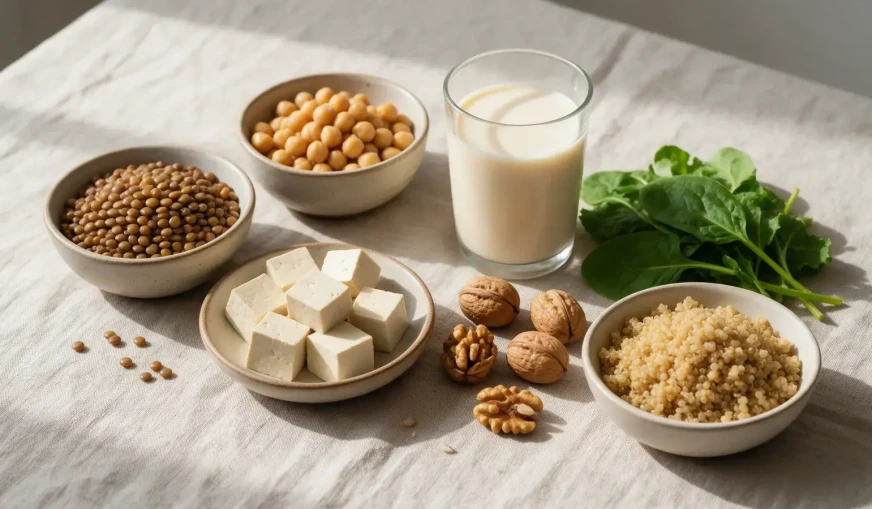
| Iron | Eggs, pulses, dark green leafy vegetables, wholegrains | Lentils, chickpeas, beans, tofu, pumpkin seeds, dried apricots; eat with vitamin C |
| Iodine | Dairy products, eggs, iodised salt (in small amounts) | Iodine-fortified plant drinks, iodised salt; seaweed products are not recommended because their iodine content varies so much |
| Calcium | Milk, yoghurt, cheese | Calcium-fortified plant drinks, calcium-set tofu, tahini, almonds, leafy greens |
| Vitamin D | Egg yolk, fortified products, sunlight | Fortified products, sunlight; levels should be checked by a doctor |
| Omega-3 | Walnuts, flaxseed, chia; for those who eat fish, low-mercury fish | Walnuts, flaxseed, chia; algae-based supplements can be considered on a doctor's advice |
| Choline | Eggs, dairy products | Soy products, pulses, broccoli, quinoa |
| Zinc | Cheese, eggs, pulses, wholegrains | Pulses, pumpkin seeds, cashews, oats, tofu |
| Protein | Eggs, dairy products, pulses | Pulses, tofu, tempeh, soy drink, grain and pulse combinations |
I explained in detail how the general vitamin and mineral needs in pregnancy can be met through food in my article on vitamin and mineral needs during pregnancy.
How Can You Absorb Iron and Zinc From Plant Sources Better?
The iron in plant foods is harder to absorb than that in animal sources; but absorption can be raised with the right combinations. The most effective method is to have a food containing vitamin C alongside iron-rich meals and to drink tea and coffee between meals, not with them.
- Squeeze lemon on lentil soup and add a salad with peppers and tomatoes alongside a chickpea dish.
- At breakfast, eat tahini with wholegrain bread and an orange rather than with molasses.
- Soaking pulses overnight and pouring away the water before cooking reduces some of the compounds that lower absorption and makes them easier to digest.
- Choosing wholegrains as sourdough bread or bulgur can also support mineral absorption.
- Drink tea and coffee at least an hour after a meal.
Because blood volume increases in pregnancy, iron needs rise markedly. For a list of plant sources of iron, you can look at the article on iron sources for vegans and vegetarians. Whether you need an iron supplement is decided by your doctor from your blood values.
How Do You Get Enough Protein on a Plant-Based Diet?
Protein needs in pregnancy rise especially in the second and third trimesters. Vegetarian and vegan pregnant women can meet this need by adding a pulse, soy product, egg or dairy product to every meal and by varying different protein sources through the day.
Eating grains and pulses on the same day (such as bulgur and lentils, or bread and hummus) allows different amino acids to complement each other. These combinations do not have to be in the same meal; spreading them through the day is enough. I described ways of getting protein without eating animal products in the article on getting protein without animal foods.
A sample day for a vegan pregnant woman
- Breakfast: Oat porridge made with fortified soy drink, topped with walnuts, ground flaxseed and strawberries.
- Snack: Hummus on wholegrain bread with a few slices of tomato.
- Lunch: Mercimek köftesi (Turkish red lentil balls), a salad with plenty of greens and lemon, a bowl of fortified plant-based yoghurt.
- Snack: An orange and a handful of pumpkin seeds.
- Dinner: Stir-fried vegetables with tofu, bulgur pilaf and baked broccoli.
For a lacto-ovo vegetarian pregnant woman, pasteurised milk can be used in this menu instead of soy drink and yoghurt instead of plant-based yoghurt, and a thoroughly cooked egg can be added at breakfast. The menu is only to give an idea; portions should be adjusted to the individual.
How Should You Read the Label on Fortified Products?
In a vegan pregnancy, fortified plant drinks and products play an important role in closing the gap in B12, calcium, vitamin D and iodine. But not every plant drink is fortified; that is why you need to check the “ingredients” and “nutrition information” sections of the label.
- Look in the ingredients list for wording showing that calcium, B12, vitamin D and iodine have been added.
- Prefer “no added sugar” or “unsweetened” options.
- Look at the protein content; soy drinks generally provide more protein than rice and almond drinks.
- Some organic products may not be fortified; being organic alone tells you nothing about nutritional value.
A Daily Checklist for Vegan and Vegetarian Pregnant Women
A daily checklist is a practical way of not overlooking food groups that might fall short. The list below is a general framework; portion amounts should be personalised to your week of pregnancy, your weight and your health.
- A protein source at every main meal: pulses, tofu, eggs or dairy products.
- 2–3 portions a day of dairy products or fortified plant drink or yoghurt.
- A dark green leafy vegetable every day and at least one source of vitamin C.
- A handful a day of walnuts, almonds or pumpkin seeds; flaxseed or chia a few times a week.
- A wholegrain carbohydrate source at every meal.
- Taking the supplements your doctor has recommended regularly.
When Should You Talk to a Doctor?
If you have extreme tiredness, pallor, shortness of breath, numbness in the hands and feet, less weight gain than expected, or very restricted eating because of severe nausea, see your doctor without delay. For vegan pregnant women, regular checks of values such as B12, iron stores and vitamin D are especially important.
To build a plan that respects your dietary choice and leaves no gaps, in line with your obstetrician's advice, we can work together within nutrition counselling for pregnancy.
Sources
- British Nutrition Foundation – Vegetarian and vegan diets during pregnancy
- NHS – The vegan diet
- NHS – The vegetarian diet
- NHS – Have a healthy diet in pregnancy
This article is for general information only; please consult your doctor and dietitian about your own situation.
Frequently Asked Questions
Can a vegan woman stay vegan during pregnancy?
A well-planned vegan diet supported by the necessary supplements can be continued in pregnancy. However, because the risk of gaps in nutrients such as B12, iodine, iron, calcium, vitamin D and omega-3 is high, you need to work closely with your obstetrician and dietitian.
Is a B12 supplement essential in a vegan pregnancy?
Vitamin B12 occurs naturally almost only in animal foods; so vegan pregnant women need to get B12 from fortified products or a supplement. The form and dose of the supplement should be determined by your doctor according to your blood values.
Do plant milks take the place of cow's milk in pregnancy?
Unsweetened plant drinks fortified with calcium, vitamin D, B12 and iodine can be used instead of milk. Unfortified products do not provide these nutrients adequately; some options, such as rice milk, are also low in protein, so always read the label.
Should vegetarian pregnant women eat eggs?
For vegetarians who eat eggs, eggs are a valuable source of protein, B12, choline and vitamin D. In pregnancy, eggs should be cooked until both the yolk and white are completely firm, and foods containing raw egg should be avoided.
Are soy products safe in pregnancy?
Soy products such as tofu, soy drink and edamame can be used as a plant protein source in pregnancy when eaten in balanced amounts. Soy-based supplements and concentrated isolated soy protein products should not be used without asking your doctor.
Book an appointment for a personalised pregnancy nutrition plan
Nutritional needs in pregnancy change with the week of pregnancy, weight change and test results. Message us for a plan that fits your doctor's advice.

This content is for information only. For a personalised nutrition programme, please consult a dietitian.