

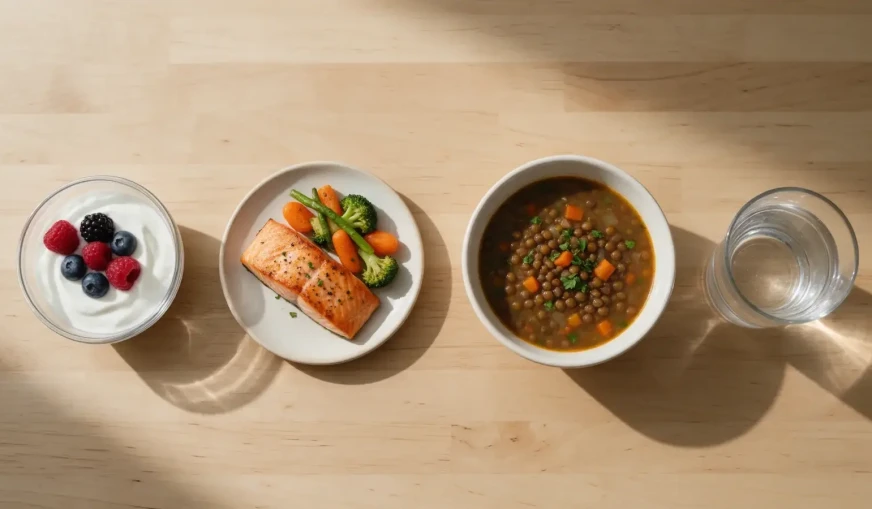
A sample daily menu while using a weight-loss injection should be small but nourishing, include protein at every meal, be supported by vegetables and fibre, and have fluids spread through the day. Because appetite is reduced, the aim is not to eat very little but to get, in small portions, the protein, vitamins and minerals your body needs.
Medicines such as semaglutide (Ozempic, Wegovy) or tirzepatide (Mounjaro) are used with a doctor's prescription and follow-up. The menus in this article are not a recommendation to take a medicine but examples to help you plan your plate during treatment. Instead of a single menu, I have prepared four options you can adapt to different days; portions need to be adjusted with your dietitian to your weight, age, activity and health.
- Having a protein source at every meal helps limit muscle loss.
- Small, frequent meals make it easier to cope with nausea and feeling full early.
- Fatty, fried and very sugary foods can increase digestive complaints.
- Drink fluids spread through the day rather than with meals.
- Adapt the menu for days with nausea, constipation or a busy schedule.
Which Principles Should You Base Menu Planning On?
Menu planning while using a medicine has four basic principles: protein first, then vegetables, moderate wholegrains and enough fluids. Because appetite is limited, the most valuable foods need to go on the plate first.
- Protein first: Starting the meal with a protein source makes sure you get enough protein before you feel full.
- Vegetables and fibre: They help prevent constipation and support fullness; increase fibre gradually.
- Moderate carbohydrate: Choose options such as bulgur, oats and wholegrain bread in small portions.
- Fluids: Because the feeling of thirst may fall, tie drinking water to set times; drink large glasses between meals, not during them.
- Eat slowly: Spreading a meal over 20 minutes and stopping as soon as you feel full reduces nausea.
I described these principles in detail in the nutrition guide for people using weight-loss injections.
Where Can I Get Protein?
Your protein target has to be set personally with your dietitian; but knowing roughly how much protein each food provides makes it easier to build a menu. The values below are approximate figures based on USDA and TürKomp (the Turkish food composition database) data.
| Food and portion | Approximate protein |
|---|---|
| 1 egg | 6 g |
| 1 bowl (200 g) of yoghurt | 7–8 g |
| Half a bowl (100 g) of strained yoghurt | 9–10 g |
| 1 cup (200 ml) of milk or kefir | 6–7 g |
| 2 fingers (30 g) of white cheese | 4–5 g |
| 3 tablespoons (60 g) of lor (Turkish fresh curd cheese) | 7–8 g |
| A palm-sized portion (100 g) of cooked chicken breast | 30 g |
| A palm-sized portion (100 g) of cooked fish | 20–25 g |
| 1 bowl (200 g) of cooked lentils or chickpeas | 15–18 g |
As you can see from the table, a breakfast built only on eggs and cheese, with no protein source at lunch and dinner, may struggle to meet the daily need. That is why I have spread protein across every meal in the menus.
Menu 1: A Normal Day
Below is the basic menu for days when you have few complaints and your appetite is relatively steady. Portions are kept small; if you feel full you do not have to finish the plate, but try to eat the protein first.
- Breakfast: A vegetable omelette made with 2 eggs, 1 finger of white cheese, tomato and cucumber, half a slice of wholegrain bread.
- Snack: Half a bowl of strained yoghurt, a few strawberries or half an apple.
- Lunch: A palm-sized portion of grilled chicken, a bowl of green salad, 3–4 tablespoons of bulgur pilaf.
- Snack: 1 cup (200 ml) of kefir or ayran (Turkish salted yoghurt drink).
- Dinner: Baked fish, vegetables cooked in olive oil, a few spoonfuls of cacik (Turkish yoghurt and cucumber dip).
In this menu the day's total protein comes from eggs, strained yoghurt, chicken, kefir and fish; vegetables appear in every main meal. Bread and pilaf are not left out completely, just kept to small portions.
Menu 2: A Day With Nausea
Nausea usually increases at the start of treatment and with dose changes. On these days, small meals that are low in fat, mild in smell and served at room temperature or cold are tolerated better.
- Breakfast: A boiled egg, a few unsalted crackers or half a slice of toast.
- Snack: A few spoonfuls of yoghurt and slices of banana.
- Lunch: A bowl of warm chicken broth soup or yayla çorbası (Turkish yoghurt and rice soup), with a few spoonfuls of lor alongside.
- Snack: Cold milk or kefir, in small sips.
- Dinner: Boiled potato with boiled chicken or fish, plainly cooked carrot and courgette.
If you have vomiting, cannot keep fluids down, have severe abdominal pain or dizziness, do not settle for changing the menu; see your doctor straight away.
Menu 3: A Period of Constipation
With constipation, the essentials are to increase fibre gradually rather than suddenly, to increase fluids and to move about. Increasing high-fibre foods without enough water can make the complaint worse.
- Breakfast: Oat porridge made with milk (2–3 tablespoons of oats), a dessert spoon of flaxseed, a few walnuts; with 1 egg alongside.
- Snack: 2–3 prunes or 1 kiwi, and a glass of water.
- Lunch: A lentil or chickpea dish, a salad with plenty of greens, yoghurt.
- Snack: 1 cup (200 ml) of kefir.
- Dinner: Green beans or leeks cooked in olive oil, a palm-sized portion of köfte (Turkish meatballs) or chicken.
Menu 4: A Busy Workday
On busy days, skipping meals can increase the risk of sudden hunger and nausea in the evening. Options prepared in advance and easy to carry make these days easier.
- Breakfast: 2 pre-boiled eggs, a few cherry tomatoes and cucumber.
- Snack: Strained yoghurt in a container with a lid, or a carton of ayran.
- Lunch: A chicken or tuna quinoa-and-bulgur salad brought from home.
- Snack: A handful of raw almonds and a mandarin.
- Dinner: A light vegetable soup and a small plate with cheese and egg.
You can also look at the articles on eating while taking Ozempic and eating while taking Mounjaro for advice specific to the active ingredient.
How Can I Prepare the Menu on a Weekly Basis?
In periods of reduced appetite, even the question of “what shall I eat?” can be tiring. Preparing a few basic foods at the start of the week makes it easier to spread protein and vegetables through the day and lessens the pull towards packaged snacks.
- Protein preparation: Once or twice a week prepare boiled eggs, baked chicken and köfte and keep them in the fridge in closed containers; eat them within 2–3 days.
- Pulses: Divide boiled chickpeas and lentils into portions and add them to salads and soups.
- Vegetables: Washed, chopped raw vegetables and baked mixed vegetables are quickly added to meals.
- Dairy products: Always keep yoghurt, kefir and lor in the fridge.
- Fluid plan: A water bottle that is filled and emptied through the day and reminders set for certain times make it easier to track your fluid intake.
What Is More Comfortable to Avoid in the Menu?
Fatty, fried, very spicy and very sugary foods, fizzy drinks and large portions increase nausea, bloating and heartburn in many people who use these medicines. Alcohol, too, can increase both digestive complaints and swings in blood sugar, so it should not be drunk without asking your doctor.
The effect of each food varies from person to person. Noting for a few weeks which foods bother you is the most practical way of personalising the menu.
On days when you eat out you can apply the same logic: choose grilled meat, chicken or fish with salad and vegetables, do not hesitate to have half the portion boxed up, and start the meal with a soup or salad rather than a fatty starter. At gatherings, taking the protein foods first lets you give your limited appetite to the most valuable foods.
For Whom Are These Menus Not Suitable?
These examples are for general information and may not be suitable for everyone. For people with kidney disease, diabetes (especially those using insulin or blood-sugar-lowering medicines), gout, coeliac disease, food allergy, a history of eating disorders, and older people, the menu must always be prepared individually.
When appetite returns after the medicine is stopped, the menu will also need to change; I described this transition in the article on whether weight comes back when you stop weight-loss injections. If you are using a weight-loss injection under a doctor's care and would like a menu specific to you that is updated regularly, we can work together through online diet counselling. Remember that results vary from person to person.
Sources
- NHS – Semaglutide
- NHS – Tirzepatide
- NIDDK – Prescription Medications to Treat Overweight & Obesity
- WHO – Healthy diet
This article is for general information only; please consult your doctor and dietitian about your own situation.
Frequently Asked Questions
How many meals a day should I eat while using a weight-loss injection?
For most people, three small main meals and one or two snacks are well tolerated. If your appetite is very low, increasing the number of meals and making the portions smaller makes it easier to meet your protein needs; try not to skip meals.
Do I have to eat when I have no appetite at all?
Eating very little can lead to muscle loss, tiredness and nutrient deficiencies. Even if you have no appetite, try to eat small portions, putting foods that contain protein first; if you can only eat very little for days, let your doctor and dietitian know.
Do I need to use protein powder?
Most people can meet their protein needs with eggs, dairy products, meat, fish and pulses. Whether a supplement is needed when you cannot get enough protein from food, and which product suits you, should be decided with your kidney health also assessed.
How much weight will I lose with these menus?
Weight loss depends on the effect of the medicine, your starting weight, your activity and many personal factors; it would not be right to say that a menu produces a particular amount of weight loss. The aim is to protect your muscle mass and your health during weight loss.
Can I eat sweets while using a weight-loss injection?
An occasional small portion of dessert can be part of the plan; but very sugary and fatty desserts can increase nausea and leave no room for protein. It feels more comfortable to satisfy a sweet craving with options such as fruit, yoghurt or oats cooked in milk with cinnamon.
Book an appointment for a personalised nutrition plan
The information in this article is general; what you need depends on your age, health and goals. Message us and we will build the plan that suits you together.

This content is for information only. For a personalised nutrition programme, please consult a dietitian.


