

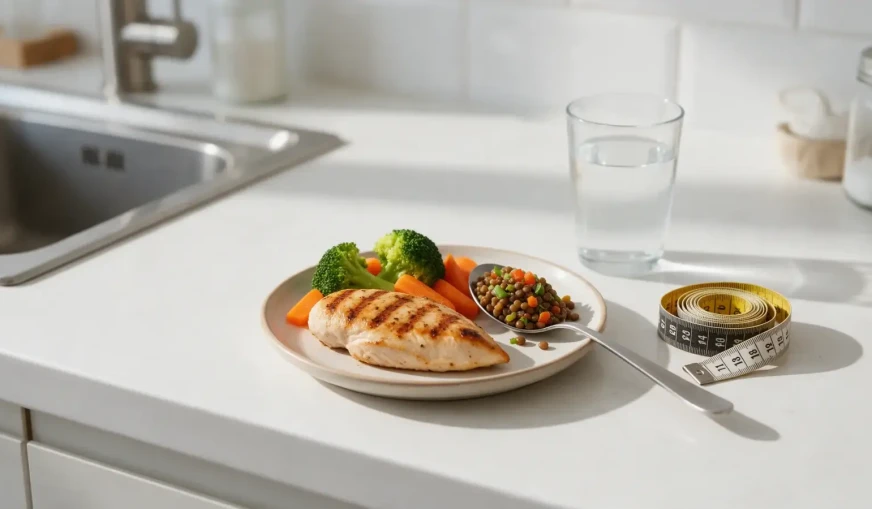
The aim of eating while using a weight-loss injection is not to eat less, but to eat enough despite a reduced appetite. Protein first at every meal, then vegetables and wholegrains; small portions, eating slowly, enough fluid through the day and regular strength exercise are the basis of this process.
Medicines such as semaglutide (Ozempic, Wegovy) and tirzepatide (Mounjaro) reduce appetite and prolong the feeling of fullness. They are used on a doctor's prescription and under a doctor's follow-up, and only in people who meet certain criteria; the dose, duration and suitability are your doctor's decision. This article is not about the medicines, but about eating while you are using them.
- When appetite falls, protein, vitamin and mineral intake can drop easily too; give priority to protein when you set up your plate.
- Small portions, eating slowly and stopping when you feel full reduce nausea and indigestion.
- Fatty, fried and very sugary foods and alcohol can make stomach complaints worse.
- Fluid and fibre intake are the basis of preventing constipation.
- This is the time to build habits that you can keep up when the effect of the medicine ends.
Why Does Eating Matter So Much While Using a Weight-Loss Injection?
Because the medicine reduces how much you eat, but it does not choose what you eat. When you feel full after a few mouthfuls a day and those mouthfuls are of low nutritional value, muscle loss, tiredness and vitamin and mineral deficiencies can appear while you lose weight.
A joint advisory published in 2025 by the American College of Lifestyle Medicine, the American Society for Nutrition, the Obesity Medicine Association and The Obesity Society also lists the main challenges with these medicines: digestive side effects, nutrient deficiencies linked to reduced calorie intake, loss of muscle and bone, and weight regain after the medicine is stopped. The advisory recommends that nutrition counselling and strength exercise be part of treatment to deal with these problems.
How Should You Set Up Your Plate?
A practical and effective order is to eat the protein first at each meal, then the vegetables, and the grains last. Even if your appetite switches off early, you will have had the most valuable part of the plate.
| Place on the plate | Examples | Why it matters |
|---|---|---|
| Protein (about a palm-sized portion) | Eggs, chicken, turkey, fish, lean red meat, yoghurt, kefir, cheese, dried pulses | Helps preserve muscle mass and supports fullness |
| Vegetables (half the plate) | Cooked or raw seasonal vegetables, greens, soups | Provide fibre, vitamins, minerals and fluid |
| Wholegrains / starch (a small portion) | Bulgur, oats, wholegrain bread, boiled potato | Provide energy and fibre; keep the portion small |
| Healthy fat (a small amount) | Olive oil, walnuts, almonds, avocado | Helps the absorption of fat-soluble vitamins; too much can upset the stomach |
Daily protein needs vary according to a person's weight, age, kidney health and physical activity. The general reference for healthy adults is about 0.8 grams per kilogram of body weight; during weight loss, this need may be planned higher for some people in order to preserve muscle mass. It is sensible to work out the right amount for you with your dietitian; for people with kidney disease, the amount of protein must always be set together with a doctor.
How Should You Adjust Portions and Eating Speed?
Because these medicines slow the emptying of the stomach, a portion that you used to eat comfortably can now cause nausea, bloating or vomiting. The most basic rules are to use a small plate, halve the portion and stop the moment you first feel the fullness signal.
- Planning 4 or 5 small meals instead of 3 main meals is more comfortable for most people.
- Take small bites, chew well and spread the meal over at least 15 to 20 minutes. For the effects of eating speed, you can look at the article on the effects of eating speed.
- Let go of the habit of "finishing what is on the plate"; if you are full, save the rest for the next meal.
- Do not lie down straight after eating; finish dinner a few hours before bed.
On days when your appetite is very low, skipping meals may seem tempting, but long gaps increase the risk of muscle loss and can lead to overeating at the next meal. Even if you have no appetite at all, have a small meal with easy-to-eat protein sources such as yoghurt, ayran (a salted yoghurt drink), kefir, eggs or a bowl of lentil soup.
Which Foods Can Make Complaints Worse?
Fatty, fried and heavily sauced meals, very sugary desserts, fizzy drinks and alcohol can make digestive complaints such as nausea and indigestion worse. The NHS also advises people using these medicines to avoid alcohol, because it can increase nausea and vomiting.
Sugary drinks, packaged snacks and pastries make you feel full even in small amounts while providing very few nutrients. In a period when your appetite is limited, these "empty" calories fill the space you would otherwise give to protein and vegetables. Rather than banning these foods completely, eating them rarely and in small portions is a more sustainable approach.
How Should You Eat with Nausea, Constipation and Diarrhoea?
Nausea, vomiting, constipation and diarrhoea are the most commonly reported side effects of these medicines, and they are usually most noticeable at the start of treatment or after dose increases. Small changes in eating can ease these complaints, but if symptoms are severe or do not go away, you should see your doctor.
Nausea
Eat plain, low-fat, mild-smelling foods in small portions. Cold or warm foods are usually easier to tolerate than hot, strong-smelling dishes. Taking fluids in sips between meals rather than with food may help.
Constipation
Eating less naturally means taking in less fibre and less fluid. Keeping vegetables, fruit, dried pulses, oats and wholegrains on the menu every day, and spreading your water through the day, is the basis of preventing constipation. Increase fibre slowly, because raising it suddenly can cause gas and bloating. For high-fibre recipe ideas, you can look at the article on high-fibre recipes.
Diarrhoea
When you have diarrhoea, the priority is to replace lost fluid and salt. Increase fluids such as water, ayran and soup broth, and give fatty and very spicy foods a break for a while. See your doctor if the diarrhoea lasts more than a few days, contains blood, or comes with weakness and dizziness.
When to see a doctor straight away: Severe abdominal or back pain that does not go away, vomiting that will not stop, being unable to keep fluids down, marked dizziness or signs of an allergic reaction. These are not complaints to be managed with eating.
What Should You Do to Prevent Muscle Loss?
Some of the weight lost when losing weight can come from muscle tissue; the two supports for limiting this are enough protein and regular strength exercise. These two supports matter even more during periods of rapid weight loss.
A good start is to combine strength exercise with weights, resistance bands or bodyweight on at least two days a week with daily walking. It is also more suitable to spread protein across the meals of the day rather than loading it into a single meal. I have described this subject in more detail in my article on whether it is possible to lose weight without losing muscle.
What Happens When the Medicine Is Stopped?
When the medicine is stopped, appetite usually returns close to its previous level; if eating habits have not been built in this period, part of the weight may come back. So the time you spend on the medicine should be seen as a period of learning a routine that you can keep up without it.
A regular meal pattern, portion awareness, a plate based on protein and vegetables, regular exercise and sleep are the cornerstones of this routine. Your doctor decides when and how to stop the medicine; do not stop it or change the dose on your own. General strategies for keeping weight steady are covered in my article on keeping weight steady after a diet.
If you are planning a pregnancy: These medicines are not used in pregnancy, and if a pregnancy is planned they need to be stopped a certain period beforehand. If you are thinking of becoming pregnant, talk to your doctor; during this time we can plan your eating through preconception nutrition counselling.
A practical list by food group for people using tirzepatide is in my article on eating while using Mounjaro. For general information on the effects and risks of rapid weight loss with this medicine, you can read my article on sudden weight loss with Ozempic. For a personal eating plan and regular follow-up during your treatment, we can work together, in line with your doctor's treatment plan, through online diet counselling.
Sources
- Mozaffarian D, et al. Nutritional priorities to support GLP-1 therapy for obesity: A joint Advisory. Obesity, 2025 (PubMed)
- NHS – Semaglutide
- NHS – Tirzepatide
- WHO/FAO/UNU – Protein and amino acid requirements in human nutrition
This article is for general information only; please consult your doctor and dietitian about your own situation.
Frequently Asked Questions
Do I need to go on a diet while using a weight-loss injection?
These medicines are recommended for use together with changes to eating and exercise. Because appetite falls, it also becomes harder to get enough protein, vitamins and minerals; so what is needed is a balanced and planned way of eating rather than a restrictive diet.
How many meals a day should I eat while using a weight-loss injection?
For most people, 4 or 5 small meals are more comfortable than 3 large ones, because the medicine slows the emptying of the stomach. It is sensible to decide the number of meals with your dietitian, according to your appetite, side effects and daily routine.
Can I drink alcohol while using a weight-loss injection?
The NHS advises people using these medicines to avoid alcohol; alcohol can make side effects such as nausea and vomiting worse. Alcohol also provides extra calories with no nutritional value.
Which supplements should I take while using a weight-loss injection?
The need for supplements varies from person to person and should be assessed with blood tests. Rather than taking supplements at random, the priority is to keep your diet varied, and if you suspect a deficiency, to decide together with your doctor.
Can I exercise while using a weight-loss injection?
Yes. In particular, strength exercise on at least two days a week helps to preserve muscle mass while losing weight. Decide on an exercise routine that suits your health by talking to your doctor, and pay attention to your fluid intake on exercise days.
Book an appointment for a personalised nutrition plan
The information in this article is general; what you need depends on your age, health and goals. Message us and we will build the plan that suits you together.

This content is for information only. For a personalised nutrition programme, please consult a dietitian.


