

It is common for some weight to come back after stopping a weight-loss injection, because the appetite and fullness signals that the medicine suppressed gradually return to their previous level. Keeping weight steady is possible, but it depends on the eating habits built while you were on the medicine, on preserving muscle mass and on planning the stopping process with your doctor.
Medicines such as semaglutide (Ozempic, Wegovy) and tirzepatide (Mounjaro) are treatments used on a doctor's prescription and under a doctor's follow-up. In this article I do not talk about the medicine itself, but about what needs to change on your plate and in your daily routine during the stopping period, from a dietitian's point of view.
- When the medicine is stopped, appetite and the urge to eat may increase; this is a biological change, not a lack of willpower.
- In clinical studies, participants who stopped the medicine were seen to regain a significant part of the weight they had lost within a year.
- Enough protein, plenty of fibre, planned meals and regular movement are the basic tools for keeping weight steady.
- The decision to stop or reduce the dose should only be made with your doctor.
- Dietitian follow-up during the transition makes it easier for new habits to settle in.
Why Is Weight Regained After Stopping a Weight-Loss Injection?
These medicines increase the feeling of fullness and slow stomach emptying so that you eat less; when the medicine is stopped, this effect is lost and hunger signals become stronger again. After weight loss, the body's lower energy expenditure also makes weight regain easier.
While you are on the medicine, portions shrink by themselves. If new eating skills have not been developed in this period, it is very easy to return to old portions and old snacking habits when the medicine is stopped. So the real preparation begins months before stopping.
What Does Research Show?
In an extension of the STEP 1 trial of semaglutide, participants who stopped treatment were reported to have regained about two-thirds of the weight they had lost within a year. In the SURMOUNT-4 trial of tirzepatide, those who continued treatment largely kept their weight, while those switched to placebo showed marked weight gain.
These results do not mean that the medicine "does not work"; they are a reminder that obesity is a chronic condition that needs long-term follow-up. There are large differences between individuals: the speed of weight regain varies with the length of time on the medicine, muscle mass, sleep and stress levels, physical activity and eating habits.
The practical lesson from these findings is that the weight lost while on the medicine is not automatically kept when it is stopped. Seeing the period after stopping as a natural stage of treatment lets you take early action when weight starts to rise, without being overtaken by the feeling that everything was in vain.
How Should You Prepare Before Stopping?
The most useful preparation is to build a routine while you are on the medicine that you can also keep up without it. This period, when appetite is low, is actually a good opportunity to learn new habits.
- Set up a meal routine: Eat planned meals at set times through the day. Instead of random snacking, decide on snacks you have thought about in advance.
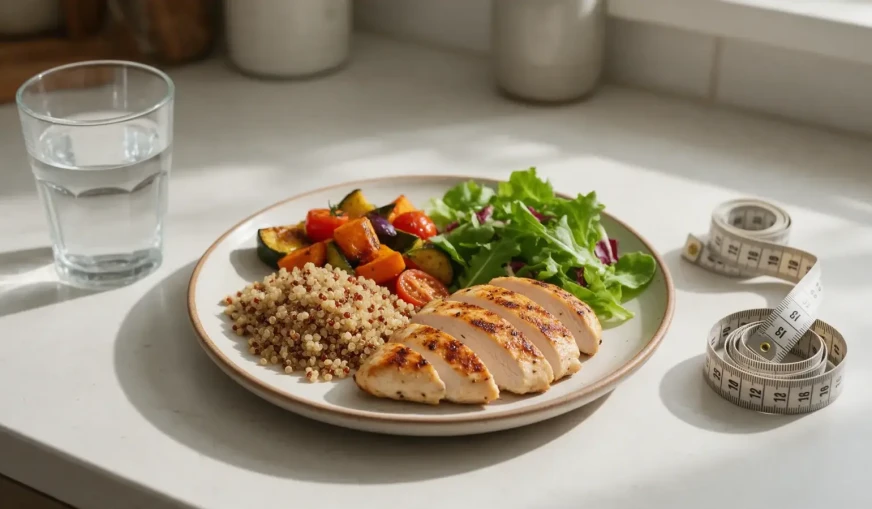
- Learn the plate model: Half the plate vegetables, a quarter protein, a quarter wholegrains or pulses.
- Protect your muscle: Have protein at every meal, and start resistance exercise with your doctor's approval.
- Know your triggers: Note at which times, in which moods and in which settings you tend to eat more.
For the basics of eating while on the medicine, you can look at the nutrition guide for people using weight-loss injections.
How Should You Eat in the Stopping Period?
In the stopping period, the aim is to meet the rise in appetite with high-volume, high-fibre, protein-rich foods and to keep energy-dense foods under control. In this way the wish to eat more can be managed without weight rising quickly.
| Strategy | Why it helps | Practical example |
|---|---|---|
| Protein at every meal | Prolongs fullness and limits muscle loss | Eggs, yoghurt, cheese, chicken, fish, pulses |
| Plenty of fibre and vegetables | Provides volume and keeps blood sugar steadier | Salad, vegetables cooked in olive oil, lentils, chickpeas, bulgur |
| Planned snack | Prevents extreme hunger in the evening | Fruit and a handful of nuts, or yoghurt |
| Fewer liquid calories | Sugary drinks do not keep you full | Water, mineral water, ayran (a salted yoghurt drink), unsweetened tea |
| Eating slowly | Gives time for the fullness signal to reach the brain | Spreading the meal over at least 20 minutes |
You do not need to keep portions as small as when you were on the medicine, but it is important to increase them in a controlled way. For example, a good approach is first to enlarge the vegetable and protein portion, while keeping energy-dense foods such as bread, rice and dessert moderate.
Why Does Preserving Muscle Mass Matter So Much?
In rapid weight loss, muscle can be lost along with fat, and a drop in muscle mass lowers resting energy expenditure. This is one of the factors that makes weight gain easier after the medicine is stopped.
Work out your daily protein need with your dietitian, according to your weight, age and kidney health. It is more effective to spread protein across breakfast, lunch and dinner than to eat it in one meal. Doing resistance exercise on at least two days a week also helps to preserve muscle. The article on losing weight without losing muscle offers more on this.
What Might a Sample Day After Stopping Look Like?
The example below shows the framework of a day that meets increased appetite in a balanced way. Amounts should be adjusted with your dietitian according to your height, weight, activity and health.
- Breakfast: A two-egg vegetable omelette, a slice of white cheese, plenty of greens, tomato and a slice of wholegrain bread.
- Snack: A bowl of yoghurt with a handful of strawberries or a small apple.
- Lunch: Grilled chicken or a chickpea salad, and a bowl of lentil soup.
- Snack: A piece of fruit and a few raw almonds or walnuts.
- Dinner: Baked fish or meatballs (köfte), a vegetable dish cooked in olive oil, cacık (yoghurt with cucumber) and a few spoonfuls of bulgur pilaf.
In this routine every meal contains protein and vegetables; dessert or pastry is not banned completely, but is given a moderate place in the weekly plan. Because banned lists often increase loss of control, a flexible but planned approach is more sustainable.
How Do Sleep, Stress and Emotional Eating Affect Weight?
Poor sleep and heavy stress can increase appetite and can strengthen the pull towards high-energy, sugary foods in particular. When the effect of the medicine wears off, these triggers are felt more clearly.
Regular sleep times, short walks through the day and simple notes to help you spot emotional eating are as important as the eating plan. If you feel that your eating behaviour is out of control, getting support from a mental health professional can also be part of the process.
How Should You Track Your Weight Without the Medicine?
Following your weight, waist measurement and habits regularly, but not obsessively, lets you notice small rises before they grow. Weighing yourself once a week in the same conditions is enough for most people.
Set yourself an "early warning range": if your weight goes above this range, review your meal plan, your sleep and your movement routine. For more suggestions on keeping weight steady in the long term, you can read my article on strategies for keeping weight steady after a diet.
Remember that in some people the doctor may consider it appropriate to continue treatment or to adjust the dose gradually. This is entirely a medical decision; do not stop, start or change the dose of the medicine on your own.
What Does Dietitian Support Add in This Process?
Dietitian support helps you to put sustainable eating skills in place of the appetite control that the medicine provided. A meal plan, a protein target, portion adjustment and concrete solutions for the situations you find difficult are worked out together.
The first months after stopping are the most critical time; regular consultations in this period let small slips be corrected before they grow. If you live outside Istanbul or have a busy schedule, we can plan this process together through online diet counselling. You can find more information on the possible effects of rapid weight loss with the medicine in the article on sudden weight loss with Ozempic.
Sources
- Wilding JPH et al. – Weight regain and cardiometabolic effects after withdrawal of semaglutide: The STEP 1 trial extension (Diabetes Obes Metab, 2022)
- Aronne LJ et al. – Continued Treatment With Tirzepatide for Maintenance of Weight Reduction in Adults With Obesity: The SURMOUNT-4 Randomized Clinical Trial (JAMA, 2024)
- NIDDK – Prescription Medications to Treat Overweight & Obesity
- NHS – Semaglutide
This article is for general information only; please consult your doctor and dietitian about your own situation.
Frequently Asked Questions
How soon does weight come back after stopping a weight-loss injection?
This varies greatly from person to person. In studies, weight gain has mostly been seen to begin in the months after the medicine is stopped; however, eating habits, muscle mass, movement and sleep noticeably affect this pace. It is not possible to give a time or an amount that applies to everyone.
Does reducing the injection gradually prevent weight gain?
A plan to reduce the dose or stop is entirely your doctor's decision. Whichever method is chosen, what matters most for keeping weight steady is the eating and movement habits built during this process.
My appetite has increased a lot since stopping the injection. What should I do?
Set up a planned routine without skipping meals, with protein and plenty of vegetables at every meal, and add a snack in the afternoon so you do not get too hungry in the evening. If your urge to eat feels uncontrollable, talk to your doctor and dietitian.
What diet should I follow after stopping the injection?
There is no single "post-injection diet". A balanced, sustainable way of eating with enough protein and fibre is the most suitable approach; crash diets can increase muscle loss and weight fluctuation.
Does exercise stop weight coming back?
Regular physical activity, resistance exercise in particular, makes an important contribution to preserving muscle mass and keeping weight steady. It may not be enough on its own; its effect increases when it is combined with your eating routine.
Book an appointment for a personalised nutrition plan
The information in this article is general; what you need depends on your age, health and goals. Message us and we will build the plan that suits you together.

This content is for information only. For a personalised nutrition programme, please consult a dietitian.


