

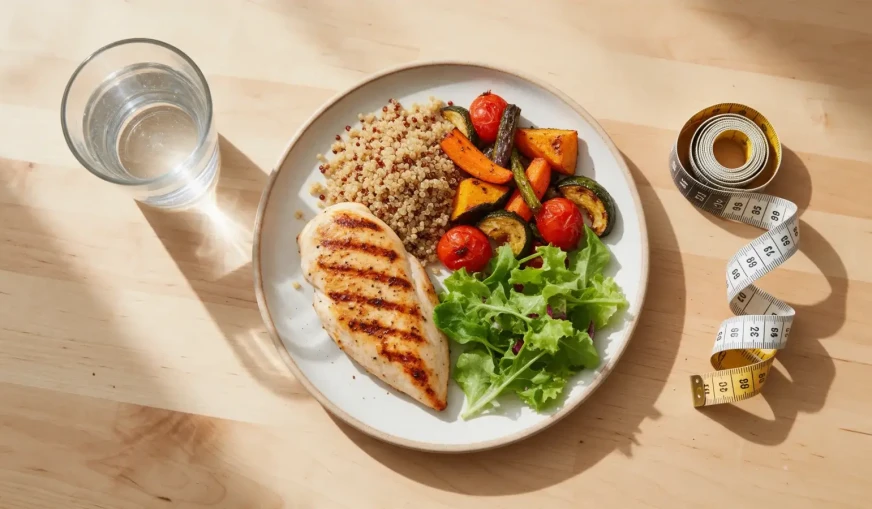
The basic rule of eating while taking Ozempic is to meet the nutrients your body needs despite a reduced appetite: small, frequent meals, a protein source at every meal, fibre from vegetables and wholegrains, enough fluid through the day, and limiting fatty, heavy meals. Ozempic is a medicine used on a doctor's prescription and under a doctor's follow-up; your nutrition plan should be part of that follow-up.
A problem that comes up often is that, when appetite falls,, meals get skipped at random and protein and fluids fall short by the end of the day. In this article I share a practical meal routine and a sample day for someone taking semaglutide.
- Ozempic is a prescription medicine whose active ingredient is semaglutide and which is used in the treatment of type 2 diabetes; its use for weight management is a doctor's decision.
- The medicine reduces appetite and slows stomach emptying; that is why small portions and eating slowly are tolerated more comfortably.
- Protein at every meal, and enough vegetables, fruit and wholegrains each day, help limit muscle loss and constipation.
- Fatty, fried and very sugary foods and alcohol can make side effects such as nausea worse.
- Make decisions about the dose, changing medicine and side effects only with your doctor.
What Is Ozempic and How Does It Affect Eating?
Ozempic is a medicine containing semaglutide, from the group of GLP-1 receptor agonists. According to the NHS, semaglutide is used under the name Ozempic in type 2 diabetes and under the name Wegovy in the treatment of obesity, and it is given only on prescription.
Two effects of the medicine stand out in terms of eating: it reduces appetite and prolongs the feeling of fullness, and it slows digestion. This makes it easier to eat less; but it also makes large portions, fatty meals and eating quickly more likely to cause nausea, bloating and indigestion. These effects vary from person to person and are usually more noticeable at the start of treatment and when the dose goes up.
The NHS also reminds people that the medicine should not be obtained from anywhere other than registered pharmacies, and that fake weight-loss medicines are sold online. Whether to use it, at what dose and for how long is entirely your doctor's decision.
What Should a Meal Routine Look Like While Taking Ozempic?
The most comfortably tolerated routine is three small main meals a day and, if needed, one or two small snacks. Even if you have no appetite, not going without food for long prevents nausea from increasing and uncontrolled snacking at the end of the day.
- Use a small plate: Start without filling the plate and add more afterwards if needed.
- Eat slowly: Keep mouthfuls small, chew well and stop as soon as you feel full.
- Eat the protein first: While appetite is limited, finishing the protein on the plate is the priority.
- Do not eat heavily before bed: Finishing dinner at least two or three hours before bed reduces reflux and indigestion.
If you are curious about the effect of eating speed on fullness, you can look at the article on the effects of eating speed.
Why Should There Be Protein at Every Meal?
In rapid weight loss, the loss may come not only from fat but from muscle tissue too. Enough protein and regular strength exercise are the two key tools for preserving muscle mass.
A joint statement published in 2025 by the American College of Lifestyle Medicine, the American Society for Nutrition and obesity societies lists preventing muscle and bone loss, preventing nutrient deficiencies and managing digestive side effects through diet among the priorities during GLP-1 therapy. In practice this means adding a palm-sized protein source to every main meal:
- Eggs, cheese, yoghurt, kefir, milk
- Chicken, turkey, fish, lean red meat
- Lentils, chickpeas, dried beans, borlotti beans
Your personal protein need varies with your weight, age, kidney function and activity. I covered this topic in more detail in the article on whether it is possible to lose weight without losing muscle.
What Should You Eat While Taking Ozempic? A Sample Day
The menu below is an example with small portions that puts protein and fibre to the fore. If you have diabetes, the amount of carbohydrate and the timing of meals should be adjusted to the other medicines you take.
| Meal | Example | Why? |
|---|---|---|
| Breakfast | 1–2 eggs, a slice of cheese, tomato and cucumber, one thin slice of wholemeal bread | Starting the day with protein and fibre balances fullness |
| Snack | A bowl of yoghurt and a small piece of fruit | Prevents long gaps without food, provides protein and fluid |
| Lunch | Grilled chicken or köfte (Turkish meatballs), palm-sized, vegetables cooked in olive oil, a few spoonfuls of bulgur | A small but balanced plate |
| Snack | Ayran (Turkish salted yoghurt drink) or kefir; a few walnut kernels if you like | Adds fluid and protein |
| Dinner | Lentil soup, baked fish or dried beans, salad | Fibre and protein, instead of heavy fried food |
If your appetite is very low, you can halve the portions and increase the number of meals. What matters is getting close to your protein, vegetable and fluid goals by the end of the day.
Which Foods and Drinks Can Make Symptoms Worse?
Fatty, fried, very spicy and very sugary foods and fizzy drinks, combined with slowed digestion, can increase nausea, bloating and heartburn. According to the NHS, alcohol is also not recommended, because it can make side effects such as nausea and vomiting worse.
- Fried foods, sautéed dishes, pastries and creamy sauces
- Syrupy desserts, sugary drinks and fruit juices
- Fizzy drinks (they can increase bloating)
- Very large portions and heavy meals eaten late
These are not absolute bans; but if you have symptoms, they are the first groups to simplify. You can find advice specific to symptoms such as nausea, constipation and tiredness in the nutrition guide for people using weight-loss injections.
Why Are Fluids and Fibre So Important?
With a reduced appetite, drinking water can be forgotten too; if there is nausea or diarrhoea, fluid loss increases. Constipation is a common result of both the medicine and eating less. That is why fluids and fibre are the quiet but indispensable parts of the plate while taking Ozempic.
Keep your water bottle with you through the day and drink in small sips between meals. Get fibre from vegetables, fruit, pulses and wholegrains; but in the first days of treatment or during periods of nausea, add very high-fibre foods gradually rather than all at once. If you have severe vomiting, diarrhoea or a marked drop in the amount of urine, see your doctor because of the risk of fluid loss.
Easy ways to increase fibre are: wholemeal or rye bread instead of white bread, bulgur instead of rice pilaf, lentils, chickpeas or dried beans at least two or three times a week, a portion of vegetables at every meal and two portions a day of fruit eaten with the skin on. Prunes, kiwi and oats are good options for people prone to constipation. If you do not increase your water intake as you increase fibre, bloating and constipation can get worse; the two should always be thought of together. Soups, ayran, kefir and watery vegetable dishes are a practical solution on days when appetite is low, since they provide both fluid and nutrients.
Who Should Be Especially Careful?
In some situations, a nutrition plan needs closer follow-up. If one of these applies to you, act together with your doctor and dietitian.
- People taking other diabetes medicines: The NHS notes that semaglutide can lower blood sugar, especially when taken with some diabetes medicines. Tell your doctor about symptoms such as sweating, trembling, palpitations and dizziness.
- People planning a pregnancy: According to the NHS, semaglutide is not used in pregnancy and should be stopped at least two months before if you are planning a pregnancy. Make this decision with your doctor; you can plan the process with the nutrition side of pregnancy preparation.
- People with a history of eating disorders: A medicine that makes it easier to eat very little may need extra support for these people.
- Older people and those with low muscle mass: The protein and exercise plan is even more important.
For side effects such as nausea, constipation and tiredness, you can look at the articles on eating to manage the side effects of weight-loss injections and muscle loss while using weight-loss injections for preserving muscle mass. For a general assessment of Ozempic's effects and risks on weight loss you can read the article on rapid weight loss with Ozempic, and for the process of stopping the medicine, the article on whether weight comes back when you stop weight-loss injections. For a nutrition plan specific to you during medication use, we can work together, in line with your doctor's follow-up, within online diet counselling.
Sources
- NHS – Semaglutide
- NIDDK – Prescription Medications to Treat Overweight & Obesity
- Mozaffarian D et al. Nutritional priorities to support GLP-1 therapy for obesity. Obesity (Silver Spring), 2025 (PubMed)
- WHO – Healthy diet
This article is for general information only; please consult your doctor and dietitian about your own situation.
Frequently Asked Questions
How many meals should I eat while taking Ozempic?
For most people, three small main meals a day and, as needed, one or two small snacks make for a comfortable routine. Skipping meals because your appetite has dropped can increase nausea and lower your protein intake.
Can I eat sweets while taking Ozempic?
An occasional small portion of dessert can be part of the plan; but syrupy and very fatty desserts can increase nausea and bloating. It is easier to tolerate a sweet craving with fruit, yoghurt or a small portion of a milk-based dessert.
Can I drink coffee while taking Ozempic?
Coffee can usually be part of the plan; but drinking it on an empty stomach and having many cups can increase stomach discomfort in some people. Coffee should not take the place of your water goal.
Can you lose weight with Ozempic without dieting?
Although the medicine reduces appetite, its effect on weight management is assessed together with diet and exercise. Balanced eating is important both for preserving muscle mass and for holding on to gains if the medicine is stopped later.
Do I need vitamin supplements while taking Ozempic?
The need for supplements varies from person to person and should be assessed with blood tests. Rather than starting a supplement on your own, talk to your doctor; make a varied and balanced diet your priority.
Book an appointment for a personalised nutrition plan
The information in this article is general; what you need depends on your age, health and goals. Message us and we will build the plan that suits you together.

This content is for information only. For a personalised nutrition programme, please consult a dietitian.


