

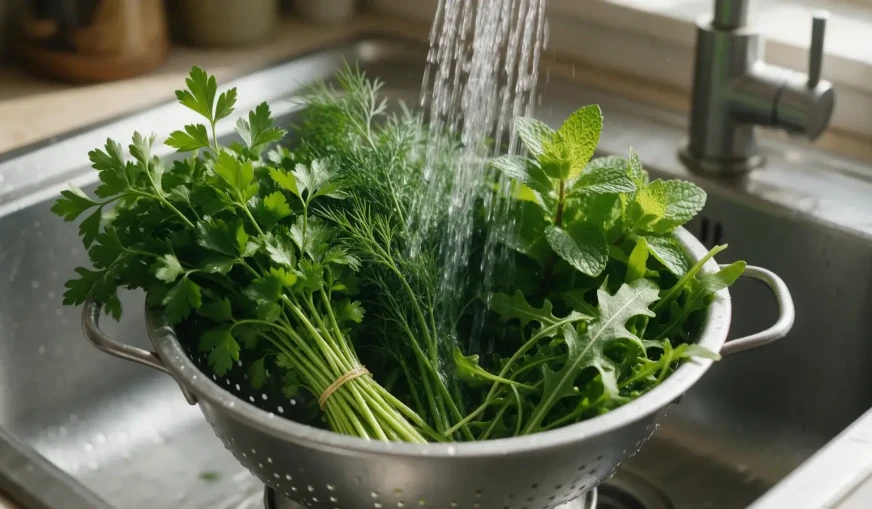
Yes, you can eat parsley in pregnancy; the normal amounts used in cooking, salads and soups are considered safe and contribute valuable nutrients such as folate and vitamins C and K. What should be avoided in pregnancy is not parsley itself but its concentrated forms, such as parsley tea, parsley cures, parsley oil and supplements. What matters most is to wash greens thoroughly before eating them.
In Turkish cooking, parsley, dill, mint, rocket and watercress appear on almost every table. You do not have to give up these greens in pregnancy; but because they are eaten raw, you need to pay more attention than ever to hygiene rules. In this article I explain the safe use of parsley, the forms to avoid and the steps for cleaning greens properly.
- Parsley in cooking and salads can be eaten safely in pregnancy.
- Concentrated forms such as parsley tea, cures, juice, oil and supplements are not recommended in pregnancy.
- Greens eaten raw should be washed thoroughly because of soil-borne infections.
- Dill, mint, rocket and watercress can also be eaten in normal amounts.
- If you are thinking of a herbal cure or supplement, ask your doctor first.
Why Do People Wonder About Parsley in Pregnancy?
The concern comes from certain compounds found in the concentrated forms of the plant that have traditionally been thought to act on the womb. These compounds are present in very low amounts in the few sprigs of parsley used in cooking; the risk is linked with using the plant in concentrated forms such as tea, cures, oil or supplements.
The popular belief that a parsley cure “brings on a period” or “shifts water” adds to this worry. The safety of such cures in pregnancy has not been shown, and they should not be used. So the question is not “can you eat parsley” but “how much, and in what form”.
What Is the Nutritional Value of Parsley?
Parsley is a low-energy green that is dense in vitamins and minerals; it is especially rich in vitamin K, vitamin C and folate. However, because the amount used in a salad is small, its contribution should be considered together with other vegetables and fruit.
The values below are approximate figures for 100 grams of fresh parsley based on USDA data. A pinch or a few tablespoons of chopped parsley is only a small part of this.
| Nutrient (100 g fresh parsley) | Approximate amount | Contribution in pregnancy |
|---|---|---|
| Energy | 35–40 kcal | A low-energy source of flavour and volume |
| Vitamin C | around 130 mg | Supports absorption of plant-based iron |
| Vitamin K | Very high | Blood clotting and bone health |
| Folate | around 150 mcg | Cell division and neural tube development |
| Iron | around 6 mg | Plant-based iron; absorption rises when eaten with vitamin C |
If you take a blood-thinning medicine, it is advised to eat greens high in vitamin K regularly rather than in very variable amounts from day to day, and to discuss this with your doctor. For other folate-rich foods, you can look at the article on foods containing folic acid.
Can You Drink Parsley Tea and Parsley Cures in Pregnancy?
No, parsley tea, parsley juice and parsley cures are not recommended in pregnancy. In these forms the plant is eaten far more concentrated, and there is not enough data on their safety in pregnancy.
Similarly, capsules or supplements containing parsley oil, parsley seed and parsley extract should not be used. Parsley can often be among the herbal blends marketed as “swelling relievers”, “detox” or “slimming”; read the labels carefully. I discussed the claims about parsley tea and weight in general in the article on whether parsley tea helps you lose weight, and the general framework for herbal teas in pregnancy in the article on herbal teas in pregnancy.
Are Other Greens Safe in Pregnancy?
Greens such as dill, mint, rocket, watercress, lettuce, purslane and spring onions can be eaten safely in pregnancy as long as they are washed well. As with parsley, the problem is not the amounts in a meal but concentrated tea, cure or supplement forms.
- Dill: Can be used in normal amounts in salads, yoghurt and vegetable dishes.
- Mint: Fresh or dried, it causes no problem in cooking; have mint tea in moderation, and cut back if it makes heartburn worse.
- Rocket and watercress: Provide folate and vitamin C; because they grow close to the soil, they need especially careful washing.
- Spinach and chard: Eating them cooked is better for both safety and digestion.
- Sprouts: Because raw alfalfa, bean and other sprouts can carry a higher risk of bacteria, it is safer to eat them cooked in pregnancy.
How Should Greens Be Washed and Stored?
With greens eaten raw, the real risk is microorganisms such as toxoplasma and listeria that can be passed on from soil and dirty water. The NHS advises washing fruit, vegetables and salad ingredients thoroughly before eating them in pregnancy.
- Separate the greens from the bunch and pick out yellowed and rotten leaves.
- First soak in plenty of water to let the soil settle, then wash leaf by leaf under running water.
- Using vinegar or bicarbonate water is not essential; what is really effective is careful washing under running water. Do not use detergent.
- After washing, drain in a clean colander or dry with a salad spinner.
- Do not use the chopping board and knife you use for raw meat for the greens.
- Store washed greens in a closed container in the fridge and eat them within a few days.
If you cannot be sure about the hygiene of salads you eat out, preferring cooked vegetable dishes throughout pregnancy can be a more comfortable choice. I have gathered the other rules of food safety in pregnancy in the article on what not to eat during pregnancy.
What Are Common Mistakes With Parsley and Greens?
The most common mistake is either turning greens into an uncontrolled “cure” because they are “healthy”, or, the opposite, removing them from the table completely out of fear. Both extremes are unnecessary.
- Green smoothies and detox juices: The large amount of parsley, spinach and other greens packed into one glass means far more concentrated consumption than in meals; do not make such drinks a habit in pregnancy.
- Using them unwashed: Apart from packaged products marked “washed”, wash all greens again at home.
- Salads left standing: Salads left for hours at room temperature after preparation are suitable for bacteria to grow.
- Giving them up completely: Giving up greens out of fear means losing a valuable source of folate and vitamin C.
How Can I Use Parsley in Pregnancy Eating?
It is best to think of parsley not as a main food but as a companion that enriches the table. Especially when used alongside sources of plant-based iron, it contributes to iron absorption thanks to its vitamin C.
- Add plenty of parsley and lemon to mercimek köftesi (Turkish red lentil balls), bulgur salad and chickpea salad.
- Put a handful of parsley and rocket on a breakfast plate with a boiled egg.
- A yoghurt sauce with dill and parsley is a tasty companion to grilled chicken or köfte (Turkish meatballs).
- Sprinkle freshly chopped parsley over soups at serving time.
If you would like to plan your whole eating routine in pregnancy, including greens, in line with your obstetrician's advice, you can look at my page on nutrition counselling for pregnancy. If you have signs of infection in pregnancy such as fever, diarrhoea or muscle aches, see your doctor without waiting.
Sources
- NHS – Foods to avoid in pregnancy
- NHS – Toxoplasmosis
- WHO – Food safety
- Turkish Ministry of Health – Turkey Nutrition Guide (TÜBER) 2022
This article is for general information only; please consult your doctor and dietitian about your own situation.
Frequently Asked Questions
How much parsley can you eat a day in pregnancy?
There is no set limit for the usual amounts used in cooking, salads and soups; a bunch of parsley added to a bowl of salad is no problem. What should be avoided is regular consumption of parsley in concentrated forms such as tea, cure, juice or supplements.
Does parsley cause miscarriage?
There is no information that parsley eaten in normal amounts in food causes miscarriage. The concern relates to the concentrated forms of the plant; for this reason parsley cures, tea, oil and supplements should not be used in pregnancy.
Can you eat tabbouleh or kısır in pregnancy?
Yes, kısır (Turkish bulgur salad) or tabbouleh made with thoroughly washed greens, prepared fresh and kept in the fridge, can be eaten in pregnancy. Avoid salads that have been left at room temperature for a long time when eating out.
Does parsley shift water in pregnancy?
It is a common belief that parsley shifts water, but parsley cures or tea are not recommended for swelling in pregnancy. To cope with swelling, methods such as movement, raising your legs and reducing the salt in ready-made foods are used; for sudden and marked swelling, see your doctor straight away.
Can dried parsley be used in pregnancy?
Yes, dried parsley used as a seasoning in cooking is also safe in normal amounts. Avoid products that contain concentrated parsley extract.
Book an appointment for a personalised pregnancy nutrition plan
Nutritional needs in pregnancy change with the week of pregnancy, weight change and test results. Message us for a plan that fits your doctor's advice.

This content is for information only. For a personalised nutrition programme, please consult a dietitian.


