

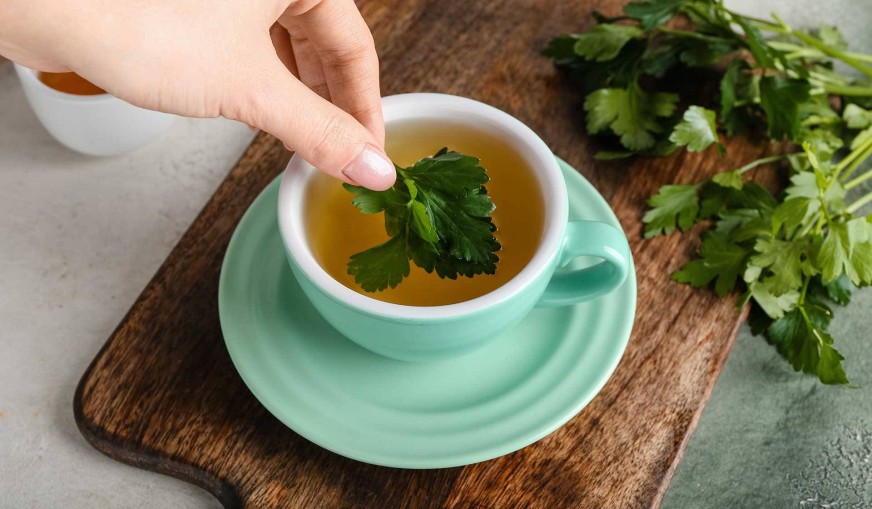
Parsley is a low-calorie vegetable that also contains a good amount of fibre, vitamin C, iron and other nutrients. Parsley tea is therefore sometimes mentioned as a drink to go with a weight-management plan. Before starting any diet or health programme, though, it is important to speak to your doctor.
What Is Parsley Tea?
It is a herbal tea made from fresh parsley leaves that can be drunk hot or cold.
The parsley plant contains many vitamins and minerals, such as vitamin C, vitamin A, iron, potassium and calcium, and a lot of research has been done on the health properties of parsley. Parsley tea contains some of these nutrients. Some people drink it hoping it helps with weight loss. However, care is needed about its potential side effects and interactions with some medicines.
Does Parsley Tea Help You Lose Weight?
Research and data on whether parsley tea leads to weight loss are very limited. Some small studies suggest the diuretic properties of parsley might help the body shed excess fluid, but these results have not yet been established, and any change on the scales would be fluid rather than fat.
It should also be remembered that, alongside parsley tea, a healthy diet and exercise programme are what matter. Combining these can help you manage your weight in a healthy way.
It is fine to include parsley as part of healthy eating plans. When making decisions about any diet or health programme, however, it is important to consult a doctor or nutrition specialist first.
What Are the Possible Benefits of Parsley Tea?
Parsley tea provides some of the nutrients found in parsley leaves. Possible benefits include the following (research is limited):
- Urinary tract: Parsley has traditionally been used for its diuretic properties, but there is little scientific evidence that parsley tea prevents urinary tract infections.
- Immune system: Parsley is rich in nutrients such as vitamin C, vitamin A and iron, which contribute to the normal function of the immune system.
- Digestive health: Parsley is rich in fibre and other nutrients and is good for digestive health.
- Anti-inflammatory compounds: Flavonoids and antioxidants in parsley are being studied for their role in the body's inflammatory processes.
- Teeth and gums: Chlorophyll in parsley is traditionally used to freshen breath, but this is not a substitute for dental care.
- Some laboratory studies have looked at compounds in parsley, but this does not mean parsley tea prevents or treats cancer.
How Should It Be Drunk?
Parsley tea can be drunk in the following ways:
- Drink no more than 2-3 cups a day: Parsley tea has a diuretic effect, so drinking too much can lead to dehydration.
- Drink it on a full stomach if it upsets you on an empty one.
- Do not steep it for too long: If steeped for a long time it can taste bitter and lose some nutrients. About 5-10 minutes is enough.
- If you take medication, speak to your doctor: Parsley tea can interact with some medicines and increase side effects, so if you take any medication, it is recommended that you check with your doctor first.
- If you are pregnant or breastfeeding, speak to your doctor: Please consult your doctor before drinking any herbal tea during pregnancy and breastfeeding.
How Is Parsley Tea Made?
Ingredients:
- 1 bunch of fresh parsley
- 3 cups (about 600 ml) of water
- 1 dessert spoon of lemon juice (optional)
Method:
- Wash the parsley.
- Put 3 cups (about 600 ml) of water in a pan and bring it to the boil.
- Add the parsley to the boiling water and keep boiling for 2-3 minutes.
- Take the pan off the heat and leave it to steep for 5-10 minutes.
- Strain the tea through a strainer and add lemon juice if you like.
You can drink it hot or cold.
This article is for general information only; please consult your doctor and dietitian about your own situation.
Book an appointment for a personalised nutrition plan
The information in this article is general; what you need depends on your age, health and goals. Message us and we will build the plan that suits you together.

This content is for information only. For a personalised nutrition programme, please consult a dietitian.


