

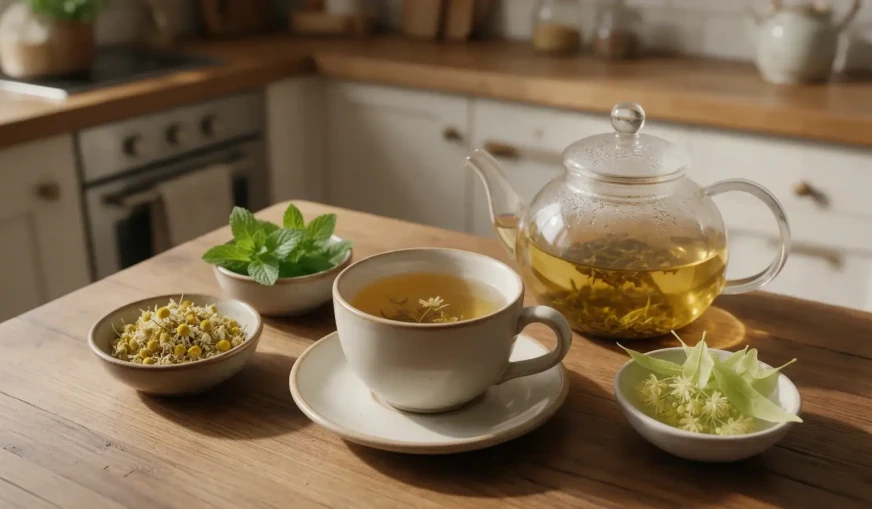
Herbal teas can be drunk in moderation in pregnancy, but “herbal” does not mean safe. The NHS advises limiting herbal teas such as chamomile and mint to no more than 4 cups a day and avoiding teas that contain liquorice root; green tea and black tea contain caffeine, so they must be counted within the daily limit of 200 mg of caffeine.
Because tea is an inseparable part of daily life in Turkey, one of the questions I am asked most in pregnancy is “How many glasses of tea can I drink?” In this article I explain the teas people wonder about most, from black and green tea to chamomile, linden and fennel, and the points to watch.
- Black and green tea contain caffeine; total caffeine in pregnancy should not exceed 200 mg a day.
- Herbal teas such as chamomile, mint and linden can be drunk in moderation; the NHS recommends no more than 4 cups a day.
- Teas containing liquorice root are not recommended in pregnancy.
- Slimming, detox and “mixed herb” teas are not suitable in pregnancy.
- Check with your doctor before using any product, including herbal capsules, extracts and concentrated blends.
Can You Drink Black Tea in Pregnancy?
Yes, black tea can be drunk in pregnancy; but because it contains caffeine, the amount should be limited. According to the NHS, a mug of tea contains about 75 mg of caffeine, and total daily caffeine in pregnancy is advised not to exceed 200 mg.
A tulip-shaped Turkish tea glass (about 100 ml) is smaller than a mug, but the strength of the brew changes the caffeine content markedly. As a practical approach, limit yourself to a few glasses of lightly brewed tea spread through the day, and if you also have coffee, cola or chocolate that day, add those to your total caffeine.
Tea can also reduce the absorption of plant-based iron. So drinking tea not with meals but about an hour after a meal is beneficial, especially for pregnant women at risk of iron deficiency. For the vitamin and mineral balance in pregnancy you can look at the article on vitamin and mineral needs during pregnancy.
To balance caffeine through the day, a practical method is to have a few glasses of light tea in the morning and at lunchtime and switch to caffeine-free options in the evening. Adding a date or a few dried apricots next to your tea instead of sugar also satisfies a sweet craving in a more balanced way.
Can You Drink Green Tea in Pregnancy?
Green tea can be drunk in moderation, but it too contains caffeine; the NHS gives a similar amount of caffeine per cup for black and green tea. So green tea is not a caffeine-free alternative and must be included in the daily caffeine count.
The US National Center for Complementary and Integrative Health (NCCIH) reminds us that caffeine intake in pregnancy should not go beyond a moderate level and that green tea is a source of caffeine. Capsules and supplements containing green tea extract can be much more concentrated and are not recommended in pregnancy. Stay away too from green tea blends marketed as “metabolism boosters”.
Are Herbal Teas Safe in Pregnancy?
There is not enough research on the effects of herbal teas in pregnancy; so the safest approach is to drink commonly used, mild herbs in moderation and to avoid strong, mixed or treatment-purpose products. The NHS recommends limiting herbal teas to no more than 4 cups a day.
The table below offers a general framework. Depending on your health, the medicines you take and your week of pregnancy, your doctor may give different advice.
| Tea | Caffeine | General approach in pregnancy |
|---|---|---|
| Black tea | Yes | Can be drunk in moderation; counted within the 200 mg daily caffeine limit |
| Green tea | Yes | Can be drunk in moderation; extract and capsule forms are not recommended |
| Chamomile | No | In moderate amounts; data on its safety are limited |
| Mint | No | In moderate amounts; cut back if it makes heartburn worse |
| Linden | No | In moderate amounts, lightly brewed |
| Ginger | No | Often used for nausea; ask your doctor before using it regularly |
| Fennel, sage | No | Concentrated and regular consumption not recommended; ask your doctor |
| Liquorice root | No | Should be avoided |
| Slimming, detox and mixed herb teas | Varies | Not suitable in pregnancy |
Can You Drink Chamomile, Mint and Linden Tea?
Chamomile, mint and linden tea, brewed lightly and drunk at no more than a few cups a day, are acceptable options for most pregnant women. However, the NCCIH notes that very little is known about whether chamomile is safe in pregnancy; so moderation is important.
- Chamomile: Can be chosen as a soothing hot drink in the evening. Avoid it if you are allergic to chamomile or plants from the same family.
- Mint: Can ease indigestion in some people; but because it can make heartburn worse, cut back if you have reflux in pregnancy. The article on what helps heartburn in pregnancy can guide you on this.
- Linden: A favourite option in cold weather; it should be lightly brewed and drunk in moderation.
Which Herbal Teas Should Be Avoided in Pregnancy?
Teas containing liquorice root, slimming and detox teas, herbal blends with a laxative effect and concentrated herbal products used for treatment are not recommended in pregnancy. The NHS advises avoiding these teas, noting that liquorice root can harm the baby's development.
- Slimming and detox teas: They often contain laxative herbs such as senna; they can cause loss of fluid and electrolytes. I discussed whether these products work at all in the article on whether slimming teas work.
- Strong parsley tea: Parsley in food is fine, but concentrated consumption of parsley as a tea or “cure” is not recommended in pregnancy.
- Sage and fennel: Apart from an occasional cup, regular and concentrated consumption is not recommended.
- Raspberry leaf tea: This tea, which is linked with the later stage of pregnancy, should be used only with your doctor's approval.
- Unlabelled blends: Do not use herbalist blends of unknown content in pregnancy.
Are Teas Recommended for Nausea and Sleep?
Ginger is a commonly used option for nausea in pregnancy and can bring relief in some women; but you should ask your doctor before using it regularly, especially if you take blood-thinning medicines. I explained the dietary ways of coping with nausea in the article on nausea during pregnancy.
For sleep, a cup of lightly brewed chamomile or linden can be a relaxing habit; but it does not solve the cause of sleeplessness. Cutting back on black and green tea in the evening stops caffeine from disturbing sleep. If your sleeplessness is marked, talk to your doctor.
What Should You Watch for When Preparing and Choosing Tea?
With herbal teas in pregnancy, the real risk often comes less from the herb itself than from its concentration and its uncertain content. A few simple habits make for safer consumption in terms of both caffeine and herbal content.
- Brew lightly: Rather than boiling herbal teas for a long time, steep them in hot water for a few minutes; drink black tea light too.
- Choose single-herb products: Packaged products with the contents clearly written and only one herb are more predictable than herbalist blends.
- Read the label: Products carrying words such as “slimming”, “detox” or “water-shifting” may contain laxative or diuretic herbs.
- Limit sugar: Adding sugar, honey or ready-made flavoured syrups to tea brings unnecessary energy and blood sugar load; this matters even more if you have gestational diabetes.
- Watch for medicine interactions: If you take any medicine, always tell your doctor about the herbal tea you drink regularly.
What Can You Drink Instead of Tea?
The main drink in pregnancy is water; in place of tea or between cups, you can choose water, mineral water, ayran (Turkish salted yoghurt drink), kefir and a small amount of warm lemon water. Water flavoured with fresh fruit slices or mint leaves can make it easier to drink more water through the day.
Caffeine-free teas are a comfortable option as far as caffeine is concerned; even so, check the herbs in the ingredients. For other foods and drinks to stay away from in pregnancy, you can look at my article on what not to eat during pregnancy.
If you would like to plan your whole eating routine in pregnancy, including drink choices, in line with your obstetrician's advice, you can look at my page on nutrition counselling for pregnancy. For symptoms such as severe vomiting, bleeding or sudden swelling, see your doctor without wasting time on tea and herbal remedies.
Sources
- NHS – Foods to avoid in pregnancy (caffeine and herbal teas)
- NCCIH – Green Tea
- NCCIH – Chamomile
- Turkish Ministry of Health – Turkey Nutrition Guide (TÜBER) 2022
This article is for general information only; please consult your doctor and dietitian about your own situation.
Frequently Asked Questions
How many glasses of tea can you drink a day in pregnancy?
This depends on how strong the tea is and on the other sources of caffeine you have through the day. According to the NHS, a mug of tea contains about 75 mg of caffeine and daily caffeine in pregnancy should not exceed 200 mg; a few glasses of lightly brewed tea often stay within this limit.
Can you drink decaffeinated tea in pregnancy?
Decaffeinated black or green tea is a more comfortable option as far as caffeine is concerned. Even so, because it can reduce iron absorption, it is best drunk apart from meals, and the ingredients of herbal blends should be checked.
Can you drink fennel tea for gas in pregnancy?
Regular and concentrated consumption of fennel tea is not recommended in pregnancy. For gas and bloating, first try smaller meals, eating slowly, increasing fibre gradually and moving about; if you would like to use tea, ask your doctor.
Can you drink linden and sage tea for a cold in pregnancy?
One or two cups of lightly brewed linden do not usually cause a problem. Concentrated and regular consumption of sage tea is not recommended. If you have a fever, cough or tiredness, see your doctor rather than getting by on herbal teas.
Can herbal teas harm the baby in the womb?
There is no strong evidence that moderate consumption of mild herbal teas does harm; but the effect of many herbs in pregnancy has not been studied enough. So the safest way is to be moderate, to avoid liquorice root and concentrated blends, and to ask your doctor.
Book an appointment for a personalised pregnancy nutrition plan
Nutritional needs in pregnancy change with the week of pregnancy, weight change and test results. Message us for a plan that fits your doctor's advice.

This content is for information only. For a personalised nutrition programme, please consult a dietitian.


