

Low ferritin shows that the iron stores in the body are falling, and it often appears before anaemia develops. The most common causes are heavy periods, inadequate iron intake, pregnancy and absorption problems; it can lead to symptoms such as tiredness, hair shedding and getting tired easily. The cause needs to be investigated and, if necessary, treated by a doctor; diet supports the refilling of the stores by eating iron-rich foods in the right combinations.
It can be confusing when your haemoglobin is normal on a blood test but your ferritin comes back low. In this article I explain what ferritin is, what low levels mean and the role of diet in this picture. Interpreting your ferritin result and deciding on treatment is your doctor's job.
- Ferritin is a protein that reflects the body's iron stores.
- Ferritin can fall before haemoglobin drops; in other words, iron stores may be empty even without anaemia.
- Heavy periods, pregnancy, mostly plant-based eating, absorption problems and blood loss are the main causes.
- Meat, chicken and fish containing haem iron, and plant sources combined with vitamin C, support the stores.
- Refilling the stores can take months; your doctor decides on a supplement, its dose and its duration.
What Is Ferritin and What Does It Do?
Ferritin is a protein that stores iron safely inside cells; the level of ferritin in the blood gives an idea of the body's total iron store. For this reason ferritin is one of the most important tests used to spot iron deficiency early.
Iron deficiency usually develops in stages. First the stores empty and ferritin falls; then there is not enough iron for making red blood cells; and in the last stage haemoglobin drops and iron deficiency anaemia appears. Low ferritin can be an early sign of this process.
What Symptoms Does Low Ferritin Cause?
Low ferritin causes no symptoms in some people, while in others it can lead to complaints even before anaemia develops. Symptoms usually start insidiously and can be confused with everyday tiredness.
- Constant tiredness, low energy and reduced exercise capacity
- Hair shedding, brittle nails
- Headache, difficulty concentrating
- Sensitivity to cold
- A restless feeling in the legs, especially in the evenings
- When anaemia develops, pallor, shortness of breath and palpitations
These symptoms can have other causes too, such as thyroid problems, B12 deficiency and sleep disorders. So, rather than explaining your complaints by ferritin alone, rely on your doctor's overall assessment.
Why Does Ferritin Fall?
Low ferritin comes about when the iron the body loses or uses is more than the iron taken in and absorbed. The reason for this imbalance varies from person to person and must always be investigated.
- Blood loss: Heavy periods are the most common cause; gastrointestinal bleeding is also something to be investigated, especially in men and in women after the menopause.
- Increased need: Pregnancy, breastfeeding, adolescence and periods of rapid growth.
- Inadequate intake: Eating patterns in which meat, chicken and fish are eaten little or not at all, and very low-calorie diets.
- Absorption problems: Coeliac disease, some gastrointestinal diseases, stomach operations and the long-term use of certain medicines.
- Intense exercise and frequent blood donation: Iron loss can rise, especially in endurance athletes.
MedlinePlus notes that ferritin results should not always be interpreted on their own, and that conditions such as infection and inflammation can raise ferritin. In other words, during an inflammatory illness ferritin may look “normal” even though iron stores are low; your doctor makes the assessment together with other tests.
Which Foods Should You Eat to Support Ferritin?
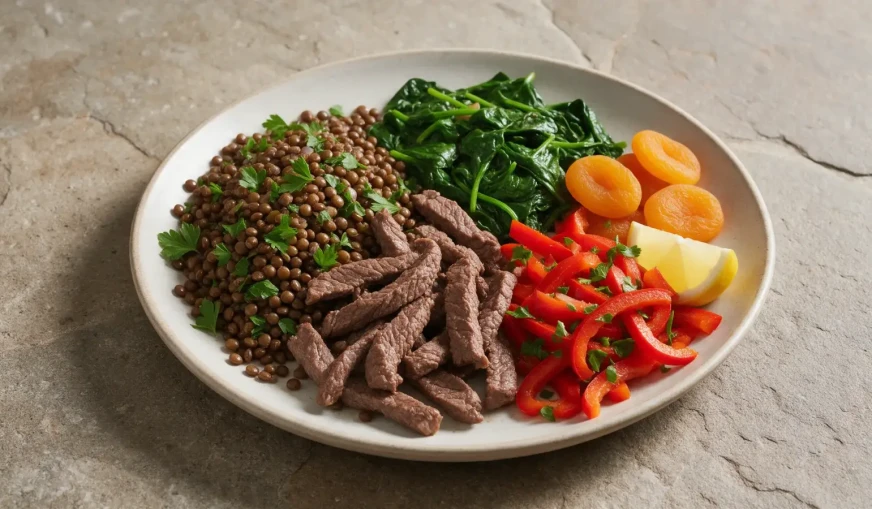
The basis of supporting iron stores is to eat sources of haem iron (red meat, chicken, fish), which is absorbed better, regularly, and to combine plant sources of iron with vitamin C. The table below summarises the different food groups and practical suggestions for using them.
| Food group | Examples | Practical tip |
|---|---|---|
| Haem iron sources | Red meat, mince, chicken thigh, turkey, anchovies, sardines, mussels (if you are not pregnant) | A few times a week, in palm-sized portions |
| Pulses | Lentils, chickpeas, dried beans, borlotti beans | Add tomato, pepper or lemon alongside |
| Dark green leafy vegetables | Spinach, chard, rocket, parsley | Eat with a squeeze of lemon or cooked with mince |
| Seeds and nuts | Pumpkin seeds, sesame, tahini, hazelnuts | Add to snacks and salads |
| Wholegrains | Bulgur, oats, wholemeal bread | Use together with pulses |
| Vitamin C sources | Oranges, mandarins, kiwi, strawberries, peppers, tomatoes | Eat at the same time as the iron-containing meal |
Traditional dishes that combine red meat and plant sources, for example chickpeas with meat, spinach with mince and dried beans with meat, are valuable combinations for iron absorption. For those who eat mostly plant-based, detailed advice is in the article on iron sources for vegans and vegetarians.
Weekly planning makes things easier too: for example, planning a meat or mince-and-vegetable dish on two or three days a week, fish on two days and a pulse dish on two or three days lets you eat iron-rich foods regularly without having to think about them day by day. Make it a habit to have a source of vitamin C at every meal.
Which Habits Reduce Iron Absorption?
Some compounds in tea, coffee and cocoa drinks, calcium-rich foods and bran products high in phytate can reduce the absorption of plant-based iron. You do not need to ban these foods; changing the timing is enough.
- Drink tea and coffee not with meals but about an hour after them.
- If you take an iron supplement, you may be asked not to take it at the same time as dairy products; ask your doctor about timing.
- Soaking pulses and pouring away the water before cooking can reduce the compounds that harm absorption.
- Adding an orange or mandarin to breakfast instead of tea helps make use of the iron in eggs and cheese.
A Sample Day for Raising Ferritin
The example below shows a balanced day that combines haem and non-haem iron with vitamin C. Portions should be adjusted to your personal needs.
- Breakfast: Menemen (Turkish scrambled eggs with tomato and peppers), white cheese, parsley, wholegrain bread and an orange; tea an hour after breakfast.
- Snack: A handful of pumpkin seeds and a few dried apricots.
- Lunch: Chickpeas with meat, bulgur pilaf, çoban salatası (Turkish shepherd's salad) with lemon.
- Snack: A bowl of yoghurt and a kiwi.
- Dinner: Baked anchovies or chicken, a rocket salad with lemon, lentil soup.
What Are Common Mistakes With Low Ferritin?
Common mistakes with low ferritin are focusing only on a supplement or a single food without investigating the cause. A sustainable solution, though, is finding the cause and reviewing your eating pattern as a whole.
- Interpreting the test result on its own: Ferritin can be misleading during infection or inflammation; it should be assessed together with other tests.
- Taking a high-dose supplement on your own: More iron than needed can cause stomach complaints and is harmful in some conditions.
- Having tea with breakfast: Plenty of tea drunk at the same time as a breakfast plate containing iron reduces absorption.
- Very low-calorie diets: Eating little lowers the intake of many nutrients, iron included.
- Skipping the follow-up test: Whether the stores have really been refilled can only be known by repeating the test.
People who exercise, especially long-distance runners and women who train hard, are groups in whom iron loss and need can rise. In these people, an eating plan with enough energy and iron that fits the training load plays an important role in preventing tiredness.
How Long Does It Take for Ferritin to Rise Through Diet?
Refilling iron stores usually takes months, not weeks; the degree of the deficiency and its cause determine the time. If a cause such as blood loss continues, it is often not possible to refill the stores through diet alone.
For this reason your doctor will recommend an iron supplement when they think it necessary and ask for the test to be repeated at set intervals. Do not start a supplement on your own; too much iron can harm health too. For more on iron deficiency in general, you can look at the article on iron deficiency symptoms and iron-rich foods, and for low ferritin in pregnancy the article on iron deficiency and anaemia in pregnancy.
If you have low ferritin together with a digestive condition or a chronic illness and would like to arrange your eating, we can build a plan that fits with your doctor's treatment within nutrition counselling for medical conditions.
Sources
This article is for general information only; please consult your doctor and dietitian about your own situation.
Frequently Asked Questions
Does low ferritin cause hair loss?
Low iron stores can contribute to hair loss in some people; but hair loss has many causes, such as thyroid problems, hormonal changes and stress. The cause needs to be assessed by a doctor.
Can haemoglobin be normal when ferritin is low?
Yes. Because iron deficiency develops in stages, the stores, and so ferritin, fall first; haemoglobin falls later. This is an opportunity to step in before anaemia develops.
Does pekmez (grape molasses) raise ferritin?
Pekmez contains plant-based iron, but its absorption is limited and its sugar content is high. It is not expected to raise ferritin markedly on its own; meat, chicken, fish and pulses combined with vitamin C are more effective sources.
Is red meat essential for ferritin?
Red meat is a practical source for supporting the stores because it contains haem iron, which is well absorbed, but it is not essential. Iron can also be taken from chicken, fish and well-planned plant sources; for vegetarians the planning needs to be done more carefully.
Which doctor should you see for low ferritin?
For a first assessment you can see your family doctor or an internal medicine specialist. If heavy periods are thought to be the cause, you can be referred to a gynaecologist, and if a loss from the digestive tract is suspected, to a gastroenterologist.
Book an appointment for a personalised nutrition plan
The information in this article is general; what you need depends on your age, health and goals. Message us and we will build the plan that suits you together.

This content is for information only. For a personalised nutrition programme, please consult a dietitian.


