

The most common side effects of weight-loss injections are digestive complaints such as nausea, vomiting, diarrhoea, constipation and abdominal pain; tiredness and hair shedding can also occur. Most of these complaints are most noticeable at the start of treatment and when the dose is increased, and can ease with changes to eating: small, frequent meals, limiting fatty foods, enough fluids, fibre built up gradually and protein at every meal. Severe abdominal pain that does not go away, on the other hand, means you should see a doctor straight away.
Medicines such as semaglutide (Ozempic, Wegovy) and tirzepatide (Mounjaro) are used with a doctor's prescription and follow-up; the decision to change the dose or stop the medicine belongs only to your doctor. In this article I go through, complaint by complaint, eating suggestions that do not replace the medicine but make it easier to cope with side effects.
- In studies the most common side effects are nausea, diarrhoea, vomiting, constipation and abdominal pain; most ease as the dose settles.
- With nausea, avoid long gaps without food; a small breakfast and small meals every 3–4 hours are better tolerated.
- With constipation, raise fluids and fibre from food together; with diarrhoea and vomiting, replace the lost fluid.
- Tiredness is often linked with too little energy, protein and fluid; it is important not to skip meals.
- See a doctor straight away for severe abdominal pain that spreads to the back, being unable to keep fluids down, or a marked drop in urine.
What Are the Most Common Side Effects of Weight-Loss Injections?
The most common side effects relate to the digestive system. According to clinical trial data reported in the 2025 GLP-1 nutrition statement jointly published by four scientific organisations, nausea has been reported in about 25–44%, diarrhoea in 19–30%, vomiting in 8–24%, constipation in 17–24% and abdominal pain in 9–20%.
The NHS also lists nausea, vomiting, diarrhoea, constipation, tiredness and hair loss among the common side effects of semaglutide and tirzepatide. According to the same statement, these complaints are mostly seen in the first weeks of treatment and when the dose is increased, and tend to become less frequent and less severe as treatment continues at a steady dose. This is largely because the medicine slows digestion and reduces appetite.
How Should You Adjust Your Eating by Complaint?
The table below summarises the changes to eating you can try first for the most common complaints. If your complaints continue despite these suggestions or affect your daily life, talk to your doctor.
| Complaint | What may help | What to limit |
|---|---|---|
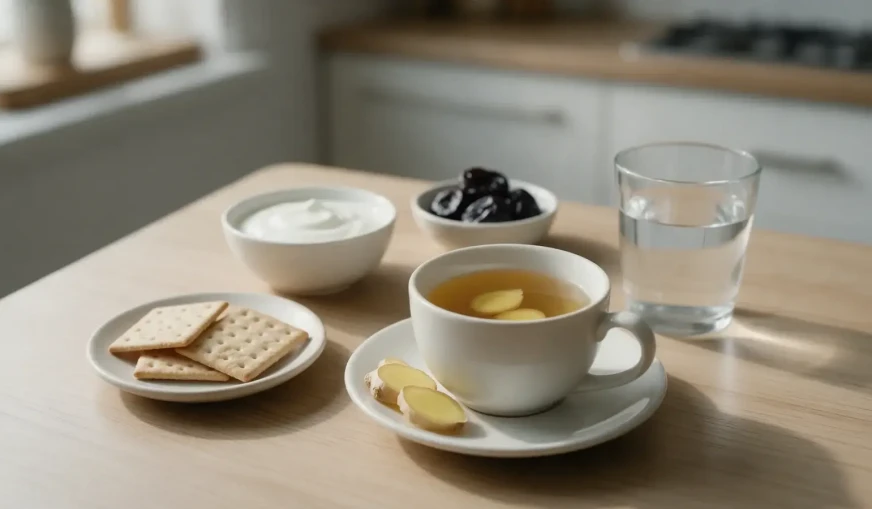
| Nausea | A small breakfast, a small meal every 3–4 hours, eating slowly, cold or lukewarm foods with little smell, ginger tea | Long gaps without food, fatty and fried dishes, large portions |
| Constipation | Fluids through the day, fibre from vegetables, fruit, pulses and wholegrains, prunes, kiwi, walking | Raising fibre suddenly without raising water, highly refined foods |
| Diarrhoea | Plenty of fluids, soup, yoghurt, soft foods such as rice, potatoes and banana | Fatty, spicy foods, fruit juice, fizzy drinks, alcohol |
| Bloating, belching, reflux | Eating slowly, a light walk after meals, finishing dinner early | Fizzy drinks, chewing gum, heavy meals late at night |
| Tiredness | Not skipping meals, protein at every meal, enough fluids, regular sleep | Very low-calorie, monotonous eating |
What Should You Eat With Nausea?
Nausea most often appears in the mornings or after a long time without food. That is why, even if you have no appetite, starting the day with a small breakfast and eating small meals every 3–4 hours through the day helps break the cycle of nausea, eating less and more nausea.
- Start with dry and plain options: a slice of toast, rusks, a boiled egg, cheese.
- Take fluids not in large amounts with meals but in small sips between meals.
- If strong-smelling dishes make nausea worse, try foods served cold or lukewarm: yoghurt, ayran (Turkish salted yoghurt drink), a cold chicken salad.
- Ginger tea or mint tea can be soothing for some people.
- In the first days of treatment and during periods of dose increases, limiting very fatty and very high-fibre meals is better tolerated.
If you are vomiting constantly and cannot keep fluids down, do not wait on dietary advice; see your doctor. Your doctor may also consider medicine support for nausea. Noting the day of your injection and the days after it makes it easier to see on which days complaints rise and to plan a lighter menu for those days.
What Can You Do About Constipation?
Constipation is common both because the medicine slows digestion and as a result of eating less, and measures need to be taken early. The GLP-1 statement also stresses encouraging enough fluids and fibre from food, and notes that long-lasting constipation can lead over time to other problems such as diarrhoea.
- Carry your water bottle with you; drink through the day without waiting to feel thirsty.
- Raise fibre slowly: a portion of vegetables at every meal, two portions of fruit a day, pulses a few times a week, wholegrains instead of white bread.
- Prunes, kiwi, oats and flaxseed are good options for constipation.
- Walk every day to the extent your doctor considers suitable.
- Take time for the toilet after breakfast without rushing.
If you raise fibre but not water, bloating and constipation can get worse. You can look at the article on the effects of high-fibre foods on the digestive system for the effects of fibre on digestion. For constipation lasting several days, ask your doctor or pharmacist before using a laxative.
How Do You Prevent Fluid Loss With Diarrhoea and Vomiting?
With diarrhoea and vomiting, the most important thing is to replace the lost fluid and salt. The GLP-1 statement notes that fluid loss caused by nausea and vomiting can affect kidney function in some people, so fluid loss should be prevented.
Drink water often in small sips; soup, ayran and yoghurt provide both fluid and salt. Soft, low-fat foods such as rice, potatoes, banana, boiled chicken and toast are generally tolerated better. Fruit juice and fizzy drinks can make diarrhoea worse. If your doctor thinks it necessary, they may suggest oral rehydration solutions. If your urine becomes darker and less, you feel dizzy, or the diarrhoea lasts more than a few days, see a doctor.
Are Tiredness and Hair Shedding Linked to Diet?
Often, yes. When appetite falls a great deal, the day's intake of energy, protein, iron and other vitamins falls too; this can show up as tiredness, dizziness and hair shedding. Rapid weight loss itself can also contribute to hair shedding.
- However little your appetite, do not skip meals; make the portions smaller and the meals more frequent.
- Have a protein source such as eggs, yoghurt, cheese, chicken, fish, meat or pulses at every meal.
- Keep your plate colourful; different vegetables and fruit provide a variety of vitamins and minerals.
- Get enough fluids; thirst also increases the feeling of tiredness.
- To preserve muscle mass, add strength exercises to your plan with your doctor's approval; for protein targets you can look at the article on muscle loss while using weight-loss injections.
If tiredness is long-lasting, your blood values may need to be checked; the article on iron deficiency symptoms can give you an idea about vitamin and mineral deficiencies. If you are also taking a diabetes medicine, trembling, sweating, palpitations and dizziness can be signs of low blood sugar; tell your doctor.
Which Symptoms Mean You Should See a Doctor Straight Away?
Some symptoms should be handled through urgent medical assessment, not through diet. The situations listed by the NHS among serious side effects, in which you should see a doctor without waiting, are:
- Severe pain in the abdomen or spreading to the back that does not go away (may be a sign of pancreatitis)
- Severe abdominal pain, especially in the upper right abdomen (for gallbladder problems)
- Constant vomiting, being unable to keep fluids down, a marked drop in urine
- Swelling in the throat or tongue, a widespread rash, difficulty breathing
- Sudden loss of vision or visual disturbance
If you cannot settle into an eating pattern because of side effects, or do not know what to eat because your appetite has fallen so much, we can work together, in a way that fits with your doctor's follow-up, within online diet counselling on an individual plan. You can also look at the nutrition guide for people using weight-loss injections and the article on eating while taking Ozempic for general meal routines.
Sources
- Mozaffarian D et al. Nutritional priorities to support GLP-1 therapy for obesity. Obesity (Silver Spring), 2025 (PubMed)
- NHS – Semaglutide
- NHS – Tirzepatide
- NIDDK – Prescription Medications to Treat Overweight & Obesity
This article is for general information only; please consult your doctor and dietitian about your own situation.
Frequently Asked Questions
How long do the side effects of weight-loss injections last?
Digestive side effects are mostly noticeable in the first weeks of treatment and after dose increases, and tend to ease as treatment continues at a steady dose. How long varies from person to person; share complaints that last a long time or affect daily life with your doctor.
What can I eat for nausea while using a weight-loss injection?
Dry and plain foods (toast, rusks), boiled eggs, yoghurt and light dishes served cold are generally better tolerated. Avoiding long gaps without food and eating small meals helps reduce nausea.
Do weight-loss injections cause hair loss?
Hair loss is among the side effects reported for semaglutide and tirzepatide; rapid weight loss and too little protein, energy or micronutrients can also contribute. Balanced eating is important; if shedding is marked, ask your doctor.
Can I drink alcohol while using a weight-loss injection?
The NHS notes that alcohol can make side effects such as nausea and vomiting worse. Because it also provides empty calories and can upset fluid balance, it is better to stay away from alcohol during this process.
If the side effects are very bad, can I stop the medicine myself?
Do not make the decision to change the dose or stop the medicine on your own; talk to your doctor. In situations such as severe abdominal pain, constant vomiting or an allergic reaction, get urgent medical help without waiting.
Book an appointment for a personalised nutrition plan
The information in this article is general; what you need depends on your age, health and goals. Message us and we will build the plan that suits you together.

This content is for information only. For a personalised nutrition programme, please consult a dietitian.


