

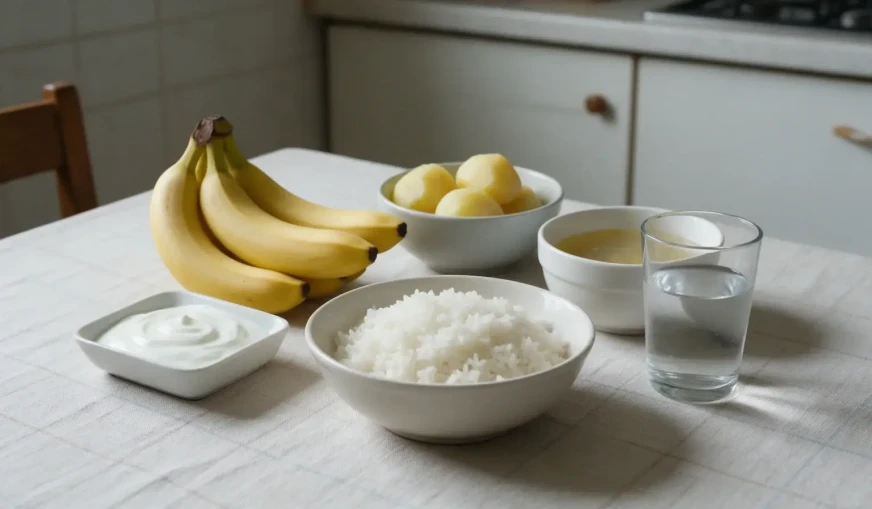
The most important thing when you have diarrhoea in pregnancy is to replace the fluid you lose: drink water often in small sips, make use of fluids that also provide salt, such as soup and ayran (Turkish salted yoghurt drink), and when you have an appetite eat foods that do not tire the stomach, such as rice, potatoes, banana, yoghurt and boiled chicken. See a doctor without waiting if there is bloody diarrhoea, fever, being unable to keep fluids down, symptoms lasting more than two days or a drop in the baby's movements.
Bowel habits often change in pregnancy; although constipation is more common, diarrhoea can occur too. Most diarrhoea passes by itself in a few days, but in pregnancy fluid loss and some food-borne infections carry extra importance. In this article I explain how to eat during diarrhoea and which situations need urgent assessment.
- The first aim with diarrhoea is to replace the fluid and salt lost; drink often in small sips.
- Soft foods such as rice, potatoes, banana, yoghurt, boiled chicken and soup are generally better tolerated.
- Fruit juice, fizzy drinks and fatty and spicy foods can make diarrhoea worse.
- Do not use anti-diarrhoea medicine, probiotic supplements or herbal products without asking your doctor.
- See a doctor straight away if you have fever, bloody diarrhoea, cannot keep fluids down, have abdominal pain or a drop in the baby's movements.
Why Does Diarrhoea Happen in Pregnancy?
The most common cause of diarrhoea in pregnancy, as in women who are not pregnant, is gastrointestinal infection. The NHS notes that diarrhoea and vomiting are mostly due to a stomach bug and pass within a few days.
Apart from this, the following causes can play a part:
- Food poisoning: Food that has not been stored properly or cooked well
- Changes in diet: Raising fibre suddenly by a lot, sensitivity to certain foods
- Supplements: According to the NHS, iron tablets can cause diarrhoea or constipation in some people
- Hormonal changes and stress
- Underlying bowel conditions
Because of changes in the immune system in pregnancy, some food-borne infections such as listeria can run a more serious course. So when diarrhoea comes together with fever and muscle aches, it is a situation needing extra attention. The NHS notes that listeria infection in pregnancy can also show up with abdominal pain and a drop in the baby's movements.
How Is Fluid Loss Prevented With Diarrhoea?
The NHS stresses that the most important thing with diarrhoea and vomiting is to take plenty of fluid so as not to become dehydrated. If you are nauseous, drink fluid not all at once but in small sips and often.
- Aim to drink a glass of water or another fluid after every watery stool.
- Soup, ayran and yoghurt provide both fluid and salt.
- If your doctor or pharmacist thinks it suitable, oral rehydration solutions (oral rehydration powders) available in pharmacies can be used; the World Health Organization also stresses the importance of these solutions in diarrhoea.
- Urine that stays pale is a sign you are getting enough fluid; dark urine in small amounts points to fluid loss.
What Should You Eat With Diarrhoea in Pregnancy, and What Should You Avoid?
Keep eating when you have an appetite; going hungry does not speed up recovery. The NHS notes that avoiding fatty and spicy foods during diarrhoea can help, while fruit juice and fizzy drinks can make it worse.
| Better tolerated | To limit |
|---|---|
| Water, ayran, plain soup (rice, vermicelli, vegetable soup) | Fruit juices, fizzy and sugary drinks |
| Rice porridge, boiled potatoes, pasta | Fried foods, creamy and fatty dishes |
| Banana, grated apple, boiled carrot | Hot and strongly spiced foods |
| Yoghurt, lor (Turkish fresh curd cheese) | Very high-fibre foods (wholegrain products, dried pulses) in the first days |
| Boiled chicken, boiled eggs | Caffeinated drinks (when tea and coffee are drunk in excess) |
| Toast, rusks | Chewing gum and sweets containing sweeteners |
Eating in small portions, at frequent intervals and warm tires the stomach less. As the complaints ease, return gradually to your normal eating over a few days; add vegetables, fruit and wholegrains back. You can look at my page on nutrition during pregnancy for the general framework of balanced eating in pregnancy.
A sample plan for a day with diarrhoea
- Morning: A glass of water, toast and a boiled egg, with water instead of light tea alongside
- Snack: A banana or a grated apple
- Lunch: Rice soup, yoghurt
- Snack: Ayran and a few rusks
- Dinner: Boiled chicken, mashed potato (low fat), boiled carrot
- Through the day: Water in small sips
Can You Use Anti-Diarrhoea Medicine and Probiotics in Pregnancy?
Do not use anti-diarrhoea medicines, probiotic supplements and herbal products without asking your doctor or pharmacist. Some medicines are not suitable in pregnancy; and stopping the diarrhoea can also cause a cause such as an infection to be missed.
If you take an iron supplement and the diarrhoea appeared after you started it, do not stop the supplement on your own; talk to your doctor. Fermented dairy products such as yoghurt and kefir can be eaten as part of normal eating. For general advice on the digestive system you can look at the article on foods for digestive health.
How Does Your Diet Recover After the Diarrhoea Has Passed?
After diarrhoea stops, it can take a few days for the bowel to return to its former pattern. In this period, moving back to normal eating step by step rather than going straight back to heavy, fatty meals helps prevent the complaints coming back.
- Day one: Carry on with soft foods such as soup, yoghurt, rice, potatoes, boiled chicken and banana; do not cut back on fluids.
- Days two and three: Add cooked vegetables, eggs, white cheese and wholemeal bread.
- Following days: Restart raw vegetables, salad, fruit with skins and pulses in small portions.
Because the need for protein, iron and other nutrients goes on in pregnancy, it is important not to skip meals while recovering. If your appetite has not fully come back, make portions smaller and increase the number of meals. If you lost a little weight for a few days during the diarrhoea, this is usually due to fluid loss and recovers as your fluid intake improves; discuss how your weight is running at the next check-up with your doctor. When you raise fibre again, remember to raise water too; otherwise constipation may develop this time. The suggestions in the article on what helps constipation in pregnancy may be useful for this.
How Can You Protect Yourself From Food-Borne Diarrhoea in Pregnancy?
The most important way of protecting yourself in pregnancy is food safety. The NHS notes that listeria infection mostly comes from ready-to-eat foods eaten cold, and that smoked and cured fish, cold deli products, mould-ripened soft cheeses, unpasteurised dairy products, ready-made sandwiches and salads and pre-cut packaged fruit can carry a risk.
- Cook meat, chicken and eggs thoroughly; avoid raw and undercooked products.
- Do not eat unpasteurised milk and dairy products.
- Wash vegetables and fruit thoroughly; keep raw and cooked foods apart.
- Cool leftover food quickly and put it in the fridge, and when reheating, heat it until piping hot.
- Wash your hands with soap before preparing food and after using the toilet.
You can look at the article on what not to eat during pregnancy for the full list of foods to avoid in pregnancy, and the article on which fish can be eaten during pregnancy for choosing fish safely.
When Should You See a Doctor Straight Away?
If diarrhoea in pregnancy does not improve within a few days, or if you have any of the following symptoms, contact your doctor, the maternity unit or the emergency department without waiting:
- Bloody or black-coloured stools
- A temperature of 38 °C or above, shivering, muscle aches
- Being unable to keep fluids down because of vomiting
- Signs of fluid loss such as dark urine in small amounts, dizziness and a dry mouth
- Severe abdominal pain or pain that does not go away, regular contractions
- A drop in the baby's movements
- Diarrhoea lasting more than two days
- Fever and flu-like symptoms after eating a food that carries a listeria risk
Although the NHS says diarrhoea generally passes within 5–7 days, because the effects of fluid loss can show up faster in pregnancy it is right to ask for assessment earlier. The article on nausea during pregnancy may also be useful for periods when nausea and vomiting come with it. For a personal nutrition plan that takes your digestive complaints into account, we can work together, in line with your obstetrician's advice, within nutrition counselling for pregnancy.
Sources
- NHS – Diarrhoea and vomiting
- NHS – Listeriosis
- WHO – Diarrhoeal disease
- NHS – Foods to avoid in pregnancy
This article is for general information only; please consult your doctor and dietitian about your own situation.
Frequently Asked Questions
Does diarrhoea in pregnancy harm the baby?
Mild diarrhoea that is short-lived does not usually harm the baby. But because serious fluid loss, high fever or some infections such as listeria can pose a risk in pregnancy, always tell your doctor about diarrhoea that lasts long or comes with fever.
Is rice water good for diarrhoea in pregnancy?
Rice water and rice porridge are well-tolerated options in diarrhoea because they provide fluid and easily digested energy. What really matters is getting enough fluid through the day; rice water does not take its place.
Can you eat yoghurt with diarrhoea in pregnancy?
Yes, yoghurt made from pasteurised milk is generally well tolerated during diarrhoea and provides both fluid and protein. With homemade products, make sure the milk is pasteurised or boiled.
Can you use anti-diarrhoea medicine in pregnancy?
Do not use anti-diarrhoea medicines without asking your doctor or pharmacist. Some medicines are not suitable in pregnancy, and using a medicine before the cause of the diarrhoea has been assessed can hide an underlying problem.
Is diarrhoea normal in the last weeks?
Changes in bowel habits can occur in the last weeks of pregnancy. If there are regular contractions, a gush of water, bleeding or a drop in the baby's movements with the diarrhoea, go to the maternity unit without delay.
Book an appointment for a personalised pregnancy nutrition plan
Nutritional needs in pregnancy change with the week of pregnancy, weight change and test results. Message us for a plan that fits your doctor's advice.

This content is for information only. For a personalised nutrition programme, please consult a dietitian.


