

“Ozempic face” is a non-medical expression used to describe the loss of fullness in the face, hollowing of the cheeks and temples, sagging skin and a more tired or older look that can appear after rapid, marked weight loss with weight-loss medicines such as semaglutide. This change is not specific to the medicine; it is largely linked to rapid weight loss itself. It has not been shown that diet directly prevents this, but getting enough protein, energy and fluid is important for supporting muscle and general tissue health.
As weight-loss injections have become widespread, people have begun to talk about the change in the mirror as well as the number on the scales. In this article I explain what “Ozempic face” is, who it may be more noticeable in, and what nutrition can realistically do in this process. Ozempic and similar medicines are used only with a doctor's prescription and follow-up.
- “Ozempic face” is not a diagnosis; it is an expression describing loss of volume in the face and an older look after rapid weight loss.
- Experts debate whether this look is a natural result of rapid weight loss rather than a new side effect specific to the medicine.
- The amount and speed of weight lost, age, sun damage and smoking can affect the look.
- Nutrition does not directly prevent facial change; but inadequate protein, energy and fluid intake can worsen the overall picture.
- Talk to your doctor about the speed of weight loss and possible side effects; do not change the dose on your own.
What Is “Ozempic Face”?
“Ozempic face” is a term that emerged on social media and describes the change that rapid loss of facial fat produces in the face. An article published in 2024 in the field of dermatology notes that the term is used to describe a condition that appears with rapid loss of facial weight and makes the face look more “hollowed”, and stresses that it needs to be worked out whether this is a new side effect or the natural result of rapid weight loss.
A systematic review published in 2025 that examined the plastic surgery literature also reports that weight loss caused by GLP-1 receptor agonists can lead to morphological changes in the face resembling advanced ageing. In other words the condition described is real; but although the name belongs to one medicine, the underlying mechanism is rapid and marked weight loss in general.
Why Does “Ozempic Face” Happen?
The face has fat pads divided into compartments under the skin, and this fat determines the volume, fullness and contours of the face. When weight is lost, the fat in the face falls like the fat in other parts of the body. When weight loss is fast and large, it becomes harder for the skin to adapt to this new volume; in that case sagging, wrinkles and hollowing can look more marked.
- The amount of weight lost: The more weight is lost, the more noticeable the change in the face can be.
- The speed of weight loss: With fast losses the skin has less time to adapt.
- Age: With age, the skin's elasticity and collagen structure decline.
- Sun and smoking: These factors, which weaken skin structure, can make the look more marked.
- Muscle loss: In rapid weight loss muscle tissue can also fall; this can contribute to a more worn-out look overall.
Can Nutrition Prevent “Ozempic Face”?
The honest answer is this: there is no research showing that a particular way of eating prevents “Ozempic face”. The loss of fat in the face is a natural part of weight loss, and no food can keep that fat in place.
Even so, nutrition has an indirect but important role. When weight-loss medicines markedly reduce appetite, some people eat very little through the day; this can lead to shortfalls in protein, vitamins, minerals and fluids. The 2025 joint statement on nutritional priorities in GLP-1 therapy lists nutrient deficiencies linked to reduced calories and loss of muscle and bone among the main challenges of this treatment. Inadequate eating can affect overall appearance negatively through tiredness, hair shedding, dry skin and muscle loss.
Which Nutrients Matter for Skin and Tissues?
The nutrients below are needed for the healthy structure of the skin and connective tissue. Getting them from a variety of foods rather than supplements is possible, even in a period of low appetite, with planned eating.
| Nutrient | Why does it matter? | Sources |
|---|---|---|
| Protein | The building block of all tissues, collagen included; preserving muscle mass | Eggs, yoghurt, cheese, chicken, fish, meat, pulses |
| Vitamin C | Needed for making collagen | Peppers, parsley, broccoli, citrus fruit, kiwi, strawberries |
| Zinc | Tissue repair and skin health | Meat, seafood, pumpkin seeds, chickpeas |
| Omega-3 fatty acids | The structure of the skin barrier and cell membranes | Salmon, sardines, anchovies, walnuts |
| Vitamin A and beta-carotene | Renewal of skin cells | Carrots, pumpkin, dark green leafy vegetables |
| Water | Tissue fluid balance; risk of fluid loss while on the medicine | Water, ayran (Turkish salted yoghurt drink), soup, watery vegetables and fruit |
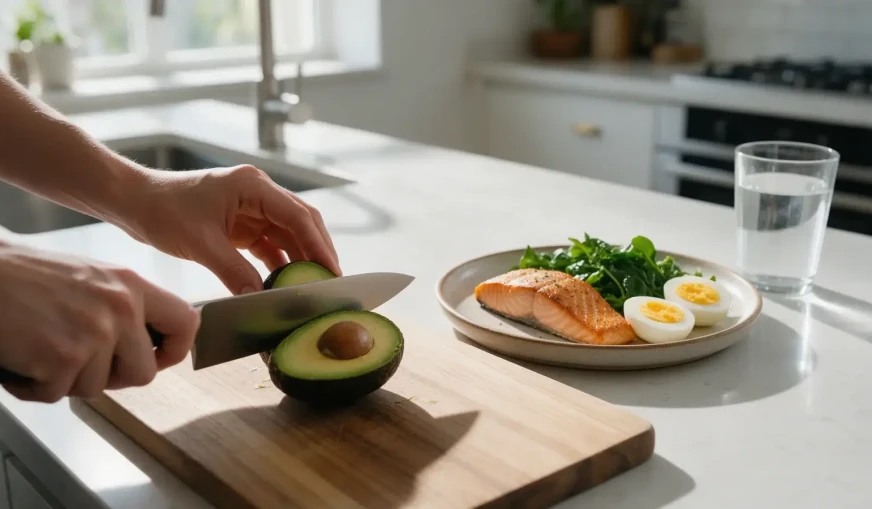
Most of these nutrients can be brought together on the same plate: for example, baked salmon with roasted peppers and broccoli, a salad with a few walnut kernels sprinkled over it and a bowl of yoghurt provide protein, vitamin C and omega-3 together. Adding tomato, pepper and parsley next to the egg at breakfast has a similar effect. On days when appetite is low, fluid options such as ayran, kefir and vegetable soup contribute to both nutrient and water needs.
There is no strong evidence that supplements such as collagen powders and “skin vitamins” prevent loss of facial volume; before spending money on these products, look at whether the protein and vegetables on your plate are enough.
How Should You Plan Eating in Rapid Weight Loss?
The aim is to make sure the weight lost comes from fat as far as possible and that the body does not go without the nutrients it needs. In practice this means:
- Protein at every meal: If appetite is low, eat the protein on the plate first.
- Do not skip meals: Eating little but regularly prevents big gaps building up by the end of the day.
- A colourful plate: At least one vegetable at every meal and two portions of fruit a day.
- Healthy fats: Olive oil, walnuts and oily fish; do not cut fat out completely.
- Enough fluids: If you have nausea, vomiting or diarrhoea, replace the fluid lost.
- Strength exercise: At least two days a week with your doctor's approval; the basic way of preserving muscle mass.
You can look at the article on how to prevent muscle loss while using weight-loss injections for a detailed protein plan aimed at preventing muscle loss, and at eating while taking Ozempic for a daily meal routine. If you cannot eat because of side effects, the suggestions in the article on eating to manage the side effects of weight-loss injections may help.
How Can You Talk About This With Your Doctor?
If you are bothered by the change in your face, talk about it openly with your doctor. The speed of weight loss, the goal and duration of treatment, side effects and your nutritional state should be assessed together. Do not change the dose or treatment decisions on your own.
You can ask your doctor these questions: Is the speed of my weight loss right for me? What should my target weight and length of treatment be? How can we monitor my muscle mass and nutritional state? Should I see a dermatologist about the skin changes? The NHS also advises talking to your pharmacist or doctor if the side effects of the medicine bother you or do not go away.
Remember that the aim of these medicines is health, not appearance; the NIDDK also stresses that weight management medicines should not be used merely to improve appearance. I covered the effects of Ozempic on weight loss in the article on rapid weight loss with Ozempic. For an individual plan that takes your muscle mass and nutritional balance into account while using the medicine, we can work together, in a way that fits with your doctor's follow-up, within online diet counselling.
Sources
- Carboni A et al. Natural Weight Loss or "Ozempic Face": Demystifying A Social Media Phenomenon. J Drugs Dermatol, 2024 (PubMed)
- Daneshgaran G et al. "Ozempic Face" in Plastic Surgery: A Systematic Review. Aesthet Surg J Open Forum, 2025 (PubMed)
- Mozaffarian D et al. Nutritional priorities to support GLP-1 therapy for obesity. Obesity (Silver Spring), 2025 (PubMed)
- NIDDK – Prescription Medications to Treat Overweight & Obesity
This article is for general information only; please consult your doctor and dietitian about your own situation.
Frequently Asked Questions
Does “Ozempic face” go away?
How the look of the face develops varies from person to person with the amount of weight lost, age and the structure of the skin. For a personal assessment on this, see your doctor or a dermatologist.
Does “Ozempic face” only happen in people using Ozempic?
No. Loss of volume in the face can be seen after rapid and marked weight loss, whatever the method. The term became popular as these medicines became widespread.
Does a collagen supplement prevent “Ozempic face”?
There is no strong evidence that collagen supplements prevent loss of facial volume. Getting enough protein, vitamin C and other nutrients from a variety of foods forms a more reliable foundation.
Does losing weight more slowly reduce facial change?
It is thought that the speed of weight loss may affect how the skin adapts; but there is no clear threshold on this. Decide the pace and goal of your treatment together with your doctor, not on your own.
Does drinking water help with a hollow face?
Drinking enough water is important for general health and especially for side effects while using the medicine, but it does not bring back lost facial fat. Keep fluid intake up as a basic part of eating well.
Book an appointment for a personalised nutrition plan
The information in this article is general; what you need depends on your age, health and goals. Message us and we will build the plan that suits you together.

This content is for information only. For a personalised nutrition programme, please consult a dietitian.


