

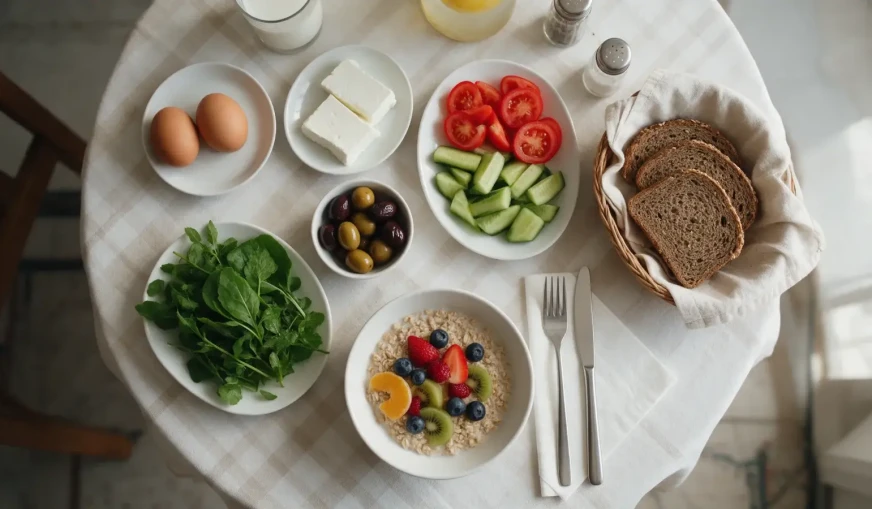
A good diet breakfast is a meal that keeps you full until lunchtime, contains protein, fibre and a little healthy fat, and is low in sugar. Combining a protein source such as eggs, cheese or yoghurt with fibre-rich foods such as vegetables, fruit or oats and a small portion of wholegrains gives, for most people, a filling breakfast in the range of 300–450 kcal.
When trying to lose weight, skipping breakfast or getting by on just a cup of coffee is a common mistake; the NHS also advises not skipping breakfast and making a breakfast that is high in fibre and low in fat, sugar and salt part of balanced eating. In this article I share 10 diet breakfast menus you can use in rotation through the week, and the principles that will keep you full.
- The three foundations of a breakfast that keeps you full are protein, fibre and a little healthy fat.
- Sugary cereals, poğaça-simit (Turkish savoury bun and sesame bread ring) and fruit juice can make you hungry quickly.
- The 10 menus below are in the range of about 300–450 kcal; portions should be adjusted to your needs.
- Weekly preparation makes it easier to choose healthily in the morning rush.
- If you have diabetes, are pregnant or have a chronic illness, the breakfast plan should be made individually.
What Should a Diet Breakfast Look Like?
A diet breakfast is not eating less but eating with the right combinations. A plate made up of a protein source, plenty of vegetables or a portion of fruit, a small portion of wholegrains and a little healthy fat both keeps you full and reduces the urge to snack through the day.
- Protein: Eggs, white cheese, lor (Turkish fresh curd cheese), yoghurt, strained yoghurt, kefir or milk.
- Fibre: Tomato, cucumber, pepper, greens, fruit, oats, wholemeal bread.
- Healthy fat: A few olives, a few walnuts or almonds, a dessert spoon of olive oil or a few slices of avocado.
- Drinks: Water, tea or coffee without sugar; whole fruit instead of fruit juice.
You can look at my article on healthy foods to eat at breakfast for a general list of foods that keep you full at breakfast.
10 Filling, Balanced Diet Breakfast Menus
The menus below are general examples for adults. The energy values are approximate ranges based on USDA and TürKomp (the Turkish food composition database) data; they vary with the product and portion you use.
| Menu | Contents | Approximate energy |
|---|---|---|
| 1. Classic plate | 2 boiled eggs, 1 finger-sized slice of white cheese, tomato, cucumber, greens, 5 olives, 1 thin slice of wholegrain bread | 350–400 kcal |
| 2. Vegetable omelette | An omelette of 2 eggs with spinach, mushrooms and pepper (1 dessert spoon of olive oil), green salad, half a slice of bread | 300–350 kcal |
| 3. Oat bowl | 3–4 tablespoons of oats, 1 cup (about 200 ml) of milk, half a banana, 2 walnuts, cinnamon | 350–400 kcal |
| 4. Yoghurt bowl | 1 bowl of strained yoghurt, 1 handful of strawberries or blackberries, 1 tablespoon of homemade granola, 1 dessert spoon of chia | 300–350 kcal |
| 5. Menemen | Low-fat menemen (Turkish scrambled eggs with tomato and peppers) with 2 eggs, 1 thin slice of wholegrain bread, greens | 300–350 kcal |
| 6. Lor plate | 4–5 tablespoons of lor cheese, parsley and dill, tomato, cucumber, 5 olives, 1 slice of rye bread | 300–350 kcal |
| 7. Avocado toast | 1 slice of wholegrain bread, a quarter of an avocado, 1 boiled egg, rocket | 300–350 kcal |
| 8. Lentil crepe | A crepe made with red lentil flour, yoghurt, green salad | 350–400 kcal |
| 9. Cheese wrap | 1 small wholemeal lavash (flatbread), white cheese, tomato, cucumber, greens, 1 glass of ayran (Turkish salted yoghurt drink) | 350–400 kcal |
| 10. Quick breakfast | 1 cup (about 200 ml) of kefir, 1 apple, 1 handful of raw almonds and 1 boiled egg | 350–400 kcal |
You can enrich some of these menus with recipes on my site: the gluten-free lentil crepe, eggs baked in avocado and yoghurt granola bowl are a few of the practical options.
Using the menus in rotation through the week both stops you getting bored and varies the vitamins and minerals that come from different foods. For example, you might choose the quick-to-prepare menus (1, 4, 7 and 10) on weekdays, and options that take more time, such as menemen, omelette or lentil crepe, at the weekend.
Which Breakfast Keeps You Full Longer?
Breakfasts that contain protein and fibre together generally keep you full for longer than breakfasts made up only of carbohydrate. For example, a plate with eggs and vegetables, or a fruit bowl with strained yoghurt, gives a steadier fullness until lunchtime than a breakfast of white bread with jam and butter.
Adding eggs, cheese, lor or strained yoghurt to breakfast is a practical way of raising protein. You can read the article on high-protein breakfasts for different ideas on this. Cutting out fat completely can reduce fullness; a few olives or a few walnuts raise both the flavour and the filling power of breakfast.
What Should People Who Like a Sweet Breakfast Choose?
For people who cannot start the day in the morning without something sweet, the answer is not to ban sweetness completely but to balance it with protein and fibre. That way blood sugar rises more slowly and fullness lasts until lunchtime.
- Cinnamon oats: Add grated apple, cinnamon and a few walnuts to oats cooked with milk; there is no need for sugar.
- Fruit and yoghurt: Add fresh or frozen fruit and a dessert spoon of flaxseed to strained yoghurt.
- Banana and egg pancakes: Small pancakes made in a non-stick pan with one banana, two eggs and two tablespoons of oat flour, with yoghurt alongside.
- Dates and cheese: Eating one or two dates with white cheese and walnuts satisfies a sweet craving in a balanced way.
The same logic applies to breakfast drinks: getting used to drinking tea and coffee without sugar is, in the long run, an important gain for both weight and dental health. If giving up sugar all at once feels hard, you can cut the amount slowly over several weeks.
What Are Common Mistakes With a Diet Breakfast?
Mistakes at breakfast while trying to lose weight often come back as hunger through the day and overeating in the evening. The most common ones are:
- Skipping breakfast: It may not be a problem for some people, but in most it leads to extreme hunger at lunch and dinner.
- Getting by on fruit or a smoothie alone: A breakfast with no protein can leave you hungry quickly.
- Drinking fruit juice: It contains no fibre so it does not keep you full; the NHS recommends limiting drinks such as fruit juice and smoothies to 150 ml a day.
- Trusting “light” products: The energy content of products labelled sugar-free or light can still be high; read the label.
- Starting with pastries: Poğaça, simit and börek (savoury filled pastry) provide a lot of energy and little fullness in a small portion.
- Filling the plate without measuring: Cheese, olives and nuts are healthy but the portion should be kept small.
How Can I Make Breakfast Practical on Weekdays?
When time in the morning is the biggest obstacle, small preparations made at the start of the week make a diet breakfast sustainable. A few basic foods prepared in advance let you put together a balanced plate in five minutes.
- Boil eggs twice a week and keep them in the fridge.
- Wash tomatoes, cucumbers and peppers and keep them ready to use.
- Mix oats with milk the night before and put them in the fridge to have a ready bowl in the morning.
- Slice wholegrain bread and freeze it; toast only as much as you need.
- Prepare yoghurt, fruit and a few walnuts in lidded containers to take to work.
Who Should Plan Their Breakfast Individually?
In situations such as diabetes or insulin resistance, pregnancy, breastfeeding, kidney disease, coeliac disease or food allergy, the contents and portion of breakfast should be planned individually. For example, in pregnancy eggs must be hard-cooked, and in diabetes the amount of carbohydrate at breakfast needs to be adjusted more carefully.
The timing and size of breakfast can also differ for people who exercise, work nights and get up very early. If you would like to build a plan that suits you and is sustainable, from breakfast to dinner, in your weight loss process, we can work together within weight management counselling. I would like to remind you that results vary from person to person and that methods promising quick weight loss are not sustainable.
Sources
- NHS – 8 tips for healthy eating
- NHS – The Eatwell Guide
- WHO – Healthy diet
- Turkish Ministry of Health – Turkey Nutrition Guide (TÜBER) 2022
This article is for general information only; please consult your doctor and dietitian about your own situation.
Frequently Asked Questions
Can you eat bread at breakfast on a diet?
Yes, one or two thin slices of wholegrain, rye or wholemeal bread can fit into most diet plans. What matters is to eat bread together with protein and vegetables, in a moderate portion.
How many calories should a diet breakfast be?
This depends on your daily energy need and meal pattern. For many adults a breakfast in the range of 300–450 kcal can be a suitable starting point; it is best to set your personal need with your dietitian.
How many eggs can you eat at breakfast?
For most healthy adults, one or two eggs at breakfast are a balanced source of protein. If you have high cholesterol or another health problem, set the right amount with your doctor and dietitian.
Can you have honey or jam at breakfast on a diet?
They can be eaten occasionally and in an amount no more than a dessert spoon; but eating them every day and in large amounts raises your sugar intake. Meeting a need for sweetness with whole fruit or cinnamon oats is a more balanced choice.
Does skipping breakfast help you lose weight?
Skipping breakfast can lower total energy intake in some people, but in most it leads to extreme hunger through the day and overeating in the evening. Which meal pattern suits you should be decided according to your lifestyle.
Book an appointment for a personalised nutrition plan
The information in this article is general; what you need depends on your age, health and goals. Message us and we will build the plan that suits you together.

This content is for information only. For a personalised nutrition programme, please consult a dietitian.


