Because appetite and the amount you eat fall noticeably while using a weight-loss injection, the risk of vitamin and mineral gaps rises. The ones to watch most are iron, vitamin B12, vitamin D, calcium, zinc and potassium. Building your plate to be "nutrient-dense" in the period when you eat little, and following your blood values with your doctor, are the basis of reducing this risk.
Medicines containing active ingredients such as semaglutide and tirzepatide (for example Ozempic, Wegovy and Mounjaro) are used on a doctor's prescription and under a doctor's follow-up. In this article I do not talk about the medicine itself, but about the effect of reduced food intake during treatment on vitamin and mineral balance, and how you can support it with eating.
- Eating less means taking in fewer vitamins and minerals; the risk of gaps rises particularly with long-term use.
- Iron, B12, vitamin D, calcium, zinc, magnesium and potassium are the nutrients that most need to be monitored.
- Eating protein and vegetables first at every meal, then wholegrains and healthy fat, increases the nutrient density of your plate.
- Share signs such as weakness, hair loss, muscle cramps, numbness or dizziness with your doctor.
- Whether to use supplements, and the dose, should be decided by your doctor according to your blood tests.
Why Can a Weight-Loss Injection Lead to Vitamin and Mineral Gaps?
These medicines slow stomach emptying and reduce appetite; as a result, the total amount of food eaten through the day falls. Because vitamins and minerals come from food, as portions get smaller, the intake of these nutrients falls by itself.
A joint statement published in 2025 by the American College of Lifestyle Medicine, the American Society for Nutrition and two obesity societies lists nutrient gaps linked to reduced calories and muscle and bone loss among the main challenges of GLP-1 treatments. The same statement recommends that individualised nutrition support be given alongside these medicines.
There are other situations that raise the risk: avoiding certain food groups completely because of nausea, frequent vomiting or diarrhoea, eating only a few mouthfuls through the day, and cutting out groups such as meat, dairy or vegetables altogether. The picture I see most often is that, when appetite switches off, meals shrink to crackers, tea and a few slices of fruit.
Which Vitamins and Minerals Need More Attention?
With reduced food intake, the ones to monitor most are iron, vitamin B12, folate, vitamin D, calcium, zinc, magnesium and potassium. Some of these are critical for muscle, bone and blood, and some for fluid and electrolyte balance.
| Nutrient | Why it matters | Good food sources |
|---|---|---|
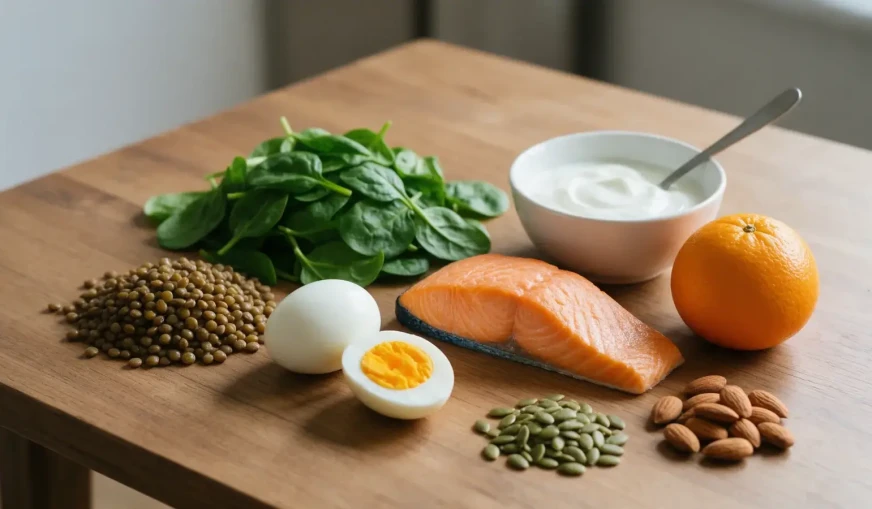
| Iron | Blood production and energy; low iron can be linked to weakness and hair loss | Red meat, chicken, eggs, dried pulses, dark green leafy vegetables |
| Vitamin B12 | Nervous system and blood production | Meat, fish, eggs, milk and dairy products |
| Folate | Cell renewal and blood production | Lentils, chickpeas, spinach, broccoli, oranges |
| Vitamin D and calcium | Looking after bone health during weight loss | Milk, yoghurt, cheese, oily fish, egg yolk; sunlight for vitamin D |
| Zinc | Immunity, wound healing, hair and nail health | Meat, pumpkin seeds, dried pulses, yoghurt |
| Magnesium and potassium | Muscle function, fluid and electrolyte balance | Banana, potato, dried apricots, spinach, almonds, wholegrains |
This table is a general roadmap. Your own needs vary with your age, sex, health and any other medicines you take. For example, in people who also take some diabetes medicines such as metformin, B12 levels may need to be monitored by a doctor.
What Are the Signs of a Deficiency?
Common signs are tiredness that does not go away, hair loss, brittle nails, muscle cramps, numbness and tingling in the hands and feet, dizziness on standing up, and frequent infections. However, because these symptoms can have other causes too, a diagnosis can only be made through assessment by a doctor and a blood test.
Symptoms can start gradually and can be confused with the tiredness that comes with weight loss. So it is important not to miss your regular check-ups, and to note down the changes you notice and share them with your doctor. In cases such as severe weakness, a feeling of fainting, palpitations or being unable to keep fluids down, go to a healthcare facility without delay.
How Can You Make Your Plate Nutrient-Dense When You Eat Little?
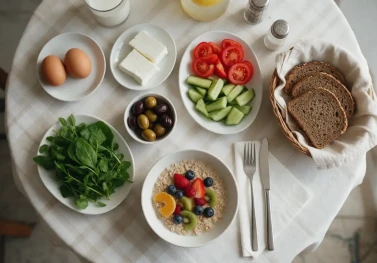
In the period when you eat little, the aim is for every mouthful to carry more protein, vitamins and minerals. To do this, it helps to start the meal with protein and vegetables, cut back on processed foods that give "empty calories", and plan small but frequent meals.
- Protein first: Put a protein source such as eggs, yoghurt, lor (cottage cheese), chicken, fish or dried pulses on the plate first, and eat it first.
- Colourful vegetables: Add at least one colourful vegetable to every meal; cooked vegetables can be easier to tolerate than raw salad during periods of nausea.
- Nuts and seeds: A tablespoon of walnuts, almonds or pumpkin seeds added to yoghurt provides magnesium and zinc in a small volume.
- Iron absorption: Have a source of vitamin C (lemon, peppers, tomato) alongside iron-rich meals; drink tea between meals rather than with them.
- Fluid: Spread your water through the day; ayran (a salted yoghurt drink) and soup provide both fluid and minerals.
For example, an egg, a bowl of yoghurt, a few walnuts and tomato and cucumber at breakfast; lentil soup and a yoghurt-based vegetable dish at lunch; and grilled fish and a boiled potato salad at dinner can make up a balanced day even for someone whose appetite has dropped. For the general framework of eating in this period, you can also read my nutrition guide for people using weight-loss injections.
How Can Mineral Loss Be Made Up During Vomiting and Diarrhoea?
Vomiting and diarrhoea cause a loss of sodium, potassium and magnesium along with fluid; in this period it is important to take fluids often in small sips and to prefer light foods that contain minerals. Home-made soups with a balanced amount of salt, ayran, banana, boiled potato and yoghurt are options that are well tolerated in this period.
If your complaints last more than a day or two, if the amount of urine you pass has fallen noticeably, or if you notice a dry mouth, dizziness and palpitations, do not dismiss it as a "normal side effect of the medicine". Fluid loss can put a strain on the body, the kidneys in particular; have the situation assessed by your doctor straight away.
Do You Need to Use Supplements?
Whether a supplement is needed, and in what dose, should be decided by your doctor by looking at your blood values. High-dose supplements used at random can interact with some medicines, and an excess of some vitamins (for example A and D) can also harm health.
Supplements do not replace eating. Protein, fibre, healthy fats and the many protective compounds in food cannot be met with a tablet. Your priority should be to get as balanced an intake as you can from food, even if your appetite is low.
What Can Be Done to Protect Muscle and Bone Health?
Getting enough protein, calcium and vitamin D, together with resistance exercise done with your doctor's approval, helps to limit muscle and bone loss during weight loss. This is especially important because, in rapid weight loss, muscle tissue can be lost along with fat.
Exercise with weights, resistance bands or bodyweight on a few days a week makes a good foundation along with daily walks. For general suggestions on preventing muscle loss, you can look at the article on losing weight without losing muscle.
Why Is Dietitian Support Important in This Process?
The medicine reduces appetite, but it does not decide what and how much you eat. Dietitian support helps you build a plan that meets your protein and micronutrient needs within smaller portions, and that suits complaints such as nausea and constipation.
Having sustainable habits in place after stopping the medicine is also valuable for keeping weight management going in the long term. For a personal eating plan that moves along with your doctor's follow-up, we can work together through online diet counselling. You can also find the possible risks of rapid weight loss in my earlier article on sudden weight loss with Ozempic.
Sources
- Mozaffarian D. et al. – Nutritional priorities to support GLP-1 therapy for obesity (Am J Clin Nutr, 2025)
- NIDDK – Prescription Medications to Treat Overweight & Obesity
- NHS – Semaglutide
- NHS – Vitamins and minerals
This article is for general information only; please consult your doctor and dietitian about your own situation.
Frequently Asked Questions
Do I need to take a multivitamin while using a weight-loss injection?
This decision is individual. Your doctor decides whether a supplement is needed after looking at your eating, your blood tests and any other medicines you take. Rather than using high-dose supplements on your own, first focus on making your plate nutrient-dense.
Does a weight-loss injection cause hair loss?
Temporary hair loss can be seen in some people during periods of rapid weight loss, and too little protein, iron and zinc can make this worse. If you notice hair loss, review your eating with your dietitian and ask your doctor to check whether there is an underlying deficiency.
Which blood tests should be followed?
The doctor who prescribed the medicine decides which tests are done and how often. In practice, iron stores, B12, vitamin D and electrolytes are among the parameters that are often assessed; with accompanying conditions such as diabetes, this list can be longer.
If my appetite is very low, how can I meet my vitamin needs?
When you are eating little, it is important to raise the nutritional value of every mouthful. Put first foods that provide a lot of nutrients in a small volume, such as eggs, yoghurt, dried pulses, fish, leafy green vegetables and nuts; if you have nausea, make portions smaller and have more meals.
What should I do if I vomit or have diarrhoea?
Frequent vomiting and diarrhoea can lead to a loss of sodium and potassium as well as fluid. Keep taking fluids in small sips; if the vomiting and diarrhoea continue, if you cannot keep fluids down, or if you have dizziness or palpitations, see your doctor without delay.
Book an appointment for a personalised nutrition plan
The information in this article is general; what you need depends on your age, health and goals. Message us and we will build the plan that suits you together.

This content is for information only. For a personalised nutrition programme, please consult a dietitian.