

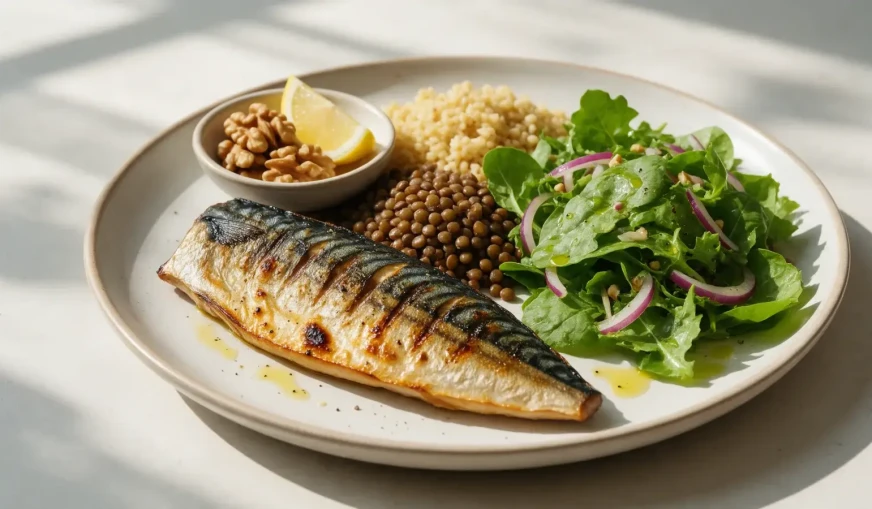
The most effective dietary steps for high triglycerides are: cutting back on added sugar, sugary drinks and refined carbohydrates such as white flour; limiting or stopping alcohol; using unsaturated fats such as olive oil and nuts in place of saturated fats; eating oily fish twice a week; and losing excess weight. Regular physical activity boosts the effect of these changes; with very high values, your doctor will consider medicine treatment.
Triglycerides are a value we see on blood tests right next to cholesterol, but they are often talked about less. Yet they are one of the blood fats that respond fastest to diet. Below you will find what the values mean, why they rise and what you need to change on your plate.
- A fasting triglyceride level below 150 mg/dL in adults is considered healthy; above 500 mg/dL is very high.
- Excess calories, especially sugar and refined carbohydrates, alcohol, excess weight and inactivity raise triglycerides.
- Giving up sugary drinks and limiting alcohol are the steps that make the most marked difference in most people.
- Oily fish, olive oil, nuts, pulses and vegetables are the basis of a heart-friendly diet.
- Omega-3 supplements and medicines should be used on a doctor's decision.
What Are Triglycerides and What Should the Normal Level Be?
Triglycerides are the most common type of fat in the body. The US National Heart, Lung, and Blood Institute (NHLBI) explains that triglycerides come both from the fats we eat and from excess calories the body does not need straight away, which are stored in fat cells as triglycerides.
| Category | mg/dL | mmol/L (approximate) |
|---|---|---|
| Healthy | Below 150 | Below 1.7 |
| Borderline high | 150–199 | 1.7–2.2 |
| High | 200–499 | 2.3–5.6 |
| Very high | 500 and above | 5.6 and above |
According to the NHLBI, triglycerides that stay high for a long time can raise the risk of heart and blood vessel disease; very high values above 500 mg/dL raise the risk of sudden inflammation of the pancreas (acute pancreatitis). MedlinePlus notes that values of 150 mg/dL and above are also a risk factor for metabolic syndrome. You may be asked to fast before the test; always interpret your results together with your doctor.
Why Do Triglycerides Rise?
High triglycerides often come about from several factors together. The main causes listed by the NHLBI and MedlinePlus are:
- Regularly taking in more calories than are used, especially eating a lot of sugar
- Excess weight and obesity, especially fat around the waist
- Excessive alcohol consumption
- An inactive lifestyle
- Type 2 diabetes and insulin resistance, an underactive thyroid gland, kidney disease
- Some medicines and a family (genetic) tendency
So with high triglycerides, you need to look not only at fat but at sugar, alcohol and total calories too. If you are curious about the link with insulin resistance, you can look at the article on nutrition treatment for insulin resistance.
Do High Triglycerides Cause Symptoms?
Most of the time, no. High triglycerides usually cause no symptoms and are noticed on a routine blood test. That is why regular checks matter, especially in people with risk factors.
The NHLBI recommends that in healthy adults a lipid profile, which includes triglycerides, is done every five years, and checked more often in older people, people with diabetes and people with a family history of high cholesterol or heart disease. With very high values, signs of pancreatitis such as severe abdominal pain spreading to the back, nausea and vomiting can appear; in that case go to the emergency department without delay. For people with a family history of very high triglycerides or of pancreatitis at a young age, the doctor may also ask for genetic assessment.
What Should You Cut Back On and What Should You Increase With High Triglycerides?
Eating to lower triglycerides depends less on a restrictive diet than on changing what is on the plate. The table below summarises the most important changes.
| Cut back on | Choose instead |
|---|---|
| Sugary drinks, fruit juices, ready-made iced teas | Water, mineral water, ayran (Turkish salted yoghurt drink), unsweetened tea |
| Syrupy desserts, sweets, cakes and biscuits | Fresh fruit (with portion control), yoghurt |
| White bread, rice pilaf, poğaça (Turkish savoury bun), simit (Turkish sesame bread ring) | Wholegrain bread, bulgur, oats, pulses |
| Alcohol | Alcohol-free drinks; with very high values, giving up alcohol completely |
| Butter, tail fat, processed meat, fried foods | Olive oil, hazelnuts, walnuts, almonds; grilling, baking, boiling |
| Large portions and heavy meals late at night | Regular meals, a plate that is half vegetables |
The World Health Organization recommends limiting free sugars to less than 10% of daily energy; on a 2,000-calorie diet that is about 50 grams, or 12 teaspoons. Considering that a can of cola or a glass of ready-made fruit juice can fill a significant part of this limit on its own, swapping drinks is one of the quickest gains.
Why Do Alcohol and Sugar Matter So Much?
The liver turns excess sugar and alcohol into triglycerides. That is why the triglyceride value often responds markedly to cutting back on sugar and alcohol over a few weeks.
The NHLBI notes that alcohol should be limited with high triglycerides and that, with very high values, a doctor may advise giving up alcohol completely. Whole fruit should have a place in your diet because it provides fibre, vitamins and minerals; but fruit juices, large portions of dried fruit and concentrated sugar sources such as honey and pekmez (grape molasses) should be eaten in moderation. Over the long term, reducing your preference for sweetness over time is more sustainable than switching to sweeteners. As a practical start, you can try halving, then eliminating, the sugar you add to tea and coffee over a few weeks, and planning dessert a few times a week in a small portion rather than every day. Reading labels matters too: breakfast cereals, fruit yoghurts, sauces and “light” products can contain unexpected amounts of sugar.
Which Fats and Foods Help Triglycerides?
You do not need to cut fat out completely; it is the type that matters. Using unsaturated fats in place of saturated fats and eating oily fish twice a week are the basic steps recommended for heart health.
- Oily fish: Salmon, sardines, mackerel and anchovies contain long-chain omega-3 fatty acids; aim for two portions a week.
- Olive oil and nuts: Sources of unsaturated fat; because they are high in calories, they should still be used in moderation (a handful of nuts a day).
- Pulses and wholegrains: Provide fibre, help keep blood sugar steady and prolong fullness.
- Vegetables: Filling half of your plate with vegetables at every meal lowers your total calories on its own.
The NHLBI stresses that high-concentration prescription omega-3 medicines can be used in the treatment of triglycerides, but that these differ from omega-3 supplements on the market and that the supplements are not approved for this purpose. So, rather than starting fish oil capsules on your own, talk to your doctor. You can look at the articles on foods that protect heart health and omega-3 and omega-6 for more on heart-friendly foods.
A triglyceride-friendly sample day
- Breakfast: Egg, cheese, tomato, cucumber, greens, olives, wholegrain bread; unsweetened tea
- Snack: A handful of raw almonds or walnuts
- Lunch: Chickpea or lentil salad dressed with olive oil, yoghurt
- Snack: A portion of fresh fruit
- Dinner: Grilled mackerel or baked salmon, plenty of salad, a portion of bulgur
How Do Weight and Movement Affect Triglycerides?
Losing some of the excess weight and moving regularly contribute markedly to lowering triglyceride levels. The NHLBI recommends reaching a healthy weight and regular physical activity for high triglycerides, and advises you to ask your doctor what level suits you before starting a new exercise programme.
Brisk walks spread across most days of the week are a good start. A 10–15 minute walk after a meal also helps balance blood sugar and blood fats. Building a routine you can keep up, rather than quick and restrictive diets, makes it easier for your values to stay in balance for a long time.
If your triglyceride values are high, first assess the causes with your doctor; then, for a nutrition plan that suits your test results, medicines and lifestyle, we can work together within nutrition counselling for heart disease. If your cholesterol values are high too, the article on which foods to choose for cholesterol control offers complementary information.
Sources
This article is for general information only; please consult your doctor and dietitian about your own situation.
Frequently Asked Questions
What triglyceride level is dangerous?
A fasting triglyceride level above 150 mg/dL is considered high and matters for cardiovascular risk. Values above 500 mg/dL call for quicker action by the doctor because of the risk of pancreatitis.
How long does it take for triglycerides to fall?
With less sugar and alcohol, regular movement and weight loss, triglycerides often start to fall within a few weeks. How far they fall depends on the starting value, the causes and the medicines used; your doctor monitors this.
Can you eat fruit with high triglycerides?
Yes, fresh fruit provides fibre and vitamins and should have a place in your diet; but portion control matters. Fruit juices and large portions of dried fruit should be limited because they raise the sugar load.
Does bread raise triglycerides?
White flour and refined carbohydrates can raise triglycerides when eaten in excess. Rather than giving up bread completely, choosing wholegrain options and adjusting the portion is a more sustainable approach.
Does an omega-3 supplement lower triglycerides?
High-concentration prescription omega-3 medicines can be used in the treatment of triglycerides; but these differ from the supplements on the market. Ask your doctor before using a supplement, and add two portions of oily fish a week to your diet.
Book an appointment for a personalised nutrition plan
The information in this article is general; what you need depends on your age, health and goals. Message us and we will build the plan that suits you together.

This content is for information only. For a personalised nutrition programme, please consult a dietitian.


