

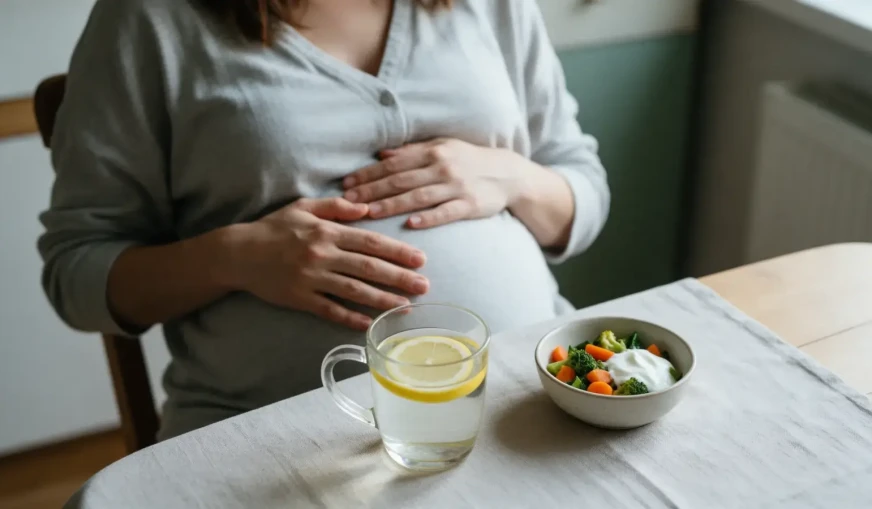
The habits that help most with gas and bloating in pregnancy are: eating small, frequent meals instead of big ones, eating slowly and chewing well, cutting back on fizzy drinks and chewing gum, not eating several gas-producing foods at the same meal, drinking plenty of water to prevent constipation, and doing a little light walking every day with your doctor's approval. Mild pain that passes when you change position or pass wind is usually harmless; for severe pain that does not go away or that comes with bleeding, see a doctor straight away.
Gas and bloating are an annoying but often harmless complaint that many expectant mothers have from the first weeks of pregnancy to the last months. In this article I explain the causes, the changes you can make to your diet and which pains may be more than gas.
- The hormone progesterone slows digestion in pregnancy; the growing womb also presses on the bowel.
- Small, frequent meals, eating slowly and cutting back on fizzy drinks ease the complaint in most expectant mothers.
- Rather than giving up foods such as dried pulses, cabbage, broccoli and onion completely, adjust the portion and the way they are cooked.
- Constipation increases gas; water, fibre and movement should be thought of together.
- If there is bleeding, regular contractions or severe abdominal pain that does not go away with rest, go to the maternity unit straight away.
Why Do Gas and Bloating Happen in Pregnancy?
The hormone progesterone, which rises in pregnancy, relaxes the muscles in the digestive system and slows the passage of food through the stomach and bowel. When food stays in the bowel longer, bacteria have more time to ferment it; this means more gas.
In the later weeks of pregnancy the growing womb presses on the stomach and bowel, increasing the feeling of fullness and bloating. Constipation, which is common in pregnancy, some iron supplements, changes in meal pattern and air swallowed while eating fast also add to the picture.
Which Foods Can Increase Gas and Bloating?
The NHS notes that bloating and gas can come from foods and drinks such as some vegetables, dried pulses and fizzy drinks, or from swallowing air while eating. However, most of these foods contain valuable nutrients in pregnancy; the aim is not to give them up completely but to adjust the portion and the way they are prepared.
| What can increase the complaint | What can be done? |
|---|---|
| Dried beans, chickpeas, lentils | Soak overnight, pour away the cooking water, start with a small portion; add cumin and thyme |
| Cabbage, broccoli, cauliflower, onion | Eat thoroughly cooked rather than raw; do not combine more than one in the same meal |
| Fizzy drinks, mineral water | Prefer plain water; drink mineral water in small amounts and between meals |
| Chewing gum and sugar-free sweets (sweeteners such as sorbitol) | Cut back or give up |
| Fried, fatty and very spicy dishes | Choose baking, boiling and grilling |
| Large dinners eaten late | Keep dinner early and light |
| Milk (in people with lactose sensitivity) | Try yoghurt, kefir or lactose-free milk |
The foods each expectant mother is sensitive to differ. Noting for a few days what you eat and when the complaints increase is the most practical way of finding the foods that cause you problems. When noting, write down not only the foods but your mealtimes, how fast you eat and how much water you drank and how much you moved that day; the picture often comes not from a single food but from the sum of these habits.
What Helps With Gas Pain?
Most of the time, small changes in eating and daily habits bring marked relief. The steps the NHS suggests for bloating and gas can be applied in pregnancy too.
- Small, frequent meals: Five or six small meals instead of three big ones reduce the load on the stomach and bowel.
- Eat slowly: Eating with your mouth closed and chewing well reduces the amount of air swallowed.
- Plenty of water: Drink water in small sips through the day; drinking through a straw can increase swallowed air.
- Movement: A light 10–15 minute walk after a meal helps gas move along the bowel.
- Sit upright: Do not slouch during and after eating, and do not lie down straight away.
- Herbal tea: The NHS suggests peppermint tea for gas; in pregnancy herbal teas need to be limited to four cups a day. You can find in detail which herbal teas are suitable in pregnancy in the article on herbal teas in pregnancy.
Lying on your left side and drawing your knees gently towards your tummy, or light stretching movements your doctor approves, can also help trapped gas to pass. Do not use anti-gas medicines without asking your pharmacist or doctor.
Should I Give Up Gas-Producing Foods Completely?
No. Dried pulses, vegetables of the cabbage family and onion are valuable parts of eating in pregnancy because they contain fibre, folate, iron, protein and many vitamins. Taking them off the list completely can increase constipation and reduce the variety of what you eat.
Instead, try these methods:
- Raise them gradually: Start pulses once or twice a week in half portions and increase as your body gets used to them.
- Change the preparation: Soak dried pulses for at least 8–12 hours, pour away the soaking water and the first cooking water; cook lentils thoroughly and eat them as soup.
- Adjust the combination: Do not have dried beans, a cabbage salad and a fizzy drink at the same meal.
- Make use of spices: Cumin, thyme and ginger can give flavour in cooking and a feeling of easier digestion.
- Watch the timing: Eat dishes that tend to cause gas at lunchtime rather than in the evening; that way night-time discomfort is reduced.
If you think you may be lactose sensitive, instead of giving up dairy products try more easily tolerated options such as yoghurt, kefir and cheese; the need for calcium goes on in pregnancy.
How Are Constipation and Gas Linked?
Constipation is one of the most common causes of gas and bloating. The longer stool stays in the bowel, the more it ferments and the more gas forms. For this reason, one of the first things to look at in expectant mothers with gas complaints is bowel regularity.
The NHS suggests foods rich in soluble fibre, such as oats and flaxseed, for people with bloating along with constipation. Fibre needs to be raised gradually over a few days, not all at once, and water needs to be raised with it; otherwise gas can increase temporarily. You can look at the article on what helps constipation in pregnancy for detailed advice. If you take an iron supplement and your complaints began with it, talk to your doctor rather than stopping it on your own.
A sample day against gas and bloating
- Breakfast: Egg, cheese, tomato, cucumber, wholemeal bread; warm water alongside
- Snack: Yoghurt, oats and a few slices of banana or kiwi
- Lunch: Grilled chicken or köfte (Turkish meatballs), courgettes cooked in olive oil, bulgur pilaf
- Snack: A medium pear or a handful of walnuts
- Dinner (early): Thoroughly cooked lentil soup (small portion), baked vegetables, cacik (Turkish yoghurt and cucumber dip)
- Through the day: Water and the herbal teas your doctor considers suitable
Is It Gas Pain or Another Kind of Pain?
According to the NHS, abdominal pain is common in pregnancy, and if the pain is mild and passes when you change position, rest, go to the toilet or pass wind, it is generally not a cause for concern. Gas, constipation and the stretching of the ligaments carrying the growing womb are common causes of this kind of harmless pain.
However, some situations can be confused with gas pain and need urgent assessment. If abdominal pain comes with any of the following, call your maternity unit or see your doctor without waiting:
- Vaginal bleeding or spotting
- Regular cramps or contractions
- Back pain
- Unusual discharge or a gush of water
- Burning on passing urine, passing urine often, cloudy or bloody urine
- Severe pain, or pain that does not go away after 30–60 minutes of rest
- Severe or constant pain under the ribs, especially on the right side
Heartburn and indigestion are also common along with a bloated feeling; the suggestions in the article on what helps heartburn in pregnancy may help you with this. For a personal nutrition plan that takes your digestive complaints into account, we can work together, in line with your obstetrician's advice, within nutrition counselling for pregnancy.
Sources
This article is for general information only; please consult your doctor and dietitian about your own situation.
Frequently Asked Questions
Does gas pain in pregnancy harm the baby?
Although gas pain is uncomfortable, it does not harm the baby. The baby is protected in the amniotic fluid and the womb; but if the pain is severe, does not go away or comes with bleeding, see your doctor for a cause other than gas.
In which months does gas pain increase in pregnancy?
Gas and bloating are common in the first three months because of hormones, and can increase again in the last months as the growing womb presses on the bowel. The severity of the complaint varies from person to person.
Can you drink fennel tea for gas in pregnancy?
The safety of herbal teas in pregnancy is not the same for every herb, and some have not been studied enough. Ask your doctor before drinking any herbal tea, fennel included, regularly; the NHS recommends limiting herbal teas in pregnancy to four cups a day.
Are yoghurt and kefir good for gas?
Yoghurt and kefir can be tolerated more easily than milk by people with lactose sensitivity and are part of balanced eating. They should not be seen as a food that directly relieves gas; make sure they are made from pasteurised milk.
Can I use an anti-gas medicine?
Although there are some options that can be used in pregnancy, do not use any medicine without asking your pharmacist or doctor. First try steps such as a meal routine, eating slowly, water and movement.
Book an appointment for a personalised pregnancy nutrition plan
Nutritional needs in pregnancy change with the week of pregnancy, weight change and test results. Message us for a plan that fits your doctor's advice.

This content is for information only. For a personalised nutrition programme, please consult a dietitian.


