

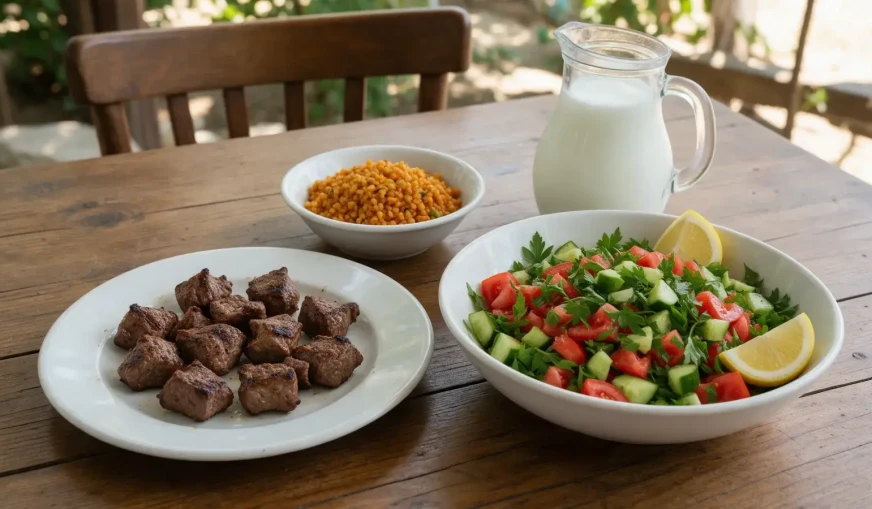
Eating meat healthily at Eid al-Adha comes down to three steps: let the meat rest in the fridge for a while rather than cooking it straight after slaughter; choose boiling, oven-baking or grilling over kavurma (slow-cooked fried meat) and deep-frying; and fill half your plate with vegetables and salad, keeping the meat to a portion about the size of your palm.
The Eid table is not just one meal: in many homes there is meat from breakfast to dinner for three or four days. So what matters is not a single meal but the total load over several days. Below you will find a practical framework covering storage, cooking, portion size and digestive discomfort.
- Freshly slaughtered meat is tough; resting it in the fridge for a few hours to a day makes it easier to cook and to digest.
- Boiling, oven-baking and grilling provide less saturated fat than long cooking in the meat's own fat.
- About 90 to 100 g of meat (cooked weight, roughly a palm-sized portion) in one meal is enough for most adults.
- Adding fibre-rich vegetables, salad and plenty of water alongside the meat can ease constipation and bloating.
- People with gout, kidney disease or heart disease, and pregnant women, should talk to their doctor and dietitian about portions before Eid.
Can Eid Meat Be Cooked Straight After Slaughter?
It is better to let the meat rest in the cold for a while than to cook it immediately. In the hours after slaughter the muscles stiffen (rigor mortis); meat cooked during this period stays tough and is harder to chew and digest.
After cutting the meat up, putting it in clean, covered containers on the bottom shelf of the fridge for a few hours to a day helps it to soften. Dividing the part you will not eat straight away into portions, labelling them with the date and freezing them also takes the pressure off cooking meat every day during Eid.
Do not wash meat before cooking. Water droplets that splash during washing can carry bacteria onto the worktop, the sink and other foods. Washing knives, chopping boards and hands in hot, soapy water straight after touching raw meat is the simplest precaution against food poisoning.
Short reminders for storage
- Keep raw meat separate from cooked food, in leak-proof containers on the bottom shelf of the fridge.
- Thaw frozen meat in the fridge, not on the worktop, and cook thawed meat within two days.
- Cool cooked meat quickly, put it in the fridge, and reheat it only once.
What Is the Healthiest Way to Cook Eid Meat?
The healthiest methods are those that need no added fat and cook the meat without burning it: boiling, steaming, baking in the oven and grilling at a suitable distance. With kavurma, the meat is usually cooked for a long time in its own fat and tail fat, so much more saturated fat ends up on the plate.
Trimming off visible white fat and membranes before cooking noticeably reduces the amount of fat, whichever method you choose. Skimming off the fat that collects on top of the cooking water once it cools is another easy step.
| Cooking method | Advantage | Point to watch |
|---|---|---|
| Boiling / pot cooking with vegetables | Needs no added fat, and the meat is tender | Do not add too much salt to the cooking water |
| Oven-baked casserole (güveç) | Cooks together with vegetables, and the portion is easy to control | Use the juices of the vegetables instead of adding fat to the tray |
| Grill / barbecue | Some of the fat drips away | Do not hold the meat too close to the fire, and do not eat blackened parts |
| Kavurma | Traditional flavour | High in saturated fat and salt; keep to a small portion |
| Deep-frying | Cooks quickly | Adds extra fat; the method to choose least during Eid |
When grilling or barbecuing, it is important not to let the meat burn. Surfaces that are cooked at very high heat and charred are known to form compounds that can be harmful to health. Keeping the meat a little further from the fire, turning it often and removing blackened parts are practical solutions. For more methods, you can take a look at the article on healthy cooking techniques.
How Much Meat Should You Eat in One Meal?
For most adults, about 90 to 100 grams of cooked meat in one meal, that is, a portion about the size and thickness of the palm of your hand, is enough. That amount more than covers the protein, iron, zinc and vitamin B12 that meat provides.
The UK National Health Service (NHS) advises people who eat more than 90 grams of red or processed meat a day on average to cut down to 70 grams. If you eat more on one day, you can balance the average by eating less on the following days. During Eid, this might mean, for example, eating meat at one meal a day rather than at every meal.
The easiest way to control portions is to set up your plate correctly from the start: half the plate vegetables and salad, a quarter meat, and the remaining quarter bulgur pilaf, wholegrain bread or pulses. Using meat within a vegetable dish rather than as the main dish (green beans with meat, courgette with meat) naturally reduces the total amount of meat.
How Should You Plan Meat Through the Eid Days?
Spreading meat across the days is the most useful way to lighten the load over several days. Instead of eating meat at breakfast, lunch and dinner one after another, you can plan one meal a day with meat.
- Breakfast: Instead of eggs with kavurma, choose a classic breakfast of cheese, eggs, plenty of greens and tomato.
- Lunch: A vegetable dish with meat, with yoghurt or cacık (yoghurt with cucumber), and a salad on the side.
- Dinner: If you have had meat during the day, set a lighter table based on pulses, vegetables or soup.
- Snacks: For Eid sweets and syrupy desserts, decide on a single small portion during the day, and choose water rather than tea alongside it.
The sweets and chocolates that are offered in every home during Eid visits should also be taken into account. For wider suggestions on this, you can read my article on eating during Eid al-Adha.
How Can You Avoid Constipation and Indigestion When Eating a Lot of Meat?
To avoid constipation and bloating, always add fibre-rich foods and enough fluid alongside meat. Meat contains no fibre, and when vegetables, fruit and wholegrains are cut back for a few days, bowel habits can easily be disrupted.
- Have a bowl of salad or vegetables cooked in olive oil with every meal.
- Spread your water through the day; drinking before you feel thirsty is a good habit.
- Add fermented dairy products such as yoghurt, ayran (a salted yoghurt drink) and kefir to the table.
- Instead of lying down straight after eating, take a gentle 15 to 20 minute walk.
- Eat slowly; it takes time for the fullness signal to reach the brain.
If you have heartburn, acid reflux or heavy indigestion, cut back first on fatty kavurma and fried foods, and finish dinner at least 2 to 3 hours before bed. If your complaints keep returning, discuss them with your doctor.
Who Should Be More Careful with Eid Meat?
People with gout or high uric acid, chronic kidney disease, cardiovascular disease, high cholesterol and high blood pressure should pay more attention to the amount of meat and salt they eat during Eid. In these cases, the right portion varies from person to person; the safest course is to talk to your doctor and dietitian before Eid.
Offal (liver, kidney, brain) is a particular concern for these groups. For example, offal is rich in purines and can increase the risk of attacks in people with gout. You can find more on this at the page on nutrition in gout.
A note for pregnant women: Meat can be part of eating in pregnancy, but it must be fully cooked. Undercooked or raw meat carries a risk of toxoplasmosis, and liver and liver products are not recommended in pregnancy because they contain very high levels of vitamin A. At the Eid table, choose thoroughly cooked options rather than meat that is still pink inside or raw kofta (çiğ köfte). To decide on suitable portions for pregnancy in line with your obstetrician's advice, you can look at my page on nutrition in pregnancy.
Why Pay Attention to Salt and Drinks at Eid?
Meat dishes, pickles, kavurma and ready-made sauces quickly raise salt intake on the Eid table; add sugary drinks and desserts, and a feeling of swelling and bloating becomes common within a few days. Practical solutions are to add less salt when cooking, not to put a salt shaker on the table, and to use more spices (thyme, cumin, black pepper, chilli flakes).
For drinks, favour water, ayran and unsweetened herbal teas, and limit fizzy and sugary drinks. For the effects of salt on health, you can take a look at the article on why reducing salt intake matters.
If you would like to get your routine back on track after Eid or put together a programme that suits your health, we can plan it together through nutrition and diet counselling.
Sources
- NHS – Meat in your diet
- WHO – Cancer: Carcinogenicity of the consumption of red meat and processed meat
- WHO – Food safety
- Turkish Ministry of Health – Turkey Nutrition Guide (TÜBER) 2022
This article is for general information only; please consult your doctor and dietitian about your own situation.
Frequently Asked Questions
How many days can Eid meat be kept in the fridge?
Raw red meat should only be kept in the fridge for a short time. If you will not eat it within a few days, it is safer to divide it into portions and freeze it. Thaw frozen meat in the fridge, cook it within two days, and make sure it is cooked thoroughly before you freeze it again.
Should Eid meat be washed?
No, it is not recommended to wash meat before cooking. Splashing water droplets can carry bacteria onto the worktop and other foods. Sufficient heat during cooking already destroys bacteria; instead of washing, pay attention to the hygiene of your chopping board and knife.
Is kavurma unhealthy?
Kavurma (Turkish slow-cooked, fried meat) is not completely off limits, but because the meat is cooked for a long time in its own fat and often with added tail fat, it is high in saturated fat and salt. It is more balanced to eat a small portion with plenty of salad and yoghurt, and to have it now and then rather than every day.
What can I do about the heavy feeling after eating meat at Eid?
A gentle walk after eating, drinking enough water and keeping your next meal light, based on vegetables, yoghurt or soup, often helps. If your complaints keep returning, or if they come with pain or vomiting, please see your doctor.
Can someone on a diet eat Eid meat?
Yes. Meat is a valuable source of protein, iron and vitamin B12, and it can be included in a portion that fits your eating plan. Choosing lean cuts, boiling or grilling it, and filling half your plate with vegetables can help you stay on track.
Book an appointment for a personalised nutrition plan
The information in this article is general; what you need depends on your age, health and goals. Message us and we will build the plan that suits you together.

This content is for information only. For a personalised nutrition programme, please consult a dietitian.


