

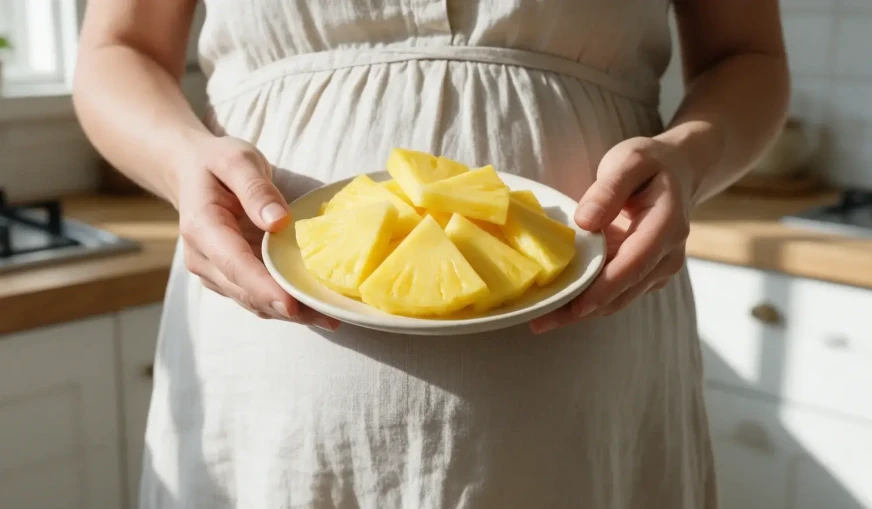
Yes, you can eat pineapple during pregnancy. There is no reliable human study showing that fresh pineapple in normal portions causes miscarriage or starts labour, and pineapple is not on the NHS list of foods to avoid in pregnancy. One portion a day (about a bowl of sliced fresh pineapple) can be part of a balanced menu as long as it is washed well and prepared hygienically.
The worries about pineapple come from an enzyme in the fruit called bromelain and from some traditional beliefs. In this article I explain what these beliefs are based on, what the scientific evidence says and how you can eat pineapple in pregnancy.
- Fresh pineapple is a fruit that can be eaten safely in pregnancy in normal food amounts.
- The belief that “pineapple causes miscarriage” rests on laboratory studies and traditional uses; there is no evidence for normal portions.
- Bromelain supplements are not the same thing as the fruit itself and should not be used in pregnancy because their safety is unknown.
- Pineapple is an acidic fruit; it can make symptoms worse for people with heartburn.
- If you have gestational diabetes, eat pineapple in a controlled portion and together with a protein source.
Where Does the “Pineapple Causes Miscarriage” Belief Come From?
The belief comes from the use of pineapple in some traditional medicine practices to bring on miscarriage or labour, and from the protein-breaking property of the enzyme bromelain it contains. Over time this information was generalised into “pineapple is harmful in pregnancy”.
In a laboratory study published in 2016, concentrated extracts obtained from pineapple were applied directly to isolated strips of uterine muscle taken from pregnant rats and from humans, and some extracts were seen to cause contractions. The researchers themselves noted at the start of the study that scientific evidence for a miscarriage-causing or labour-inducing effect of pineapple is clearly lacking.
It should be stressed that an experiment like this is not the same as eating a bowl of pineapple. A concentrated extract applied directly to tissue in the laboratory does not go through digestion, absorption and distribution in the body. So these results cannot be read as an indicator of risk from pregnant women eating normal amounts of pineapple.
What Is Bromelain, and Can You Use the Supplement?
Bromelain is the general name for the protein-breaking enzymes found in the fruit and stem of the pineapple. The bromelain in supplements, on the other hand, is usually a concentrated, standardised product; in other words, it cannot be compared with the amount in fresh fruit.
The US National Center for Complementary and Integrative Health (NCCIH) notes that very little is known about whether bromelain is safe to use in pregnancy or while breastfeeding. For this reason, bromelain supplements should not be used in pregnancy. This is not a warning about eating fresh pineapple, but about concentrated supplement products.
Does Pineapple Start Labour?
There is no strong evidence that eating pineapple starts or speeds up labour. Eating very large amounts of pineapple in the last weeks of pregnancy in order to “start labour” is not recommended either.
Large amounts of pineapple can, because of its acidity, increase heartburn and tenderness in the mouth, and can also cause digestive complaints such as diarrhoea. The start of labour or induction is a process that must be managed with your obstetrician's assessment; during this you should not try anything on your own with foods or herbal products.
What Are the Benefits of Pineapple in Pregnancy?
Pineapple is a fruit rich in vitamin C, high in water and containing fibre. With these qualities it contributes to your daily intake of fruit and vegetables in pregnancy.
- Vitamin C: Needed for the immune system and tissue health; it also supports the absorption of plant-based iron. A few slices of pineapple next to a lentil or spinach dish is a good pairing in this respect.
- Water and fibre: It adds to your fluid intake and can be part of the high-fibre foods that help with the constipation common in pregnancy.
- A healthy alternative to a sweet craving: For a sugar craving, a bowl of fresh pineapple with yoghurt is a more balanced option than sugary desserts.
The NHS recommends eating at least 5 portions of a variety of fruit and vegetables every day in pregnancy. Pineapple can be one of those portions; but it is more beneficial to keep up a variety of fruit rather than relying on a single one.
How and How Much Pineapple Should You Eat in Pregnancy?
One portion of fresh pineapple a day (about a bowl of sliced pineapple) is a sensible amount for most pregnant women. It is better to spread the fruit across meals or snacks than to eat large amounts on its own.
| Type of pineapple | Assessment in pregnancy |
|---|---|
| Fresh pineapple | First choice; the outer surface should be washed before peeling, and a clean knife and board used |
| Tinned pineapple | Usually in syrup, so high in sugar; if you choose it, pick the kind in its own juice, drain it and keep the portion small |
| Pineapple juice | Contains no fibre and can raise blood sugar quickly; choose the fruit itself and limit juice to a small glass |
| Dried pineapple | High in sugar and usually sold with sugar added; limit to very small portions |
| Bromelain supplements | Should not be used because their safety in pregnancy is unknown |
Keep cut pineapple in a closed container in the fridge and eat it soon. Because you cannot be sure under what conditions loose, pre-cut fruit sold outside was prepared, it is safer not to choose it in pregnancy.
Who Should Be More Careful With Pineapple?
Pregnant women who have heartburn, who have been diagnosed with gestational diabetes or who are allergic to pineapple should eat it more carefully. In these cases the amount and way of eating it should be adjusted to the individual.
- Heartburn: Pineapple is an acidic fruit; it can increase burning in some pregnant women. Not eating it on an empty stomach or in the evening may bring relief. For detailed advice on this, you can look at my article on what helps heartburn in pregnancy.
- Gestational diabetes: Pineapple is not completely off limits, but portion control is important. It is better to eat the fruit not on its own but with a protein or fat source such as yoghurt or a handful of nuts, and to avoid pineapple juice. Set the amount that suits you with your doctor and dietitian.
- Allergy: If marked swelling or itching of the lips, mouth or throat, hives or shortness of breath develops after eating pineapple, get emergency help without delay.
Other Common Myths About Pregnancy
Pineapple is not the only food that is banned in pregnancy unnecessarily. Rumoured bans can narrow the menu and reduce the variety of what you eat.
- “You need to eat for two”: Although energy needs rise in pregnancy, you do not need to “eat for two”; the NHS states this clearly.
- “Hazelnuts and peanuts cause allergy in the baby”: According to the NHS, nuts can be eaten in pregnancy unless you have an allergy or your doctor has said otherwise.
- “Fish is dangerous in pregnancy”: Well-cooked fish is a recommended food in pregnancy; what should be avoided is raw fish and large fish that are high in mercury.
I have gathered the foods that really should be avoided in pregnancy into a list in my article on what not to eat during pregnancy. For a safe and balanced nutrition plan throughout your pregnancy, we can work together, in line with your obstetrician's advice, within nutrition counselling for pregnancy.
Sources
- NHS – Foods to avoid in pregnancy
- NCCIH – Bromelain: Usefulness and Safety
- Monji F, et al. Investigation of uterotonic properties of Ananas comosus extracts. J Ethnopharmacol, 2016 (PubMed)
- NHS – Have a healthy diet in pregnancy
This article is for general information only; please consult your doctor and dietitian about your own situation.
Frequently Asked Questions
Can you eat pineapple in the first months of pregnancy?
Yes, fresh pineapple can be eaten in normal portions at every stage of pregnancy, including the first trimester. If you have nausea or a sensitive stomach, small portions and not eating it on an empty stomach may be more comfortable because of its acidity.
How much pineapple can you eat a day in pregnancy?
For most pregnant women, about a bowl of sliced fresh pineapple a day is a sensible portion. If you have gestational diabetes, heartburn or another health condition, set the amount together with your doctor and dietitian.
Can you drink pineapple juice in pregnancy?
Pasteurised pineapple juice can be drunk, limited to a small glass, but since it has no fibre and can raise blood sugar quickly, the fruit itself is a better choice. Pay attention to hygiene with freshly squeezed juice that is sold loose and not pasteurised.
My mouth burns after eating pineapple; is that normal?
Pineapple is an acidic fruit and contains enzymes that break down proteins, so some people may feel temporary tenderness or tingling in the mouth. If swelling of the lips, tongue or throat, hives or shortness of breath develops, it may be a sign of allergy and needs emergency help.
Can you eat pineapple while breastfeeding?
Yes, fresh pineapple can also be eaten while breastfeeding as part of a balanced menu. Since the safety of bromelain supplements while breastfeeding is unknown, do not use them without asking your doctor.
Book an appointment for a personalised pregnancy nutrition plan
Nutritional needs in pregnancy change with the week of pregnancy, weight change and test results. Message us for a plan that fits your doctor's advice.

This content is for information only. For a personalised nutrition programme, please consult a dietitian.


