

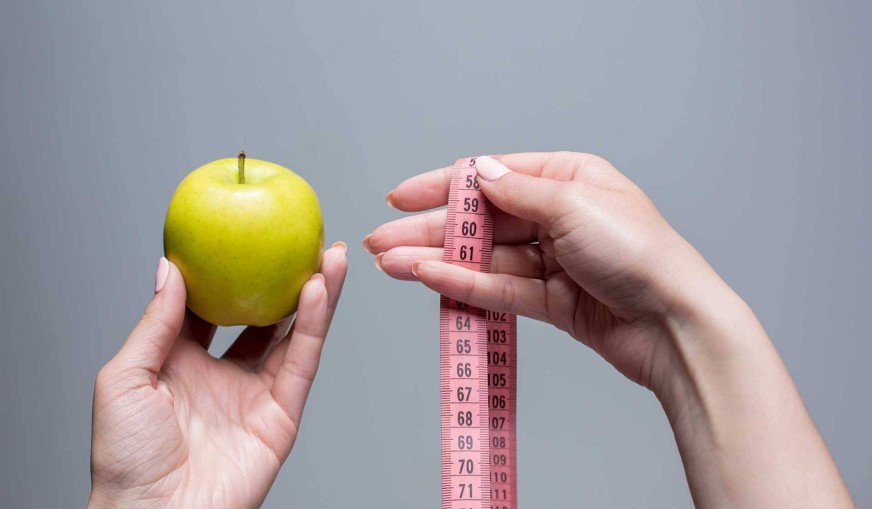
Today there are many different approaches to losing weight, but conventional diets may not suit everyone. For this reason the concept of reverse dieting has become popular in recent years.
What Is Reverse Dieting?
Reverse dieting is a diet strategy that aims to maintain or increase body weight at the end of a weight loss or weight management process. It is a term generally used in the fitness world and among athletes. It plays an important role especially for people who have followed long-term low-calorie diets.
The main aim of reverse dieting is to keep body weight under control while preventing, or reversing, a slowdown in metabolism. During weight loss diets, because the body takes in fewer calories, it can reduce its energy use over time. This can make weight loss harder, and it can slow the rate at which a person loses weight.
Reverse dieting involves gradually increasing calorie intake as a person comes off a weight loss diet. This may help the metabolism return to normal and help maintain body weight at the desired level. It also aims to minimise muscle loss.
Does Reverse Dieting Really Prevent Weight Regain?
Question: Some of my clients are asking about “reverse dieting” as a way to limit weight regain after weight loss. What is reverse dieting, what does it involve, and does science support this approach?
Answer: Most dieters return to their old eating habits soon after losing weight. This can undermine weight maintenance efforts and encourage weight regain. Reverse dieting, often known as “post-diet dieting”, involves gradually adding calories back into the diet after a person reaches their desired weight, in order to limit weight gain and prevent the common problem of regaining weight. There is as yet no research that supports this approach for weight maintenance, although a few studies of its effectiveness are ongoing.
What Is Behind This Approach?
As an example of reverse dieting, a person who has been on a 1,200 kcal diet to lose weight increases their intake by 50 kcal every few weeks until they reach a calorie level that maintains their weight. According to some advocates, this practice needs to be carried out over a period of a few weeks to a few months. This is a description of how proponents use the approach, not a recommendation, and any change to your own intake should be planned with a dietitian. Reverse dieting was developed and popularised by Layne Norton, PhD, and Holly Baxter, MS, a husband-and-wife fitness team who wrote and self-published The Complete Reverse Dieting Guide in 2020.
According to a meta-analysis of 29 long-term weight loss studies, more than half of the weight lost was regained within two years among participants. Within five years, more than 80% of the weight had been regained. This stems in part from the theory of adaptive thermogenesis, which holds that calorie restriction, and weight loss and efforts to maintain it, cause changes in behaviour and in the body's metabolic, neuroendocrine and autonomic systems, which reduce resting energy expenditure. Essentially, the body tries to protect its remaining mass. It also responds to weight loss by trying to return the body to its previous weight.
In line with the theory of adaptive thermogenesis, reverse dieting advocates suggest that a slow increase in calories, rather than a quick return to a relatively high-calorie diet, may limit the drop in resting energy expenditure that comes with weight loss, and ultimately allow dieters to eat higher calorie levels without regaining weight. The approach was first used by professional bodybuilders and other athletes to keep fat mass low while preserving muscle mass. It has since become mainstream.
Research
There is a lack of data on the practice of reverse dieting. Two studies on the subject are still ongoing. The first, funded by George Mason University, a public research university in Fairfax, Virginia, is testing reverse dieting to prevent metabolic adaptation after a period of calorie restriction in athletes who do weight training.
The second study, supported by the University of Colorado, is following 24 participants with overweight or obesity who have lost more than 10% of their body mass, randomising them to a reverse diet or a standard-care control intervention for 12 weeks. Results from neither study are available yet.
Advice for Practitioners
Although reverse dieting has been used with anecdotal success among bodybuilders and other athletes, there is not enough evidence to support recommending it. It may also be impractical for many clients. For example, for clients who do not count calories, especially as part of their weight loss plans, calculating and recording an extra 30 or 50 kcal a day can be tedious. These extra calories also do not equal very much food. For example, just five or six almonds, seven or eight peanuts or half a string cheese contain 50 kcal.
For clients who have lost weight and want to keep it off, regular follow-up with a dietitian can help with weight management.
— Toby Amidor, MS, RD, CDN, FAND, is the founder of Toby Amidor Nutrition (tobyamidornutrition.com) and a Wall Street Journal bestselling author. She’s written several cookbooks, including The Best 3-Ingredient Cookbook and The Best Rotisserie Chicken Cookbook. She’s also a nutrition expert for FoodNetwork.com and a contributor to U.S. News Eat + Run and other national outlets.
References
1. Link R. What is reverse dieting? Healthline website. https://www.healthline.com/nutrition/reverse-dieting. Published April 30, 2019.
2. Anderson JW, Konz EC, Frederich RC, Wood CL. Long-term weight-loss maintenance: a meta-analysis of US studies. Am J Clin Nutr. 2001;74(5):579-584.
3. Rosenbaum M, Leibel RL. Adaptive thermogenesis in humans. Int J Obes (Lond). 2010;34:S47-S55.
4. Trexler ET, Smith-Ryan AE, Norton LE. Metabolic adaptation to weight loss: implications for the athlete. J Int Soc Sports Nutr. 2014;11:7.
5. Can reverse dieting prevent weight regain after weight loss. ClinicalTrials.gov website. https://clinicaltrials.gov/ct2/show/study/NCT03434431. Updated March 1, 2019.
6. Feasibility and preliminary efficacy of a reverse diet as a novel weight loss maintenance strategy for weight-reduced adults with overweight/obesity. ClinicalTrials.gov website. https://clinicaltrials.gov/ct2/show/NCT03560635. Updated February 10, 2021.
This article is for general information only; please consult your doctor and dietitian about your own situation.
Book an appointment for a personalised nutrition plan
The information in this article is general; what you need depends on your age, health and goals. Message us and we will build the plan that suits you together.

This content is for information only. For a personalised nutrition programme, please consult a dietitian.


