

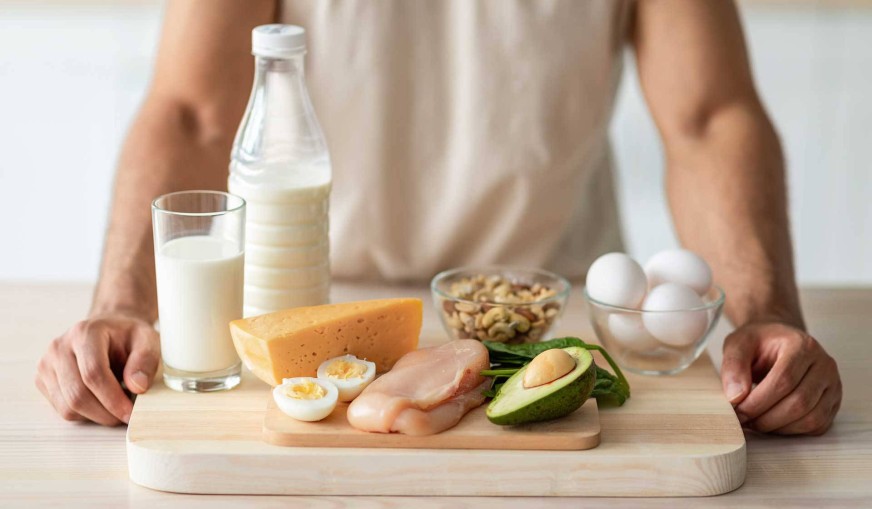
In short: A 3,000-calorie weight-gain diet is a plan that takes roughly 45–65% of daily energy from carbohydrate, 20–35% from fat and 10–35% from protein, divided into 3 main meals and 2–3 snacks. Most of the calories should come from nourishing sources such as oats, wholegrains, dairy, meat, fish and eggs, nuts and olive oil, and the plan can be supported by resistance exercise.
A diet of 1,500 to 2,000 calories is generally considered standard, and it meets the nutritional needs of most people. Gaining weight, however, takes more than this, so a weight-gain diet contains many more calories.
Who Needs a High Calorie Intake?
Besides people who have difficulty with gaining weight, athletes have higher calorie needs than the general population. People with physically demanding jobs, such as farm workers and construction workers, may also need a high number of calories to maintain their weight. These people may need to follow a weight-gain diet.
Where Should the Calories in the Diet Come From?
The calories in your diet come from three macronutrients: carbohydrates, fats and proteins. One gram of protein or carbohydrate contains 4 calories, and one gram of fat contains 9 calories.
According to the Acceptable Macronutrient Distribution Ranges (AMDRs) set by the US National Academy of Medicine, the calories in the diet should come from:
45–65% carbohydrates
20–35% fats
10–35% proteins
In line with these ranges, a 3,000-calorie weight-gain diet would look as follows:
Calories |
3,000 |
Carbohydrate |
338–488 grams |
Fat |
67–117 grams |
Protein |
75–263 grams |
When combined with resistance exercise, studies suggest that protein intakes at the upper end of the AMDR recommendations may reduce body fat gain and increase muscle mass when calorie intake is high. In this way, resistance exercise may encourage muscle gain rather than fat gain on a high-calorie diet. A higher protein intake together with resistance training may also help support your body composition.
Which Foods Should You Eat on a Weight-Gain Diet?
It can be hard to eat 3,000 calories a day from whole, unprocessed or minimally processed foods such as fruit, vegetables, wholegrains, healthy fats and lean proteins. Although these foods contain many nutrients, they are lower in calories, so you would need to eat a much larger amount of food.
By contrast, it is relatively easier to reach 3,000 calories from highly processed, refined foods such as bacon, crisps, sweets, biscuits, sugary breakfast cereals and sugary drinks, both because they are very tasty and because they contain a lot of calories for their size. However, these foods do not provide the nutrients that are good for your health. For this reason it is important to take most of your daily calories from more nourishing foods.
These nourishing foods include:
- Animal-based proteins: salmon, chicken, turkey, bison, whole eggs and lean cuts of beef such as sirloin or tenderloin
- Plant-based proteins: tofu, edamame, tempeh, peas and chickpeas
- Grains: oats, rice, bread, pasta and quinoa
- Dairy: milk, cottage cheese, kefir and Greek yoghurt
- Solid and liquid fats: almonds, walnuts, flaxseed, olive oil and natural peanut or almond butter
- Fruit: avocado, strawberries, apples, bananas, pears, oranges, grapes and so on
- Vegetables: courgette, sweet potato, peas, cabbage, peppers, broccoli, tomatoes, cauliflower and so on
In addition, protein powders, including whey, casein and plant-based powders such as rice, soy or pea, can be added to smoothies for a nourishing, high-calorie snack.
Weight-gain powders that are high in calories per portion are also an option, but it is best to use them only after talking to your dietitian. It is generally best to meet your calorie and nutrient needs from food first.
Which Foods Should You Avoid on a Weight-Gain Diet?
On a 3,000-calorie weight-gain diet, the foods to avoid or limit are those that are highly processed and low in nutrients. These include:
- Fast food: tacos, burgers, pizza, hot dogs and so on
- Sugary foods and drinks: fizzy drinks, sweets, sports drinks, sugary baked goods, sweetened tea, ice cream, sweet coffee drinks and so on
- Refined carbohydrates: biscuits, crisps, sugary cereals, pastries and so on
If most of your diet is made up of nourishing whole foods, you can enjoy your favourite treats in moderation. Make sure most of your calories come from nutrient-dense foods, and have sweets and junk food only now and then.
Weight-Gain Diet: Sample Menu
A sample 5-day weight-gain diet of 3,000 calories:
Monday
Breakfast: 80 grams of oats, 1 cup (240 ml) of milk or plant-based milk, 1 banana and 2 tablespoons (33 grams) of peanut butter
Snack: a mix of 80 grams of cornflakes, 30 grams of granola, 34 grams of dried fruit and 20 nuts
Lunch: 100 grams of spaghetti, 3/4 cup (183 grams) of tomato sauce, 112 grams of cooked minced meat and 1 tablespoon (14 grams) of butter with 1 medium bread roll
Snack: 1 cup (226 grams) of cottage cheese and 1/2 cup (70 grams) of blueberries
Dinner: 110 grams of salmon, 1 cup (100 grams) of brown rice and 5 asparagus spears
Tuesday
Breakfast: a smoothie made with 2 cups (480 ml) of milk or plant-based milk, 1 cup (227 grams) of yoghurt, 1 cup (140 grams) of blueberries and 2 tablespoons (33 grams) of almond butter
Snack: 1 granola bar, 1 portion of fruit and 2 slices of cheese
Lunch: a 30 cm sandwich with meat, cheese and vegetables, served with 85 grams of baby carrots, 2 tablespoons (28 grams) of hummus and apple slices
Snack: 1 scoop of whey protein powder mixed with 1 cup (240 ml) of milk or plant-based milk
Dinner: 113 grams of beef tenderloin, 1 medium (173 grams) baked potato with 1 tablespoon (14 grams) of butter, and 1 cup (85 grams) of broccoli
Wednesday
Breakfast: 3 wholewheat waffles with 2 tablespoons (33 grams) of peanut butter, 1 orange and 2 cups (480 ml) of milk or plant-based milk
Snack: 1 nut-based granola bar and 28 grams of almonds
Lunch: a burger made with 170 grams of 90% lean meatballs (patty) with a slice of tomato and lettuce leaves on wholegrain bread, and 1 1/2 cups (86 grams) of homemade sweet potato chips cooked in olive oil
Snack: 1 cup (227 grams) of yoghurt and 1 cup (140 grams) of strawberries
Dinner: 112 grams of chicken breast, 1/2 cup (84 grams) of quinoa and 1 1/3 cups (85 grams) of peas
Thursday
Breakfast: a 3-egg omelette made with onion, red and green peppers and 1/4 cup (28 grams) of grated cheese, with 2 cups (480 ml) of milk or plant-based milk to drink
Snack: 1 slice of wholewheat bread with 2 tablespoons (33 grams) of peanut butter and 1 banana
Lunch: 226 grams of fish fillet, 1/4 cup (32 grams) of boiled green lentils and 1/4 cup (30 grams) of walnut salad
Snack: 2 sliced boiled eggs on a mixed green salad
Dinner: a turkey dish made with 114 grams of turkey breast, chopped onion, garlic, celery and sweet pepper, 1/2 cup (123 grams) of tinned chopped tomatoes, 1/2 cup (120 grams) of dried beans and 1/4 cup (28 grams) of grated cheese. You can add thyme, bay leaf, chilli flakes and cumin if you like.
Friday
Breakfast: 3 whole eggs, 1 apple, and porridge made with 1 cup (80 grams) of rolled oats and 1 cup (240 ml) of milk or plant-based milk
Snack: 1 cup (226 grams) of plain yoghurt, 1/4 cup (30 grams) of granola and 1/2 cup (70 grams) of raspberries
Lunch: 168 grams of chicken breast, 1 medium (151 grams) sweet potato, 3/4 cup (85 grams) of green beans and 28 grams of hazelnuts
Snack: 1/2 cup (130 grams) of chickpeas over salad leaves
Dinner: 170 grams of beef tenderloin, 1/2 cup (130 grams) of black beans, 1/2 cup (90 grams) of brown rice, 1 cup (35 grams) of lettuce and spinach, and 2 tablespoons (16 grams) of salsa
This article is for general information only; please consult your doctor and dietitian about your own situation.
Book an appointment for a personalised nutrition plan
The information in this article is general; what you need depends on your age, health and goals. Message us and we will build the plan that suits you together.

This content is for information only. For a personalised nutrition programme, please consult a dietitian.


