

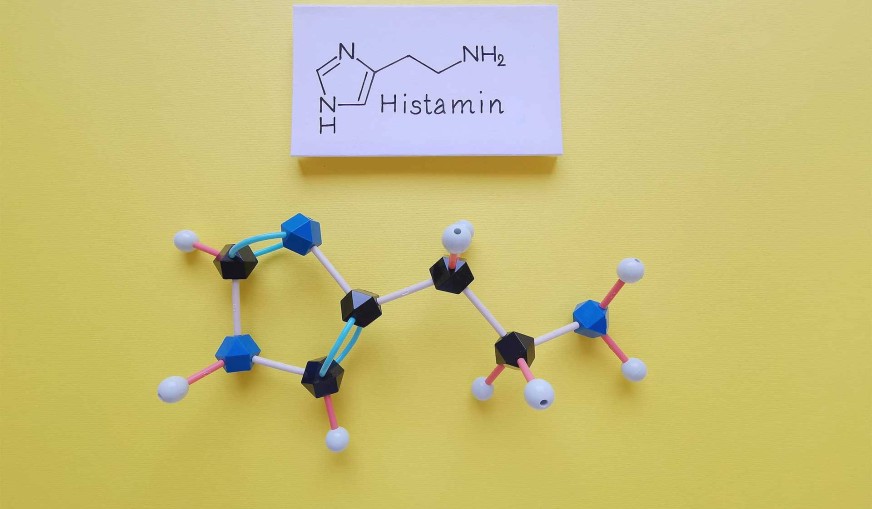
Histamine is a chemical that the body makes naturally. It has several roles, including regulating the immune system, stimulating stomach acid secretion and passing messages in the nervous system. It is also involved in allergic reactions and infections.
What Does Histamine Do?
Histamine has several roles in the body:
- Regulating the immune system: it increases the activity of immune cells, which helps them fight infections.
- Stomach acid secretion: it increases the release of stomach acid, which helps with the digestion of food.
- Nervous system signalling: histamine acts on nerve cells and contributes to functions such as alertness, appetite control, movement and learning.
- Widening of blood vessels: it widens the blood vessels, which increases blood flow and can lower blood pressure.
Which Foods Contain Histamine?
Histamine is found naturally in some foods and can build up in others. These foods include:
- Fermented foods: vinegar, pickles, kefir, yoghurt, cheese, salami, sucuk (Turkish spiced sausage) and other sausages
- Fresh seafood: tuna, mackerel, salmon, sardines, mussels and prawns
- Chocolate
- Fruits: strawberries, blackberries, raspberries, cherry tomatoes, oranges, mandarins, grapefruit and lemons
- Nuts: almonds, walnuts, hazelnuts, peanuts and pumpkin seeds
- Spices: turmeric, coriander, black pepper, chilli pepper and cumin
What Is Histamine Intolerance?
Histamine intolerance is a condition that appears when the body's ability to regulate its histamine levels is reduced. In this case the body cannot digest or break down histamine-rich foods properly.
In people with histamine intolerance, a high histamine load can show itself through symptoms that resemble an allergic reaction, such as headache, tiredness, stomach pain, diarrhoea, hives, a runny nose and red eyes.
What Are the Symptoms?
Symptoms of histamine intolerance may include:
- Headache
- Tiredness
- Stomach pain
- Diarrhoea
- Hives
- Runny nose
- Red eyes
How Is Histamine Intolerance Diagnosed?
Diagnosis is made by a doctor. The doctor looks at the person's symptoms to work out whether histamine intolerance may be the cause.
During this process a doctor will often suggest keeping a food diary. The diary helps record the histamine-containing foods you eat alongside your symptoms. The doctor may also request tests, which can include a histamine tolerance test, a urine histamine test and a blood test.
How Is Histamine Intolerance Managed?
Management usually centres on dietary changes. People with histamine intolerance try to keep their symptoms under control by avoiding foods that contain histamine. Your doctor can also advise you on whether any medication is appropriate for you.
Which Foods Are Usually Avoided?
Foods that people with histamine intolerance are usually advised to limit in their diet include:
- Fermented foods: vinegar, pickles, kefir, yoghurt, wine and beer
- Fish: tuna, salmon, mackerel and sardines
- Cheese: especially salty cheeses
- Tomatoes: tomatoes and tomato products
- Chocolate: cocoa, chocolate and chocolate products
- Eggs: egg yolk
- Seafood: lobster, prawns, mussels, squid and octopus
Which Foods Can Be Eaten?
People with histamine intolerance can generally include foods that are lower in histamine in their diet. These include:
- Fresh fruit: strawberries, bananas, melon, watermelon and apples
- Vegetables: potatoes, carrots, celery, broccoli and courgettes
- Meat: fresh meat
- Milk and dairy: fresh milk and dairy products
People with histamine intolerance need to take care with how they eat. Storing food properly, avoiding fermented foods, choosing fresh foods and avoiding ready-made meals may help to keep symptoms under control. It is also wise to follow this process with a specialist, because when you remove foods from your diet it can be hard to keep your eating balanced.
This article is for general information only; please consult your doctor and dietitian about your own situation.
Book an appointment for a personalised nutrition plan
The information in this article is general; what you need depends on your age, health and goals. Message us and we will build the plan that suits you together.

This content is for information only. For a personalised nutrition programme, please consult a dietitian.


