

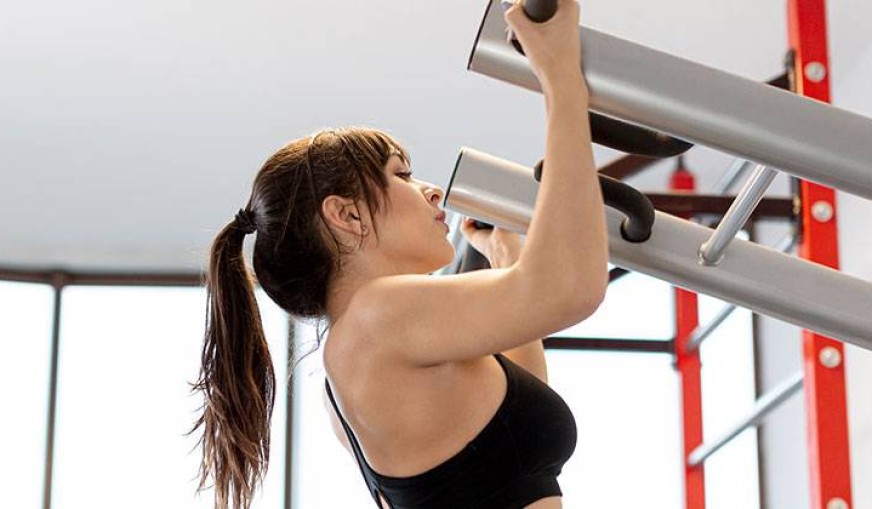
Focusing only on food is not enough to gain weight. To gain muscle rather than fat and to shape your body, it helps to follow a suitable exercise programme. Regular training can support healthy weight gain by building muscle mass.
So which exercises should you do while gaining weight? Which training techniques and eating strategies support muscle gain? Here is an overview of exercise and eating suggestions for people who want to gain weight.
1. Why exercise matters when you want to gain weight
- It supports gaining muscle rather than fat.
- It can give the body a stronger, more defined shape.
- More muscle mass can contribute to a healthy weight gain.
- It helps you build strong bones and endurance.
- As muscle mass grows, the body uses more energy, and the extra calories you eat are more likely to support muscle than fat.
Tip: exercising while you gain weight helps ensure the extra calories support muscle tissue.
2. Which workouts suit weight gain and muscle building?
- Resistance training (lifting weights) is one of the most commonly used ways to support muscle building.
- Bodyweight exercises can build muscle too, but for people who want to gain weight, weight training is generally more suitable.
Common workouts for supporting muscle gain:
1. Basic compound exercises (movements that work large muscle groups)
- Squat: works the leg and hip muscles.
- Deadlift: works the back, leg and core muscles.
- Bench press: works the chest, shoulders and triceps.
- Overhead press: works the shoulders and upper body.
- Pull-ups: work the back and biceps.
- Dips: target the triceps, chest and shoulders.
Tip: these movements work several muscle groups at once and can help you build strength.
2. Isolation exercises (movements that define particular muscles)
- Biceps curl: targets the front of the arm.
- Triceps extension: works the back of the arm.
- Leg press: works the leg muscles.
- Lat pulldown: works the back muscles.
- Dumbbell lateral raises: work the shoulder muscles.
Tip: weight training at least three to four days a week is commonly used to support muscle gain.
3. An exercise programme for weight gain and muscle gain
- A programme of at least 3 to 5 days a week is commonly used to support muscle gain and to give your body time to adapt.
- Splitting muscle groups across days gives each group time to recover.
A sample training programme (5-day split)
| Day | Muscle group | Suggested exercises |
|---|---|---|
| Day 1 | Chest and triceps | Bench press, incline dumbbell press, dips, triceps pushdown |
| Day 2 | Back and biceps | Deadlift, lat pulldown, pull-ups, biceps curl |
| Day 3 | Legs and hips | Squat, leg press, Romanian deadlift, calf raises |
| Day 4 | Shoulders and abdomen | Overhead press, lateral raises, plank, hanging leg raises |
| Day 5 | Full body or cardio | Gentle walking, swimming, cycling |
Tip: working with heavier weights in the range of 6 to 12 repetitions is one of the approaches commonly used for muscle gain. If you are new to training, please work with a qualified trainer.
4. Matching your eating to your training when gaining weight
- If you do not eat enough while training, you may lose muscle rather than gain weight.
- Eating protein and carbohydrate after each workout supports muscle repair.
Foods that support muscle development:
- Protein sources: eggs, red meat, chicken, fish, dairy products, pulses
- Healthy carbohydrates: oats, brown rice, bulgur, wholegrains, sweet potato
- Healthy fats: avocado, olive oil, walnuts, almonds, peanut butter
- Liquid calories: protein shakes, smoothies, milk-based drinks
Tip: a meal with around 20 to 30 grams of protein and 40 to 60 grams of carbohydrate after training is commonly suggested to support muscle recovery.
5. Should you do cardio while gaining weight?
- Too much cardio can make it harder to gain weight and may affect muscle.
- However, rather than stopping cardio completely, it can be useful to include low-intensity exercise.
Things to keep in mind with cardio:
- 20 to 30 minutes of low-intensity cardio (such as gentle walking) two or three days a week is often enough.
- High-intensity interval training (HIIT) is generally kept to a minimum.
- Make sure your body gets enough carbohydrate when you do cardio.
Tip: if you do cardio, make sure you eat enough extra calories to cover the energy you use.
6. Why rest and sleep matter when gaining weight
- Muscle growth and repair take place during sleep.
- Poor sleep can slow muscle development and make weight gain harder.
Tips for good sleep:
- Aim for at least 7 to 9 hours of sleep a night.
- Avoid heavy meals before bed, though a light protein snack is fine.
- Manage stress to help keep cortisol levels in check.
Tip: regular sleep supports your training performance and your muscle gain.
Manage your weight gain and exercise programme in balance
- Focus on weight training and work out 3 to 5 days a week to support muscle gain.
- Build an eating pattern that includes healthy fats, protein and carbohydrates.
- Look after your general health with low-intensity cardio.
- Eat enough protein and carbohydrate after training to support muscle development.
- Look after your sleep and rest so that your muscles can recover.
Remember: gaining weight and building muscle takes patience. With a suitable training and eating plan, healthy weight gain is possible. Please speak to your doctor before starting a new exercise programme, and a dietitian can help you plan your eating.
This article is for general information only; please consult your doctor and dietitian about your own situation.
Book an appointment for a personalised nutrition plan
The information in this article is general; what you need depends on your age, health and goals. Message us and we will build the plan that suits you together.

This content is for information only. For a personalised nutrition programme, please consult a dietitian.


