

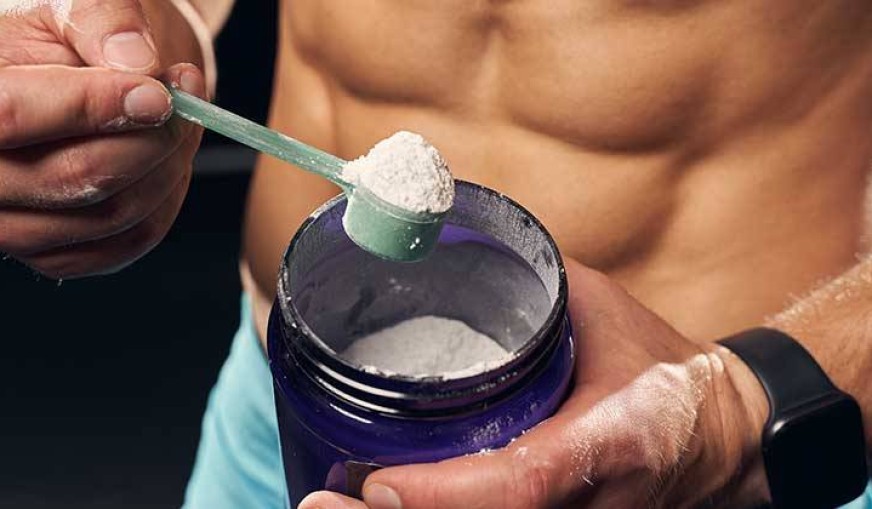
For people who exercise, sound nutrition comes first, and some also look at supplements to support their training and recovery. Supplements are not essential, and the evidence differs from one product to another. Here are the supplements that active people most commonly ask about:
1. Protein Powder
Protein is needed for muscle repair and growth. Protein powders are a convenient way for some people to top up their daily protein, especially after training.
- Whey protein: Quickly absorbed.
- Casein protein: Absorbed more slowly, so some people take it in the evening.
- Plant proteins: Pea, soya and rice proteins can be chosen by vegetarian or vegan athletes.
2. Creatine
Creatine is one of the most researched supplements in sport, studied in relation to strength and performance in high-intensity exercise. It is stored in muscle cells as an energy source.
- Dose: Follow the product label and your doctor's or dietitian's advice.
- Possible benefits: Studied in relation to strength and recovery. Individual responses differ.
3. BCAAs (Branched-Chain Amino Acids)
BCAAs (leucine, isoleucine and valine) are studied in relation to muscle recovery after exercise. The evidence is mixed, and a diet with enough protein already provides them.
- They are sometimes taken before or after exercise.
- They are being studied in relation to muscle protein synthesis.
4. Glutamine
Glutamine is an amino acid that some athletes use during recovery.
- It is sometimes discussed for people who train intensively.
- Its effect on immunity is still being researched.
5. Omega-3 Fatty Acids
Omega-3 is being studied in relation to muscle soreness and joint comfort.
- Sources: Oily fish, or fish oil capsules and flaxseed oil if your doctor advises them.
- Possible benefits: Supports heart health and may help keep inflammation in check.
6. Beta-Alanine
Beta-alanine is studied in relation to muscle fatigue during high-intensity exercise.
- It is discussed in relation to endurance.
- It is of interest for high-intensity training.
7. Electrolyte Supplements
Minerals lost through heavy sweating need to be replaced. Electrolyte drinks support hydration and muscle function.
- They are most relevant in long exercise sessions.
- Drinks containing sodium, potassium and magnesium can be used.
8. Vitamin and Mineral Supplements
Some vitamins and minerals are especially important for people who exercise intensely:
- Vitamin D: Supports muscle function and bone health.
- Vitamin C: Supports the immune system.
- Iron: Helps carry oxygen, which matters for endurance. Take iron only if a blood test shows you need it.
9. Caffeine
Caffeine is studied in relation to exercise performance.
- Taken before exercise, it can give an energy lift.
- It can affect sleep, heart rate and alertness, so intake should be kept moderate.
Supplements can play a supporting part for some people, but they are never a substitute for sound nutrition and good training. Before using any supplement, speak to a specialist to check whether it suits your individual needs, health and goals. Results vary from person to person.
This article is for general information only; please consult your doctor and dietitian about your own situation.
Book an appointment for a personalised nutrition plan
The information in this article is general; what you need depends on your age, health and goals. Message us and we will build the plan that suits you together.

This content is for information only. For a personalised nutrition programme, please consult a dietitian.


