

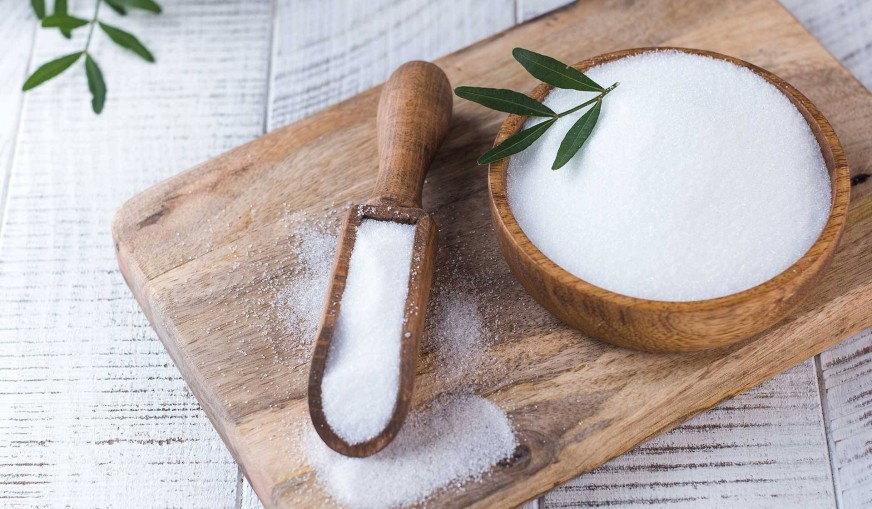
In short: Erythritol is a sugar alcohol that occurs naturally in some fruits and fermented foods and is made industrially by fermentation. It is about 70% as sweet as sugar, contains almost no calories and does not raise blood sugar. However, because a study published in 2023 linked high blood erythritol levels with cardiovascular events, people at risk of heart disease should limit their intake.
More Americans than ever are aiming to cut down on added sugar. As a result, consumers are turning to low-calorie or zero-calorie sweeteners, especially those made from “natural” ingredients. Recent Nielsen data showed that 33% of US consumers are aware of, and look for, products with reduced sugar or no added sugar, the fourth-highest consumer concern out of 16 options. While sweeteners such as stevia are better known in the natural, zero-calorie sugar alternative category, the sugar alcohol erythritol is gaining attention and is used in many popular and upcoming brands.
What Is Erythritol?
Erythritol is classed as a sugar alcohol, or polyol, that occurs naturally in small amounts in certain fruits and vegetables and in fermented foods such as wine and soy sauce. It is produced by fermenting glucose, obtained from corn or wheat starch, with yeast.
Compared with another popular sugar alcohol, xylitol, and with cane sugar, erythritol contains significantly fewer calories (0.24 kcal/g, compared with 2.4 kcal/g for xylitol and 4 kcal/g for sugar). The well-known plant-derived sweetener stevia contains 0 kcal/g.
Erythritol is about 70% as sweet as sugar and about 95% as sweet as xylitol, while stevia is 200 to 300 times sweeter than erythritol. Xylitol has a glycaemic index, but the glycaemic index of erythritol and stevia is 0. None of these sugar substitutes has been shown to have much, or any, effect on blood sugar.
The metabolism of erythritol differs from that of most sugar alcohols, which pass through the digestive system unchanged and are fermented by bacteria in the colon. About 90% of erythritol is absorbed in the small intestine and into the bloodstream before it reaches the colon, and it is eventually excreted unchanged in the urine. In addition, erythritol is generally recognised as safe by the FDA. However, a study published in Nature Medicine in 2023 reported that a high level of erythritol in the blood may be associated with an increased risk of heart attack and stroke. For this reason, people at risk of cardiovascular disease are advised to limit products containing erythritol and to talk to their doctor.
The Rise of Erythritol
According to SPINS, a wellness-focused data technology company, erythritol saw triple-digit growth last year in the shelf-stable, low- and zero-calorie sweetener category. By contrast, stevia grew by only 3.6% in the same category over the same period.
Particularly popular among keto enthusiasts, erythritol has grown many times over across all store formats, but most of all in the conventional multi-outlet channel.
Last year, sales of all natural, organic, specialty and wellness-focused erythritol products sold in conventional supermarkets in the United States were estimated to have risen by 326.8% to $13.9 million.
Brands and Uses
The following are some of the newest and most prominent erythritol products on the market, as well as some common non-food uses.
Swerve Sweetener
Louisiana-based Swerve sweetener is made mainly from erythritol. It also contains prebiotic fibres from starchy root vegetables. This makes it as sweet as sugar and helps baked goods brown and caramelise. The prebiotic fibres also help reduce erythritol’s “cooling” effect (similar to the feeling of eating mint in the mouth), and give a longer shelf life than pure erythritol.
The brand offers box mixes for cakes, chocolate chip cookies, waffles and pancakes, as well as granulated, confectioners’ and brown sugar varieties. It also sells the sweetener in bulk for bakeries, restaurants and food service operations. It can be used in place of sugar at a 1:1 ratio.
Zero Worries Foods
California-based Zero Worries Foods sells Zsweet, which is erythritol, in granulated and powdered (icing) sugar varieties. Like Swerve, the company adds other ingredients, including organic stevia leaf extract and natural botanical extracts, to make Zsweet sweeter and more comparable to sugar. Zero Worries then crystallises Zsweet for the final product, so that it can be swapped for sugar in recipes in equal amounts.
So Nourished
So Nourished sells a blend of monk fruit and erythritol, in addition to powdered and granulated erythritol. The New York-based brand was started by low-carb diet enthusiasts and positions its products as a ketogenic, low-carb-diet-friendly alternative to sugar.
Pyure
Pyure is better known for its stevia products. However, the company also sells products made from a blend of erythritol and stevia, including a sugar-free maple-flavoured syrup. It also sells organic erythritol with nothing added.
Wholesome
Wholesome has a broad portfolio of organic sweeteners, including traditional sugars, creamers and syrups. Its offerings include ZeroSugar organic erythritol.
Other Uses
Erythritol is used in various applications beyond food. Because of its cooling properties and its so-called oral health benefits, it is often used to sweeten chewing gum. It is also often used in oral care products such as toothpaste, and by the pharmaceutical industry in products such as sugar-free throat lozenges, powders and syrups.
Possible Benefits of Erythritol
Erythritol has been claimed to have not only oral health benefits but also antioxidant properties. The potential areas and evidence for such benefits are as follows:
- Digestion: sugar alcohols have a bad reputation, especially for their tendency to cause stomach upset. Because most of the erythritol eaten does not reach the colon, the likelihood of gastrointestinal discomfort and gas is low when it is eaten in reasonable amounts.
- Taste: erythritol does not have a lingering aftertaste, which is another common drawback of sugar substitutes. Because it has no lingering taste, it can be combined with other sweeteners to create a sweetness closer to sugar.
- Oral health: both human and in vitro studies have shown that erythritol may benefit dental health by stopping the growth of bacteria associated with tooth decay or cavities, while reducing dental plaque and the adhesion of certain bacteria to the tooth surface. In some cases it reduced the incidence of tooth decay up to three years after the study.
- Antioxidant properties: animal and human studies suggest that erythritol may have antioxidant properties. However, more research is needed.
Things to Consider
Although erythritol has many positive aspects, there are a few factors that are not so sweet. Most importantly, it is generally more expensive than other sugar alternatives. The time-consuming fermentation process and the challenges of making the sweetener in such large batches push up the price of erythritol. Although research continues on ways to improve production, costs have not yet fallen.
In addition, because erythritol is only about 70% as sweet as sugar, it cannot replace sugar at a 1:1 ratio in a recipe unless it is combined with other sweeteners. A quarter to one third of a cup of pure erythritol can be used in place of one cup of sugar. However, crystallisation, which changes the texture, and erythritol’s cooling effect affect the flavour and shelf life, so baked goods may only last a day.
Key Takeaways
Erythritol can be a good option for customers and patients who want to reduce their sugar intake. Although it is technically a sugar alcohol, the sweetener has a few distinguishing features that many people find positive, such as less stomach upset and no lingering aftertaste.
— Esther L. Ellis, MS, RD, LDN, is a freelance writer and registered dietitian in Chicago.
Sources
1. What food-related causes do U.S. consumers care about today? Nielsen website.https://www.nielsen.com/us/en/insights/news/2019/what-food-related-causes-do-us-consumers-care-about-today.html. Published March 6, 2019. Accessed May 27, 2019.
2. Regnat K, Mach RL, Mach-Aigner AR. Erythritol as sweetener — wherefrom and whereto?Appl Microbiol Biotechnol. 2018;102(2):587-595.
3. Arrigoni E, Brouns F, Amadò R. Human gut microbiota does not ferment erythritol.Br J Nutr. 2005;94(5):643-646.
4. Mirończuk A, Rakicka M, Biegalska A, Rymowicz W, Dobrowolski A. A two-stage fermentation process of erythritol production by yeast Y. lipolytica from molasses and glycerol.Bioresour Technol. 2015;198:445-455.
5. Gunnars K. Erythritol — like sugar without the calories? Healthline website.https://www.healthline.com/nutrition/erythritol#section1. Published April 23, 2018. Accessed May 27, 2019.
6. Stevia. Diabetes.co.uk website.https://www.diabetes.co.uk/sweeteners/stevia.html. Published 2019. Accessed May 27, 2019.
7. Gunnars K. Xylitol: everything you need to know. Healthline website.https://www.healthline.com/nutrition/xylitol-101#low-glycemic-index. Published October 4, 2018. Accessed May 27, 2019.
8. Klinger S. Understanding the benefits of stevia. Pure Circle Stevia Institute website.https://www.purecirclesteviainstitute.com/resources/articles/nutrition-articles/understanding-benefits-stevia/
9. High-intensity sweeteners. Food and Drug Administration website.https://www.fda.gov/food/food-additives-petitions/high-intensity-sweeteners. Updated December 19, 2017.
10. Swerve: the ultimate sugar replacement. Swerve Sweetener website.https://swervesweet.com/about. Accessed May 27, 2019.
11. Zsweet all-natural granulated sweetener. Zsweet website.https://zsweet.com/collections/shop-our-all-natural-zero-calorie-sweeteners-zsweet%C2%AE/products/zsweet%C2%AE-all-natural-granulated-sweetener-pack-of-2. Accessed May 27, 2019.
12. Our products. So Nourished website.https://www.sonourished.com/shop/. Accessed May 27, 2019.
13. About us. So Nourished website.https://www.sonourished.com/about-us/. Accessed May 27, 2019.
14. Organic erythritol — pouch. Pyure Brands website.https://pyureorganic.com/products/organic-erythritol-pouch/. Accessed May 27, 2019.
15. Organic ZeroSugar erythritol. Wholesome website.http://shop.wholesomesweet.com/All-Natural-Zero/p/WHSM-347116&c=Wholesome@Zero. Accessed May 27, 2019.
16. Cargill. Zerose erythritol.https://www.cargill.com/doc/1432076675876/brochure-zerose-product-guide.pdf. Accessed May 27, 2019.
17. de Cock P. Erythritol functional roles in oral-systemic health.Adv Dent Res. 2018;29(1):104-109.
18. Rzechonek DA, Dobrowolski A, Rymowicz W, Mirończuk AM. Recent advances in biological production of erythritol.Crit Rev Biotechnol. 2018;38(4):620-633.
19. Hand J. How to bake with sugar substitutes. Bulletproof Blog.https://blog.bulletproof.com/how-to-bake-with-sugar-substitutes/. Accessed May 27, 2019.
20. Husband T. The sweet science of candymaking. American Chemical Society website.https://www.acs.org/content/acs/en/education/resources/highschool/chemmatters/past-issues/archive-2014-2015/candymaking.html. Published October 2014.
This article is for general information only; please consult your doctor and dietitian about your own situation.
Book an appointment for a personalised nutrition plan
The information in this article is general; what you need depends on your age, health and goals. Message us and we will build the plan that suits you together.

This content is for information only. For a personalised nutrition programme, please consult a dietitian.


