

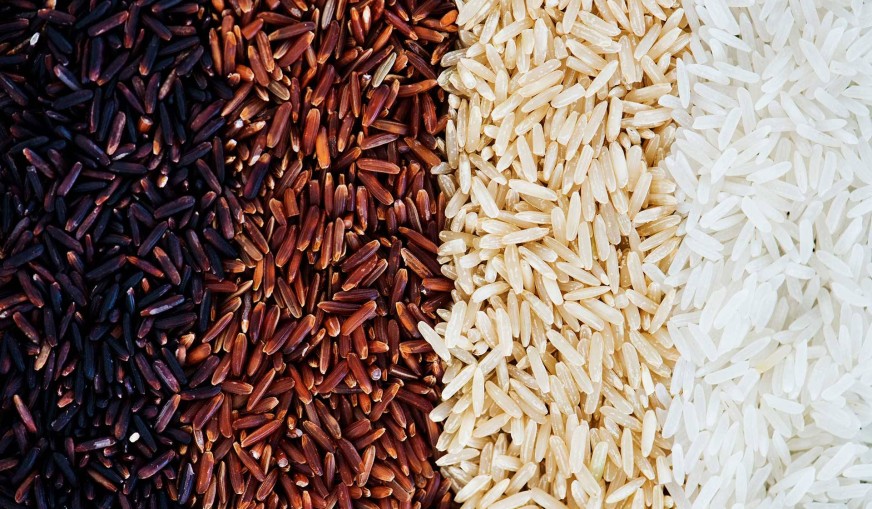
When clients ask about the nutritional contribution rice makes to their diet, they are probably not asking about rice that is coloured rice. It is true that most rice (Oryza sativa L.) is white, but some varieties of rice contain phytochemicals (mainly polyphenols and anthocyanins) in the outer bran layer. These not only give them different shades of colour but also increase their nutritional content.
What Is Coloured Rice?
All rice grains have a hard outer husk. The endosperm that remains after the bran and germ are removed is known as polished white rice. Coloured or pigmented rice is usually classed as black or red rice. Depending on the mix of anthocyanins, colours range from dark red, dark purple and dark blue to red-brown, black-purple and dark red-purple. As with white rice, there are different types of coloured rice, such as sticky and non-sticky, aromatic and non-aromatic, and short- and long-grain.
What Are the Varieties of Coloured Rice?
Coloured rice has many varieties grown all over the world. Some common varieties of coloured rice are listed below:
- Brown rice: brown rice contains more fibre and nutrients than white rice. This is because the bran layer is kept. Brown rice supports digestive health and helps you feel full.
- Black rice: black rice has unique black grains and contains a high amount of antioxidants. This variety is a good choice for people looking for an option that is especially rich in antioxidants.
- Purple rice: purple rice has attractive purple grains and a high antioxidant content. This variety adds visual appeal to meals and offers a number of nutritional advantages.
- Red rice: red rice is a popular choice among coloured rices. It is both tasty and nutritious. It is rich in iron, which contributes to normal blood formation, and also in fibre.
Possible Benefits of Coloured Rice
Coloured rice offers a number of nutritional advantages. Some of them are:
- High fibre content: coloured rice is known for its high fibre content. This fibre supports digestive health, helps you feel full and helps balance blood sugar levels. Fibre-rich eating patterns are also associated with heart health.
- Rich in antioxidants: coloured rice varieties have a high antioxidant content. Antioxidants help protect cells from the damage caused by free radicals, and they are being studied for their role in overall health.
- Lower glycaemic index: it is a carbohydrate source with a lower glycaemic index, which can help keep blood sugar levels steadier. People with diabetes should talk to their doctor and dietitian about how rice fits into their meals.
- Vitamins and minerals: coloured rice contains a number of important vitamins and minerals, including magnesium, phosphorus, potassium and zinc. It also contains vitamins such as B vitamins, folate and iron.
- A source of protein: it is a plant-based source of protein and can be used to help meet protein needs, especially in vegetarian or vegan diets.
Nutrition Report
Although there is not much difference in the nutrient content of coloured rice varieties, there are important differences in the phytochemicals they contain, especially compared with white rice. The black rice varieties found across Asia have ink-black grains when raw. As they cook, the grains turn a deep violet-purple colour. Black rice varieties include Indonesian black rice, Philippine galatinaw rice and Thai jasmine black rice.
The bran layer of red rice contains polyphenols and anthocyanins, which are believed to support the cell's antioxidant defence and the maintenance of healthy brain function. These compounds are not found in white rice.
In traditional Chinese medicine, red rice is believed to support blood circulation. It has also been used for stomach upset, indigestion, bruised muscles and hangovers. Perhaps the best known red rice product is red rice yeast, which is made by fermenting yeast on red rice and is marketed as a cholesterol-lowering supplement. But this product is different from cooked red rice. Do not use red yeast rice supplements without talking to your doctor.
Coloured rice contains not only various phytochemicals but also amino acids and volatile oils that are known to have free-radical-scavenging antioxidant capacity. When the bran of red, black and brown rice was analysed, the concentrations of phytochemicals and antioxidant activity were highest in black rice bran, followed by red and brown rice respectively.
The natural compounds that give rice its different colours are similar to those found in blueberries and blackberries. The bran of red and brown rice is high in catechin and myricetin, while black rice bran is rich in quercetin and catechin.
Nutrient Content of Coloured Rice
| Nutrients (1/4 cup, dry) | Red Rice | Black Rice |
|---|---|---|
| Calories | 170 kcal | 160 kcal |
| Protein | 4 g | 5 g |
| Fat | 1 g | 1.5 g |
| Carbohydrate | 38 g | 34 g |
| Fibre | 3 g | 2 g |
| Sugars | 0 g | 1 g |
| Sodium | 0 mg | 0 mg |
| Iron | <1 mg | <1 mg |
Source: USDA FoodData Central; company websites
— Densie Webb, PhD, RD, is a freelance writer, editor, and consultant based in Austin, Texas.
References
1. Napasintuwong O. Thailand’s colored rice standard and markets. FFTC Agricultural Policy Platform website. https://ap.fftc.org.tw/article/1756. Published February 21, 2020. Accessed April 4, 2021.
2. Ahuja U, Ahuja SC, Chaudhary N, Thakrar R; Asian Agri-History Foundation. Red rices — past, present, and future. https://www.asianagrihistory.org/pdf/articles/Red-Rices-Uma-Ahuja.pdf. Accessed April 2, 2021.
3. The origin and spread of 'Emperor's rice': scientists solve the mystery of black rice. ScienceDaily website. https://www.sciencedaily.com/releases/2015/09/150926191819.htm. Published September 26, 2015. Accessed April 2, 2021.
4. Santiaguel AF. Red pearls of the Himalayas. Rice Today website. https://ricetoday.irri.org/red-pearls-of-the-himalayas/. Published July 1, 2014. Accessed April 2, 2021.
5. Larson Duyff R. Academy of Nutrition and Dietetics Complete Food & Nutrition Guide. 5th ed. New York, NY: Houghton Mifflin Harcourt; 2017.
6. Cicero AFG, Fogacci F, Banach M. Red yeast rice for hypercholesterolemia. Methodist Debakey Cardiovasc J. 2019;15:192-199.
7. Ghasemzadeh A, Karbalaii MT, Jaafar HZE, Rahmat A. Phytochemical constituents, antioxidant activity, and antiproliferative properties of black, red, and brown rice bran. Chem Cent J. 2018;12:17.
8. Thummayot S, Tocharus C, Pinkaew D, Viwatpinyo K, Sringarm K, Tocharus J. Neuroprotective effect of purple rice extract and is constituent against amyloid beta-induced neuronal cell death in SK-N-SH cells. Neurotoxicology. 2014;45:149-158.
9. Banjerdpongchai R, Wudtiwai B, Sringarm K. Cytotoxic and apoptotic-inducing effects of purple rice extracts and chemotherapeutic drugs on human cancer cell lines. Asian Pac J Cancer Res. 2014;14(11):6541-6548.
10. Choi SP, Kim SP, Kang MY, Nam SH, Friedman M. Protective effects of black rice bran against chemically-induced inflammation of mouse skin. J Agric Food Chem. 2010;58(18):10007-100015.
11. Koch W. Dietary polyphenols-important non-nutrients in the prevention of chronic noncommunicable diseases. A systematic review. Nutrients. 2019;11:1039.
12. Kimble R, Keane KM, Lodge JK, Howatson G. Dietary intake of anthocyanins and risk of cardiovascular disease: A systematic review and meta-analysis of prospective cohort studies. Crit Rev Food Sci Nutr. 2018;59(18):3021-3043.
13. Boue SM, Daigle KW, Chen MH, Cao H, Heiman ML. Antidiabetic potential of purple and red rice (Oryza sativa L.) bran extracts. J Agric Food Chem. 2016:64:5345-5353.
14. Rice of many colors. Oldways Whole Grains Council website. https://wholegrainscouncil.org/blog/2017/09/rice-many-colors. Published September 27, 2017. Accessed April 4, 2021.
15. Zaupa M, Calani L, Del Rio D, Brighenti F, Pellegrini N. Characterization of total antioxidant capacity and (poly)phenolic compounds of differently pigmented rice varieties and their changes during domestic cooking. Food Chem. 2015;187:338-347.
This article is for general information only; please consult your doctor and dietitian about your own situation.
Book an appointment for a personalised nutrition plan
The information in this article is general; what you need depends on your age, health and goals. Message us and we will build the plan that suits you together.

This content is for information only. For a personalised nutrition programme, please consult a dietitian.


